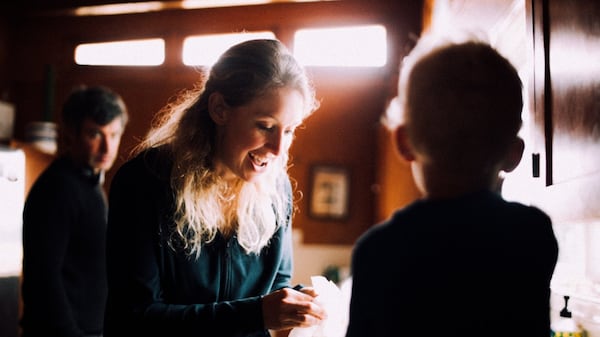
Engagements, weddings and baby showers have gift registries. Why don’t divorces? It’s a question two sisters asked themselves – one that, for them, signified moving forward and getting back on their feet – a milestone that could be celebrated and destigmatized. Thus, Olivia Howell and Genevieve Dreizen launched the world’s first-ever divorce registry, a service that allows friends and loved ones to support new divorcees with gifts. “We really just want divorce to be seen as just another life transition that you can support somebody in,” Howell said in an interview with CTVNews.ca. “We’re all about helping people get back on their feet, moving forward. We’re not bitter, we’re not angry, it’s not about your ex, it’s about you going forward.” The company is based in New York, but it has clients in Canada and elsewhere around the world. The sisters aim to normalize this type of support for individuals going through divorce, a life event that many endure. Marriage and divorce in Canada Marriage and divorce trends have changed in Canada. Divorce rates have been on the decline for decades, at 5.6 per 1,000 in 2020, down from 7.5 in 2019 and 12.7 in 1991, according to Statistics Canada data. But marriage is also on the decline, with more Canadians opting instead to live in common-law partnerships. Demographers and sociologists attribute this decrease, also seen in other countries, to individuals becoming increasingly more selective in marriage, Statistics Canada told CTVNews.ca in an email. While divorce is on the decline in Canada, it is still common – according to the 2019 Statistics Canada total divorce rate, 33.8 per cent of marriages would end up in divorce after 30 years and 36.9 per cent after 50 years. With change in marriage and divorce trends, alternative methods to how we support individuals going through breakups – like a divorce registry – could be useful, and in time, become more popular, some Canadian experts say. Ari Rubin, an associate family lawyer in Toronto, says a divorce registry could be particularly useful for recuperating assets. “For people going through divorce, naturally, you’re splitting all your assets, which includes the household’s content,” Rubin said in an interview with CTVNews.ca. “Sometimes (the) household’s contents can be some of the most contentious parts of a divorce. “If they’ve been married for 20 years, they haven’t started building a household again for over 20 years. (A registry) could be a way of getting organized, as well as having people show that they care.” People get creative According to Howell, the main items that are commonly added to registries are kitchenware, bedding and bathroom towels. However, people do get creative, adding disco balls, pirate flags, rainbow utensils and floral, lace and pink items. “Starting over is a monumental life change, and people deserve support – not just emotionally, but tangibly,” Howell said. “We’ve seen how powerful it is for people to have a way to rebuild their homes and lives with community support. “Just like baby and wedding registries became a normalized part of major life transitions, we believe divorce registries will follow that same path.” Though a service like Fresh Starts Registry is one way to support individuals going through divorce, support goes beyond gifts, such as help with filing for divorce. In addition to gift registries, the website offers access to a wide range of experts – mediators, divorce lawyers, therapists and financial advisors – as well as guides, podcasts, eBooks and events. Support during divorce process The Divorce Act applies throughout Canada, but each province has its own legislation tackling various related issues like property division, parenting, child protection, pet arrangements and common-law trust claims. In 2021, the act was changed to reflect that couples must try to seek resolution outside the court system before commencing the application for divorce. That resolution can take many forms, including lawyer negotiation, mediation, arbitration or collaborative. According to Toronto-based family lawyer Russell Alexander, while a divorce registry could be advantageous, support needs differ from person to person. “We do a lot of what we call collaborative practice, where we agree not to go to court and we try to resolve everything amicably, focusing on our client’s goals and interests,” Alexander said in an interview with CTVNews.ca. “A registered social worker can assist with communication guidelines and parenting plans and things of that nature. A lot of family professionals also have collaborative practice training, so they work closely with lawyers and financial advisors in terms of creating an outcome. “Any way we can make access to information and professionals that can help people going through divorce, I think is a good thing.” More couples opting for mediation In both Rubin’s and Alexander’s experiences, most individuals file for divorce based on one-year separation, and very few cases go to court for cruelty or adultery, even when there was abuse or adultery present during the marriage. According to Rubin, this is largely because proving either involves a higher evidentiary burden, often requiring affidavits, testimony, or cross-examination, which can cause further mental strain on the individual. Mary-Anne Popescu, executive director of the Ontario Association for Family Mediation, says she sees more individuals opt for a process that is less mentally taxing. “Couples navigating separation and divorce today are generally more informed about the mental health impacts of conflict—not just on themselves, but on their children too,” Popescu told CTVNews.ca. “There’s a growing awareness of how trauma, unresolved tension or high-conflict processes can leave lasting emotional imprints. That awareness is leading many families to seek out alternatives to court, like mediation, not only to resolve legal matters, but to preserve relationships, reduce stress, and create healthier transitions.” Additionally, Popescu has observed greater emphasis on mental health and trauma-informed practice with professionals working with individuals going through divorce. “Professionals—including mediators, lawyers, therapists, and parenting coordinators—are increasingly working from trauma-informed and child-centered lenses,” Popescu said. “Across the board, we’re seeing more intentionality, whether it’s entering into relationships, managing finances, or choosing how to end relationships.” Registry could be start of new support Despite couples opting for more collaborative processes to get divorced to avoid further mental strain, continued support for these individuals is always advantageous, Popescu says. “Something like (a divorce registry) provides this ability for people to let each other know, ‘I could use some help’ … this could be a very tangible way for people to support each other,” she said. “I think this could break down a barrier for people who are hesitant or don’t know what to say. “We’ve all been touched by divorce and separation, in our own families, our friends. It is not a clinical situation; it is an emotional situation. It’s sometimes not logical, so to have these supports, I think is really good.”