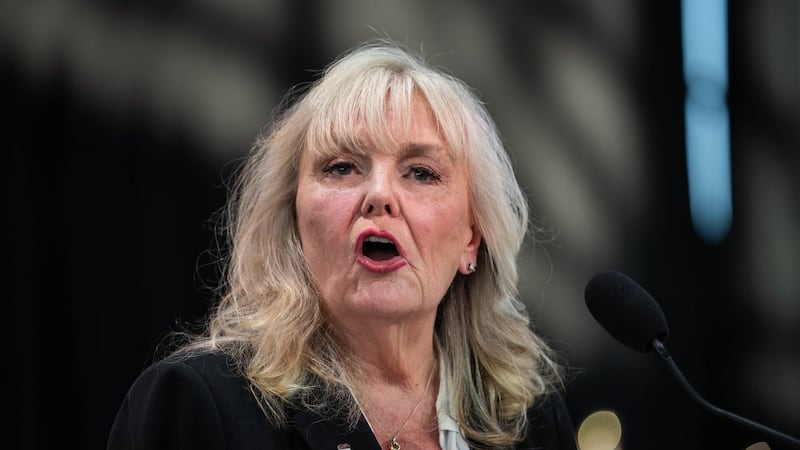
The runway at the Region of Waterloo International Airport was transformed into a race course Saturday as runners and walkers helped raise money for medical flights serving some of the world’s most isolated communities. Mission Aviation Fellowship (MAF) Canada held its second annual Runway Run/Walk in partnership with Run Waterloo, giving participants a rare chance to run on an airport runway while raising money for the organization’s humanitarian aviation work. MAF had raised more than $16,000 as of Saturday, surpassing its $12,000 fundraising goal. The organization said the money will help fund medical evacuation flights, which can cost roughly $600 to $1,000 each depending on the distance and circumstances. MAF Canada board chair Suanne Miedema said the event is about more than simply raising money. “So the key thing out of this was that we’re flying for life. We’re saving lives, literally,” she told CTV News. MAF operates aircraft in remote communities around the world, where roads may be nonexistent or difficult to travel. Chris Thomas, MAF Canada’s vice-president of philanthropy and communications, said the organization’s planes can become the only practical way for people to reach medical care. “Operating in cut off communities is important for us because oftentimes, there’s no roads and the roads are washed out,” Thomas said. “The distances that people have to walk to get to some place [or a] hospital... there’s all different circumstances. And so, oftentimes the only way for that family or that individual to get medical care or to get any kind of care is through our tiny airplanes.” The organization said its aircraft also support humanitarian organizations working in remote areas. Thomas said MAF serves about 1,500 other organizations around the world, allowing trips that could take days by road to be completed in hours. The need can be particularly urgent for children requiring specialized care. Earlier this year, MAF communications staff saw mothers and young children arrive in Uganda from South Sudan for specialized brain surgery. The children had hydrocephalus, a condition caused by a buildup of fluid in the brain. South Sudan has no permanent neurosurgeons, according to MAF. Former MAF pilot Nick Frey knows firsthand what those flights can mean. Frey flew for MAF in the Democratic Republic of Congo from 2011 to 2020. He recalled one flight involving twins born in the jungle. “When we picked up the twins, brought them to the capital city where they had the surgery, and then were able to fly them back after everything was done,” Frey said. “So stuff like that, you’ll never forget.” He said flying in remote regions can involve long flights, difficult terrain and makeshift runways. “I’m a fly single pilot, and I have flown single engine airplanes over some of the most rugged terrain in the world,” Frye said. “The skills that are needed for the pilot are pretty high.” Once on the ground, pilots can face grass airstrips, extreme heat and the logistical challenges of loading and unloading people and supplies. “It can be a long, tiring day when you do it, but you know that you’re making a huge difference to the community there and back in the city,” Frey said. For Christie Bennett, a participant in Saturday’s five-mile race, the cause has a personal connection. Bennett works in air ambulance services at the airport. “I think it’s important to be able to offer services to people in need that don’t have the opportunity to make it to hospitals or transportation and to be able to support them through that is something I’m really passionate about,” Bennett said. She said she sees similarities between the work being done in northern Ontario and MAF’s work internationally. “We operate in northern Ontario, so to sign up for a company like MAF that does that in third world countries where people don’t have access to healthcare and being able to get them to appointments or emergency services, where otherwise it wouldn’t be possible, I think is super important.” The Runway Run/Walk included a 200-metre children’s fun run as well as two-mile and five-mile events. Organizers said every dollar raised helps keep aircraft operational, maintain planes and support the people who fly them into communities where other forms of transportation may not be an option. Thomas said MAF aircraft are taking off or landing somewhere in the world roughly every seven minutes. “Every dollar makes a difference,” he said. “And so for us, it’s about keeping our airplanes operational, keeping up with maintenance, making sure that we have [people] to fuel the planes and to get them where they need to go to save the lives and to bring in the emergency care that we need to do.” For Frey, the importance of the flights can be understood through a simple scenario. “Imagine you break your leg and the nearest hospital is five days walk away,” he said. “It’s kind of hard to walk with a broken leg, so I think an airplane can come in and take you to the hospital within hours.” “It’s a matter of life and death really.”