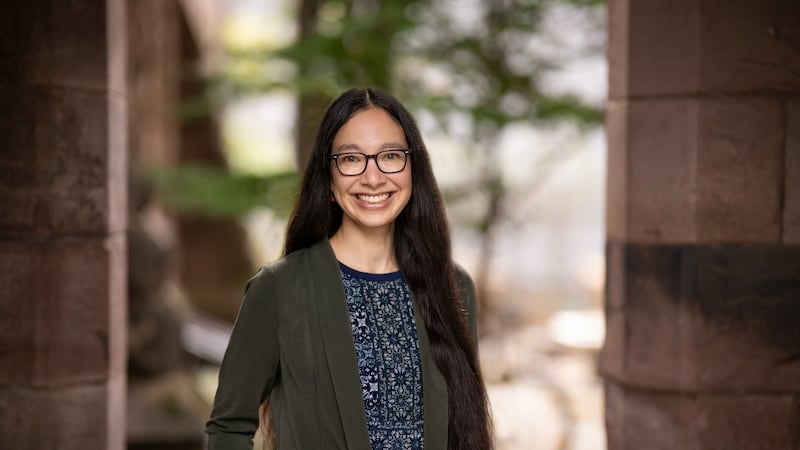
OTTAWA – Jilleen Niles sits in a bed at the Ottawa Hospital, fatigued from five hours of chemotherapy, but determined to speak out to prevent others from sitting in the same spot. At just 38 years old, she was diagnosed with Stage 3 colon cancer. But Niles’ symptoms started three and a half years before, after the birth of her son Jack. As pain increased, she pushed a series of doctors for answers, “begging to be heard.” For two years, she felt ignored, even as she detailed symptoms including blood in her stool and “devastating” pain that had her crying to get through the workday. Her grandmother died of colon cancer about 15 years ago – a fact she says she also shared with doctors. “The doctors would tell me, it’s, you know, normal post-pregnancy symptoms.” Niles is Indigenous, originally from the Sipekne’katik First Nation in Nova Scotia. She feels she experienced stigma on the long road to diagnosis, with doctors quick to offer strong pain medications. “I would say, ‘No. I don’t want the pain pills. I want answers, like real answers.’ And I find that it’s easier to give somebody pain pills and not investigate. And then that stigma that Indigenous people are facing every single day, it’s devastating,” she said. Niles has a broader lens of understanding. Before cancer treatment caused her to stop working, she worked in the mental health field as a crisis intake worker at an Indigenous health centre. “I have a lot of background dealing with people who are suffering those issues and not being heard,” she said. “Being on the other side of the window now, and advocating for myself, and me not [being] medication seeking, and me not being heard — it’s incredibly frustrating.” She did feel she was listened to during the years her own doctor was at that health centre, but once she started working there, policy dictated it a conflict of interest to stay on as a patient. It took her three different outside doctors before she found one who would order the tests needed to discover her colon cancer, which had created a large tumour that extends around her spine. “Now I’m grateful that I’m being treated in a good way and have a really great, strong healthcare team around me now. But I just wish I had it then, and I was heard earlier,” she said. Indigenous cancer program Part of that health-care team includes nurse Diego Cezer. He is an Indigenous Nurse Navigator with The Ottawa Hospital’s Indigenous Cancer Program. He says, unfortunately, elements of Niles’ story are not unique, in terms of having to push hard to be heard and getting a later diagnosis. “There definitely is some stigma, and there is still some racism, and all of that is underneath a historical background,” he said. “Within my job, I try to build bridges both between patients and the hospital, and the health-care providers within, and the communities or the programs that we work with, to break down those barriers.” Cezer showed CTV News a room for Indigenous cancer patients in the hospital where they are allowed to smudge (there’s a special exhaust system set up) and take time to reflect. It’s a quiet, calm space designed to look less clinical than other spaces in the hospital. One wall is lined with a winter forest scene, and art from various First Nations and Inuit communities covers the walls. It’s been helpful for Niles. “We need to feel that we have somewhere to go to, because in the Indigenous community, it’s all about togetherness, and having a place of belonging and feeling welcomed.” Indigenous cancer rates CTV News has been reporting on higher instances of younger Canadians diagnosed with colon cancer, and the push across the country to lower cancer screening ages. PEI and Ontario recently dropped theirs from age 50 to age 45. A new study this month from health research organization ICES found First Nations people in Ontario are less likely to survive cervical, colon and breast cancer after diagnosis compared to non-Indigenous Ontarians. Radiation oncologist Dr. Marc Gaudet says the picture across Canada is concerning. “There seems to be quite a trend across the country that both incidence rates and mortality from colorectal cancer have increased in our Indigenous, Inuit, Métis populations, which is kind of alarming, to be honest. And we see that across essentially all ages,” he told CTV News. “That increase seems to be quite a bit greater than the rest of the Canadian population, which again seems quite alarming.” Gaudet heads the radiation medicine program at The Ottawa Hospital. He is also one of the first two oncologists ever licensed to practice in Nunavut. He and a colleague have been treating communities in the North for four-and-a-half years, giving him a deeper understanding of the issues facing Indigenous cancer patients. Like Niles, he says advocating for yourself as a patient is so important. His work includes coaching both patients and healthcare providers on what the symptoms of cancer look like. “They can assume wrongly that sometimes someone is seeking medication… and that can create a difficult situation where we’re not recognizing the actual symptoms of cancer. And unfortunately, in my practice, I’ve seen that quite a few times,” he said. He acknowledges it can be very difficult for a patient to bring everything up in a short interaction in a walk-in clinic or in the emergency room, but encourages speaking out if one is worried about cancer. “Saying, ‘I’m afraid of this. I feel something is completely abnormal in my body,’…that’s often times one of the conversations that’s moved things forward, because then what you’re worried about is actually recognized, and often times that can lead to more testing,” Gaudet says. That’s Niles’ message too – even though it took her much longer to get answers. She wants to share her story to empower others to push for the answers they need. Now, she is grieving all the parts of her life where she has had to hit pause. She can’t work and has had to step back from several volunteer positions. Her twin sister, Janelle, set up a GoFundMe to help with her cost of living during treatment. “We need to help Jilleen the way she helps the community,” Janelle Niles told CTV News. “Jilleen is fighting in her way right now, and she’s going to create awareness, cancer awareness, and make sure that every single person, Indigenous or not, is looked at with a different lens than somebody who might be medication-seeking or conflating their issues.” Of all the things Jilleen has had to step back from, most difficult is being far less hands-on with her beloved three-year-old, Jack. “I’m watching my son’s life through my cancer, and I don’t feel like that’s fair. It’s very unfair because I want to be the best mom I can be in the world,” she said. “Hopefully I’ll make that up to him next year, and for the rest of his life.”