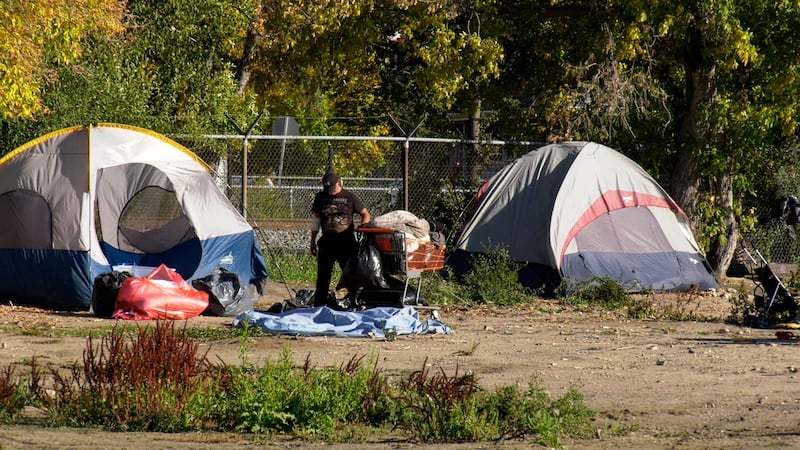
The sister of a Fredericton man who died of a drug-related death in December calls a new overnight outreach van a great start as Ottawa commits to funding the project for a year but also believes more needs to be done to get people housed. Cassandra Leblanc, a Fredericton City Councillor and Executive Director of Fredericton Community Kitchens, is reminded of her late brother Brody every day she enters the Community Kitchen in downtown Fredericton. “RIP Brody” was written on its outside wall. Leblanc doesn’t know who wrote it. Whoever did, left the gift of Brody’s memory for his sister. “I don’t know if it’s for my brother, but I’m going to say it is,” she said while pointing it out. Her brother died in December 2024 at just 33. “My brother didn’t die of a fentanyl overdose, but we believe that he was taking fentanyl at the time and he actually froze to death,” she said. “He had his issues and his struggles, but I loved him dearly. My whole family loved him dearly and I think there’s a lot of Brodys out there who are deeply loved by family who feel helpless in this fentanyl crisis and homelessness crisis we’re all going through in this community.” National health data shows 7,146 Canadians died of an opioid overdose in 2024. That’s a 17 per cent drop from the year before but still very high compared to previous years. Most of those deaths involved fentanyl. Eighty per cent of the apparent opioid deaths in Canada occurred in British Columbia, Alberta, and Ontario. In New Brunswick, while the rates of overdose deaths were highest in 2023, rates remained elevated in 2024, and the proportion of fentanyl-involved deaths reached an all-time high last year at 57 per cent. Ottawa is spending $2.8 million on four programs in Atlantic Canada in a bid to support those on the front lines. In Fredericton, more than half a million dollars will fund a new overnight outreach van run by the John Howard Society. The rest of the federal money will fund the development of a wraparound treatment centre in Miramichi, N.B., an indigenous peer support circle at the First Light Friendship Centre in St. John’s, N.L., and a mobile outreach program in Amherst, N.S. “This is a national crisis. And we are talking about people,” said Minister of Health Marjorie Michel. She added there’s no one size fits all approach. “Communities know what they need to address this crisis. They have the insight to identify what will work for them and this is why our federal government are there to support their initiatives.” The overnight van has been operating since April. John Howard Society Executive Director John Barrow said the team of two connects with around 30 people each night. From 7 p.m. to 7 a.m., the team drives around Fredericton offering help like water, a snack, a blanket, bug spray or naloxone kit. They can also drive clients to shelters or hospitals where appropriate. “Just be able to get them what they need. Of course, like we said, naloxone is a big part of it. Even just a simple conversation. We’re seeing lots of clients are very appreciative,” said Azlyn Mitton, an outreach worker. The team is trained to administer naloxone if needed. They’re in contact with bylaw officers or Fredericton police and can be called in to help assist with wellness checks and explain how their response can help free up emergency services to go to other calls instead. Outreach worker Amethyst Eatmon has noticed the opioid crisis get worse. “It’s not just local anymore,” she said. “It used to be that Moncton was bad. Saint John was bad. Everywhere is bad now.” Eatmon sees her work on the overnight van as a way to help the community get ahead of the situation. She also points out other ways her team can help, such as paperwork and referrals to help get people housed. “There’s just so many gaps and it’s like you’re not going to be able to fill them all. But like this is a really good start for sure,” she said. Leblanc is also a big supporter of the outreach service by the John Howard Society. “Having people in place over1night might have saved my brother and will save other people 100 per cent and give them that chance at life that my brother’s life was ended so short at 33. She also notes more needs to be done. “We need to really, really focus on housing and getting people housed, because at the end of the day, I can’t even fathom what it would be like to try to fight this addiction while living on the streets of your city. People need stability, they need support, and they need housing, and they need it now,” she said. Moncton organization will soon add shuttle Ensemble Greater Moncton, New Brunswick’s only overdose prevention site, had approximately 8,000 visits last year. Its Executive Director Scott Phipps notes as the population grows, so do the number of overdoses but notes that government funding on harm reduction can save dollars down the line by preventing emergency room visits. He called Ottawa’s funding announcement a step in the right direction. “For every dollar spent on the harm reduction realm, it saves the government anywhere from $5 to $7,” said Phipps. Phipps said Ensemble Greater Moncton is building a dedicated shuttle service for the vulnerable community. The van will help people with heat stress, frostbite, getting people into shelters and food programs. “We’re just establishing the infrastructure around that in terms of the specific driver, the team, the training, the route. Because it will have a very fixed route. Because people will become quite reliant on that,” he said. At this point, the cost of the vehicle is already covered but Phipps said they’ll need funding to cover its operation and maintenance costs, and they’ll be looking for any kind of support whether it be municipal, provincial or federal. “We would be more than pleased to receive federal support if it was to come our way.”