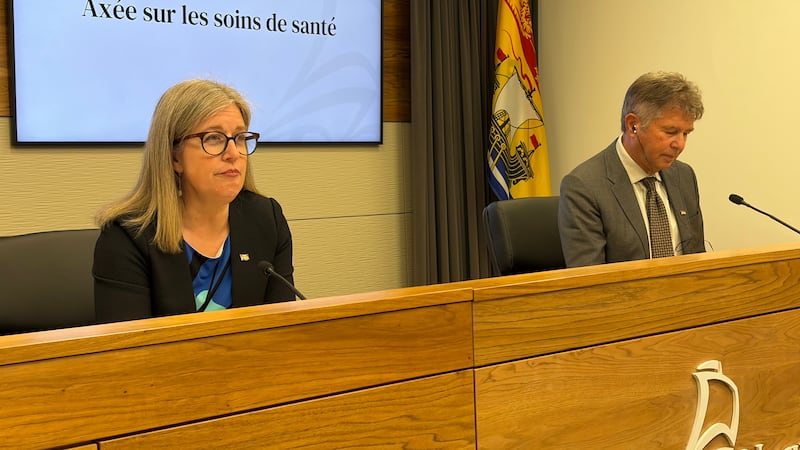
Premier Danielle Smith says she will appeal a judge’s decision to throw out the separation petition. Alberta NDP MLA Rakhi Pancholi joins Alberta Primetime to discuss the future of the petition and the party’s plans for the summer. This interview has been edited for length and clarity. Michael Higgins: I’d like to start on the courts and the separation petition, throwing that out. Your party calls the petition dead, the premier says she’s going to consult with her cabinet and caucus on what to do in terms of options. Where do you stand on spending taxpayer dollars on an appeal? Rakhi Pancholi: Essentially, the premier has one choice right now. The choice is whether or not she is going to put on the agenda in the fall, in October for Albertans, a separatism referendum. The petition itself has been struck down, actually twice now, by Alberta courts, first in December and again most recently. If the premier decides to once again invest not just her energy and her government support but also taxpayer dollars into appealing this decision, she is making it very clear that she wants a separatism referendum, but now the only choice is for her to be the one to put it on the agenda for Albertans. Let’s be clear, this isn’t actually a big surprise, her actions have indicated, for the last year, that she does support having a petition on separatism and a referendum held by Albertans. At this point, Danielle Smith and the UCP have to be judged by their actions and not just their words, and their actions suggest that they are a separatist party and she is a separatist premier. MH: Where do you land on the premier suggesting the possible use of the notwithstanding clause on the separatist petition? RP: This is a problem when you’ve got a premier who doesn’t actually understand the constitution. The Charter of Rights and Freedoms is absolutely crystal clear that Section 33, the notwithstanding clause, does not apply to treaty rights, which are protected under Section 35 of the Charter. There is actually no ability here for the government to use the notwithstanding clause to strike down this decision. We’ve heard the premier call this decision, most recently by Justice Leonard, undemocratic. She can take issue with the legality, she has a right to appeal the decision, not to use taxpayer dollars necessarily to do that, but she may do that legally. But this is not undemocratic. When the premier says that, what she’s essentially telling Albertans is that she doesn’t believe her government should be subject to the law. Our courts and the rule of law are part of our democratic system, and courts regularly and have to apply the constitution and the Charter to make sure that governments are complying with the law as well. She may not like the decision, but that does not make it undemocratic, and it is incredibly dangerous for her to call it that. MH: You’re on the committee of MLAs looking at what to do with the Forever Canadian petition. What’s the likelihood of Thomas Lukaszuk’s question ending up on the October 19 referendum ballot? RP: Whatever the question may be, whether it’s the language that was used in the Forever Canadian petition or the language of the separatists, at this point, any referendum on separatism that comes forward will be a UCP and a Danielle Smith referendum. She can use whichever question she wants. But as a member of that committee, earlier this week, we heard from a retired Supreme Court justice and we heard from the chief electoral officer that the petition itself submitted under the Forever Canadian was not actually a petition for a referendum. MH: The premier maintains there’s still confusion over that. RP: I know she does say that, but she should have been listening to her members and to hear the presentation at the committee just this week as a retired Supreme Court justice and the chief electoral officer made it very, very clear that there is no misinterpretation here, and it is not the petitioner who gets to decide what’s going to be done with this. They made it very clear this is not a petition for a referendum, it is a policy proposal petition. We also heard from the chief electoral officer that the over 400,000 Albertans who signed that petition, they didn’t sign a petition asking for a referendum. They signed a petition saying, ‘Do you agree that Alberta should remain in Canada.’ So if there is going to be a referendum, even on the Forever Canadian question, that is because it is the premier and the UCP deciding to have a referendum. They have to own it. They can’t hide behind Thomas Lukaczyk, they can’t hide behind the French separatists in her party. It is her referendum. MH: So much focus this week has been on the separation petition, so that means lingering now in the background is the electoral list breach. Is it enough that Elections Alberta and the RCMP are investigating? Could or should the government be doing more? RP: What the government should be doing is leading. The release of the electors list to, let’s be honest, the most bad actors in the separatist movement is the largest data breach in Canadian history. We have heard nothing from the premier to provide calm to Albertans, to indicate to them suggestions about how to protect their financial security, their identity, all those pieces that Albertans were looking for leadership from this premier, we have heard nothing about it. She’s been very silent on that. Really importantly, no matter what happens, this data breach alone is enough to call into question why there should be any referendum on separatism. There has been an unprecedented breach of personal information of Albertans. It will be used and abused. We also know that David Parker, who is part of that breach, is refusing to cooperate with Elections Alberta and to actually commit to the fact that he’s no longer using that electors list. There’s no legitimate or valid way at this point for a referendum to be held on separatism, and then we had the court striking it down as well. What the premier should be doing is leading and calling up her friends in the separatist movement, saying to cooperate with investigators, stop using that list, and we cannot hold a referendum under these circumstances. MH: The reason we’re here to talk is the fact that the spring sitting of the legislature has quietly come to a close. A session where the government brought forward, I believe, 17 bills, all were passed. From the opposition side of the benches, what did the session accomplish? RP: I think it accomplished quite a bit, actually, because we did see a number of bills from this government, but none of those bills addressed the key priorities of Albertans. We continue to hear from Albertans their top priority is cost of living and affordability, they’re concerned about health care, they’re concerned about the jobs and their wages, which have not risen. Those are the things that are the priorities of Albertans, but the bills that were introduced in the legislature were things about banning books and libraries, and banning flags in schools. None of those issues speak to the heart of Albertans’ priorities. Meanwhile, the Official Opposition continued to bring in a number of pieces of private members’ bills focused on protection. MH: All were defeated by the government. Why the lack of collaboration there? Why can’t you get together on some of these … a lot of affordability-type measures? RP: You’d think that there should be some unanimity on some of these pieces, and certainly we’ve put forward some good ideas. Of course, the government has a majority, it has the power in the legislature to make decisions about what’s going to pass and what’s not going to pass. We encouraged, a number of times, the government to work with us. There were some very straightforward, easy yeses for the government in there, and they chose not to do it. I think the polarization, the division in the legislature, is reflective of what we’re seeing outside as well. There should be opportunities for collaboration, but we will continue to put our good ideas forward to Albertans to talk about the things that they care about and put forward measures that will help them. Affordability with health care, with good jobs, good-paying jobs, those are the things that we’ll continue to focus on and spend the summer talking about. As well as our support for Alberta remaining in Canada, and making sure that the world knows, and Alberta knows, that we are proud Canadians and proud Albertans, and we’re focused on moving forward together.