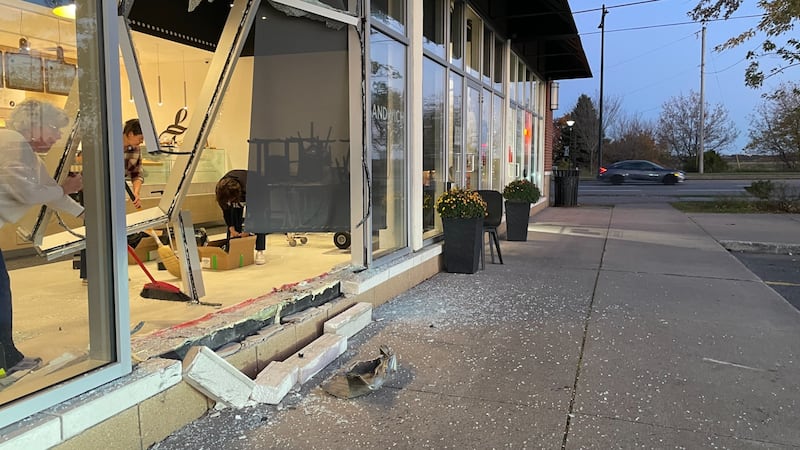
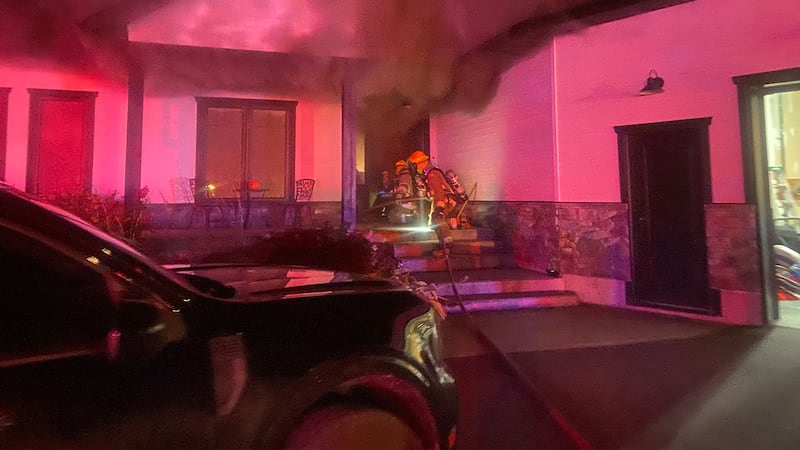
Since 2023, the city has been making an effort to deal with derelict residential properties, but hasn’t had the same luck on the commercial side of things, and it’s been creating issues for neighbouring businesses. Earlier this month, a fire broke out at an abandoned business in Alberta Avenue, damaging its neighbour The Aviary, a local music venue. “That’s a really terrible incident to happen right next door,” said Ward Métis Coun. Ashley Salvador in a recent interview. “This is an example of the detrimental effect those kinds of properties can have on our neighbourhoods.” The city defines derelict, or, “problem properties,” as those which are occupied or unoccupied residential and commercial that have significant harmful impacts on the surrounding community. They often have histories of recurring violations relating to development permits, safety codes, nuisance conditions, public health, fire risk, or other illegal activity. In a social media post, The Aviary called on the city to start having “serious conversations” about abandoned commercial properties in Edmonton. But it hasn’t been easy for the city to address derelict commercial properties under the Municipal Government Act. “It sets out different criteria for what defines a derelict commercial property,” said Ward O-day’min Coun. Anne Stevenson. “Primarily, it has to be proven to be unoccupied for over a year – that can add some nuance and some complexity just in terms of how we measure that and how the courts interpret that.” Stevenson made note of Dwayne’s Home, a former transitional housing facility in Edmonton’s core. “That got challenged in the courts and the city’s decisions were upheld,” she said. The building has been sitting vacant for years and has been subject to several break-ins and fires. A demolition order was issued by the city which was then challenged and upheld, but the owner still had a year to comply with the order. Demolition did not occur within the time frame, prompting the city to offer a demo, with the price going onto the owner’s property taxes. At that point, the owner began their own demolition. “A challenge is a lot of our legislation really protects private property interests, for many understandable reasons, but it can mean a very slow turnaround,” said Stevenson. “These derelict properties can be in our communities for years, for decades, in some cases.” The city implemented its 2023 to 2026 Approach to Problem Properties to address derelict property issues within Edmonton. The initiative increased enforcement and escalated consequences to gain compliance through a centralized office with four coordinated teams. Since the initiative began, teams addressed 2,040 “unique properties.” In 2025, teams collectively addressed 1,420 properties, 750 of which are considered unsecured vacant properties that pose a fire risk to the surrounding community. Initiated by Salvador, the city implemented a derelict residential subclass in 2024, allowing the city to charge three-times the tax rate to owners of properties that are assessed as derelict. The subclass can be applied to residential properties in mature neighbourhoods that show serious signs of neglect, are falling into significant disrepair, or are unlivable. “We’ve seen some really excellent results: about a 30-per-cent reduction in structure fires, hundreds of demolitions and redevelopment on these sites,” said Salvador. “However, there are still challenges when it comes to vacant and derelict commercial properties … council has provided direction to city staff to come back with a report that will look at what options we have to take a stronger approach on the commercial side.” But data from Edmonton Fire and Rescue Services (EFRS) showed there were 88 fires at vacant properties in 2025, the highest in at least five years. EFRS said 38 of those were deliberately set: EFRS did not specify how many of those properties were residential or commercial. “Our fire inspectors monitor unsecure vacant properties that have been identified a minimum of every 30 days or on a complaint basis,” said an email from EFRS to CTV News Edmonton. Right now, that’s the most people can really do, said Stevenson, is complain. “It may seem like a small thing, but I really encourage Edmontonians to report these properties on a regular basis when they’re causing nuisances,” she said. “Having those reports is actually a really important way the city can establish that there has been a negative impact in the community, and allows our community peace officers to take enforcement action.” Reports can be submitted to the city through 311. Community impact Chantal Cooknell, president of the Alberta Avenue Community League, said her neighbourhood deserves better. “It’s really sad to drive down 111 Avenue in the area where that fire was. It’s derelict. It’s destitute,” said Cooknell. “We’ve heard from community members that they’d like to see better for our community … and to see our community flourish.” Alberta Avenue has a high concentration of derelict properties compared to other neighbourhoods in the city – a mix of both residential and commercial. Cooknell said the 111 Avenue strip used to be a vibrant and active part of Alberta Avenue, a “gateway to sports” once serving as a primary thoroughfare to Rexall Place. “That used to be the identity of the community for a very long time, and I think as hockey is moved outside the community and our football has struggled a little bit, the community has also struggled to rebound from that,” she said. While the city has made moves to deal with residential derelict properties in the area, Cooknell said it can often take a long time for buildings to get demolished or for anything to be built in their place. “Those properties sit there for years and years and years, and we’d really like to see some more enforcement around demolition of those properties.” One of the city’s problem property teams has identified Alberta Avenue as a neighbourhood most affected by seriously neglected private properties among several others including Allendale, Calder, Central McDougall, Eastwood, Garneau, Glenwood, Inglewood, McCauley, McKernan, Parkdale, Queen Alexandra, Queen Mary Park, Strathcona, and West Jasper Place. City data Between January 2023 and November 2025, city team collectively: City officers can issue tickets at escalating amounts for properties that are found to be in repeat violation of bylaws, starting at $250. The city issued 1,277 tickets and 1,321 warnings between 2023 and 2025 Costs for remedial action work completed by the city are charged to the tax roll of the property owner. “As with all bylaw violations, officers seek out and attempt to contact the owner to ascertain their intentions with the building as well as promote positive community development options like sale and safe occupancy to ensure the property remains secured, neat and tidy,” said the city. EFRS may also order property owners to implement additional security measures to ensure vacant buildings cannot be accessed.