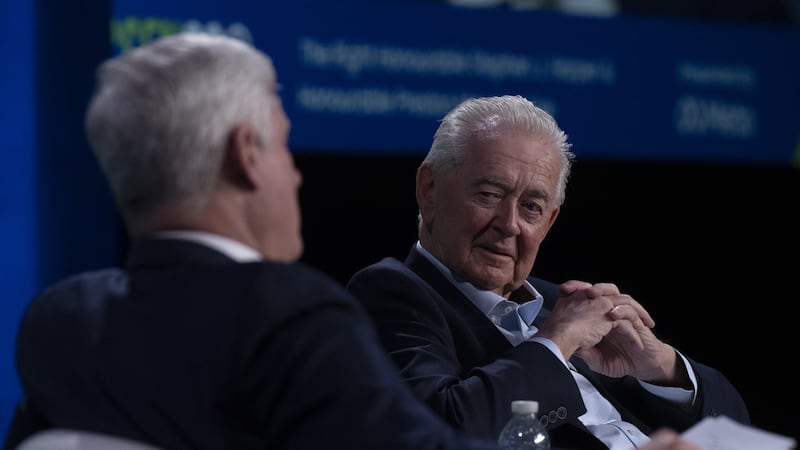
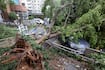
Calgary Mayor Jeromy Farkas joins Alberta Primetime host Michael Higgins to discuss the break in the Bearspaw Feedermain and what the “new normal” looks like for Calgarians as work begins to replace the water main. This interview has been edited for clarity and length. Michael Higgins: You’ve describe this water main as a “ticking time bomb.” What are the ongoing realities of the situation? Jeromy Farkas: First off, I just want to say thank you to Calgarians for their incredible patience with us. This is an incredibly frustrating situation for us to be in, not just twice, but let alone once as a city. I want to say thank you to the amazing first responders who immediately were on scene attending and doing life saving rescues. And more than anyone else to the frontline crews who have been digging in the trenches 24/7. We’ve been putting out regular photo and video updates. The repairs are ongoing. In the short term, we really have to rally together as a community. Our water use is at an unsustainable level, and we’re potentially soon entering into loss of life territory where we may not have enough water to be able to supply the needed water pressure to our fire hydrants. It’s really important for us to continue to support each other, to take those needed measures, to be able to keep our showers to three minutes or less, only run laundry and dishes when full, delay needed a flushing of toilets. All of these very small actions by more than half a million households will add up to a big difference so we can actually solve this problem once and for all. MH: What does the “new normal” look like for Calgarians as this feedermain is replaced over the next couple of years? JF: When I spoke to Calgarians earlier this week, I really wanted to be transparent and clear in terms of this new reality that we’re facing. The reality is this Bearspaw Feedermain, about 6,000 metres, is rotting from the inside. It cannot be redeemed. It cannot be fixed. This new reality is that this could break again next week, could break against next month, could break against next year. It is a ticking time bomb until we completely replace that pipe, which we will do faster than anything we’ve ever done before. Until then we need to be prepared for more regular, more proactive shutdowns. This is a pipe that is sick. It is terminally ill. It cannot be fixed for good, which means that we’re going to have to change how we operate. Potentially less water flowing through the pipe, certainly more proactive shutdowns in the spring and fall. This is our new reality, where we really need to value water as the life enabling resource that it is. This is not forever. We do need to make sure we’re supporting our first responders on the front line, so when our fire department is responding to emergencies hey have the water that they need to be able to save those lives. MH: Council has received a report from an independent panel of experts on what went wrong during the 2024 failure, and how government oversight could change. What needs to be the key takeaways from that report? JF: I want to say thank you to the incredible panel experts. Collectively the people contributing to this report represent over a century of experience running pipeline companies, public water utilities. They are the experts in terms of not just accountability but also flushing out that path forward for us. Our council is unanimous. We are committed to actioning those recommendations. We are doing the short-term immediate fix. We’re doing the medium-term replacement pipe. In the long term we need to make sure we’re better governing and holding accountable our city administration. That we’re better setting up our systems for success. So again, it’s going to require us all working together. Speaking on behalf of my council colleagues, we are committed to getting this done. MH: On that last point, how do you respond to those who feel this is a problem overlooked for years, one that should have been dealt with but wasn’t? JF: Where that’s been identified in the report we’re going to action that, we’re going to better design the systems. I’m not going to presuppose council direction on that, but I think we’re moving to a direction of wholly-owned subsidiary, similar to how we see Epcor in Edmonton or Enmax in Calgary. This can’t be happening again. I know there’s some people are asking, well, who is to blame? If you want to blame anybody, you can blame me. I am the mayor of Calgary. I may have been here for only the last 100 days, but I’m personally responsible. I am personally accountable for getting this done. We are going to move faster than we ever have to get this done so Calgarians can have safe and clean drinking water. In the immediate sense, I really need to be crystal clear with Calgarians: we are in a crisis situation. During the winter we only have so much water to work with because our Glenmore reservoir is filled up during other times of the year. Think of this like a blinking battery alert on your smartphone. The battery is being drawn out, and once it gets to zero, we don’t have any left until the spring and fall when it replenishes. There is an urgent, life-saving need for Calgarians to continue to step up, to do our part, to support our neighbors and our first responders. MH: The premier has called the situation unacceptable. There have been suggestions of stronger provincial oversight of municipal water infrastructure. Where are your discussions with the Smith government at? JF: I agree with the premier. This is unacceptable. This is a critical public good. It’s a life-enabling resource that Calgarians need to know they can rely. I’m really pleased with my initial conversations with the premier. She was engaged within minutes of the feeder main breaking earlier last week. Immediately after the break she was engaged, offering assistance as well as constant contact with her ministers. She has a good point, if further resources are going to be asked for from the provincial government that should come with greater oversight and accountability. I very much welcome that. I think having greater assurance that this won’t happen again would go a long way to rebuild trust overall. MH: How worried are you about the overall impact this situation could have on perceptions of Calgary and its appeal as a destination for new businesses and industries? JF: If anything else, with the 2013 flood, other setbacks, we’ve always come back stronger than ever. That’s why I’m really grateful to the Calgarians who have already rallied to be able to reduce water consumption. Our message is really out to those folks who may have been traveling or not otherwise plugged in during the holidays. It is so critical right now for us to step up together as a community, not just to support each other as neighbors, but to support specifically our first responders. We need to make sure when those firefighters respond to emergencies they can rely on the water coming out of those fire hydrants. There is an end in sight, but it’s going to require myself as mayor as well as my council colleagues, to be crystal clear and transparent with Calgarians about the path forward. There is an end in sight, but in the short term, we’ve really got to continue to rally and support each other.