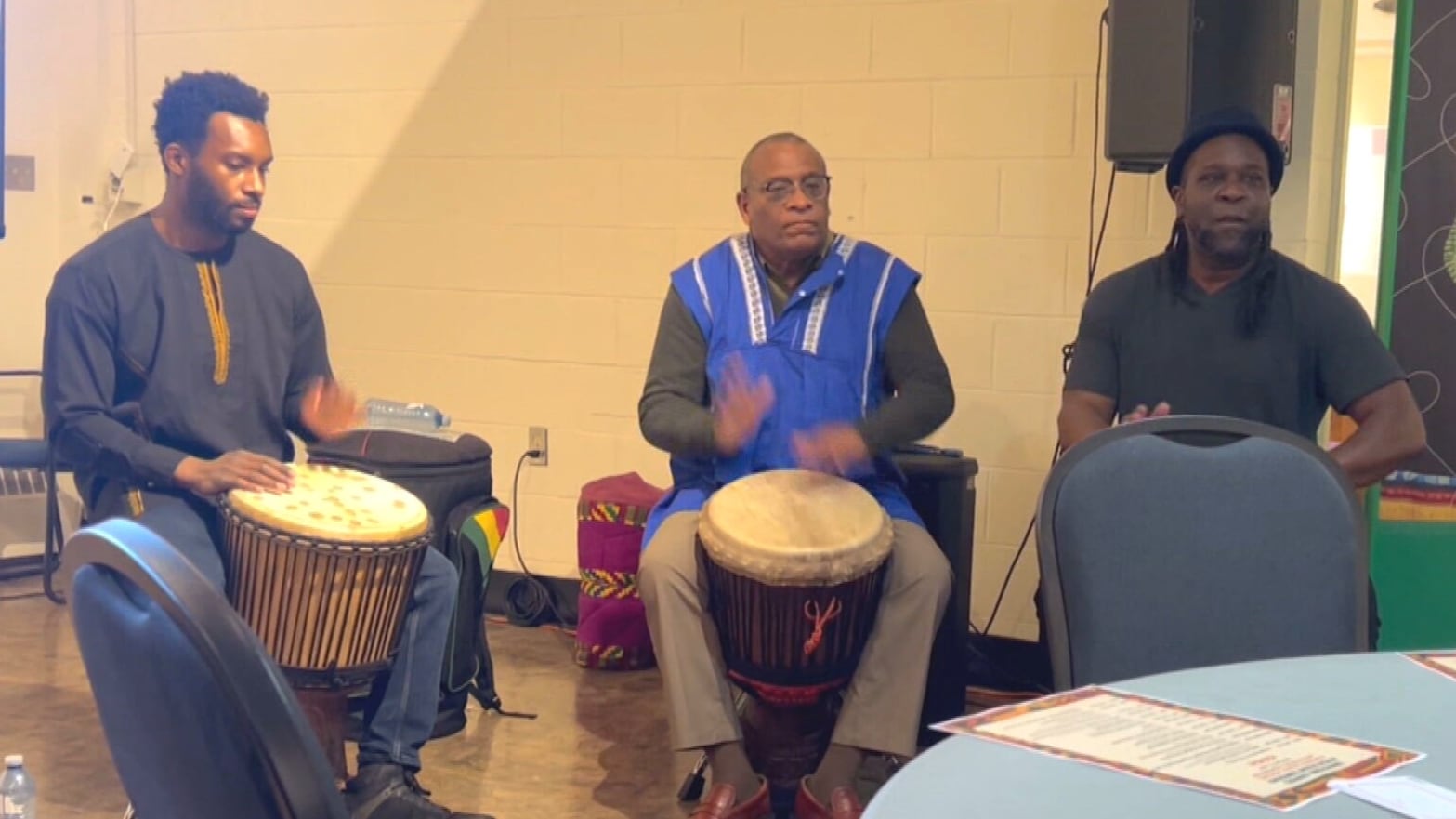
As a celebration of Black History Month, a large group of Nova Scotia Correctional Services (NSCS) employees of African descent gathered at the Black Cultural Centre for Nova Scotia, to acknowledge and discuss the future of their work. The all-day seminar featured a drum performance, numerous speeches and testimonials from parole officers and others working in inmate supervision, which includes supporting inmates transitioning back into the community. As a setting for the event, the Black Cultural Centre for Nova Scotia also features a two-floor museum that celebrates the history and cultures of African Nova Scotians. “We are here to celebrate our team,” said NSCS Manager of Training and Development Justin Skinner. “We are here to support folks in the community and support folks in the correctional facilities by reintegrating them back into society.” When Mary Sisco-Sleigh began her career more than 20 years ago, there were very few Black women working in correctional services. Over the years, those numbers have grown. Along with her co-workers, Sisco-Sleigh wants to use this occasion to discover new strategies leading to a continued positive impact on inmates. “I came in to make a difference,” said Sisco-Sleigh. “We want to see and hear the needs of what is being talked about and what is being addressed. And then, we’ll see how we can meet those needs.” One strategy is to increase the number of African Nova Scotians working in the correctional system, organizers say, at a time when Indigenous and Black inmates are overrepresented in prison and corrections facilities compared to the general population. According to Statistics Canada, in 2023-2024, Indigenous adults were incarcerated at a rate 10 times higher than non-Indigenous adults in Prince Edward Island, Nova Scotia, Ontario, Saskatchewan, Alberta and British Columbia. During that same 12-month period, Black adults were incarcerated at a rate three times that of the white population in Nova Scotia, Ontario, Alberta and British Columbia. Nova Scotia Correctional Services Cultural Services Advisor Scott Borden said, recruiting more Corrections Services employees of African and Indigenous descent would be a positive step toward productive relationships with inmates, helping them re-enter society post-incarceration. “We are overrepresented on the inmate side with African Nova Scotian and Indigenous people across the country,” said NSCS Cultural Services Advisor Scott Borden. “And on the other side of it, where the people are working, we are underrepresented. So, we’re trying to balance it up, so when people see us, they could maybe see themselves in positive roles and in a positive light, we can make a change in that way.”