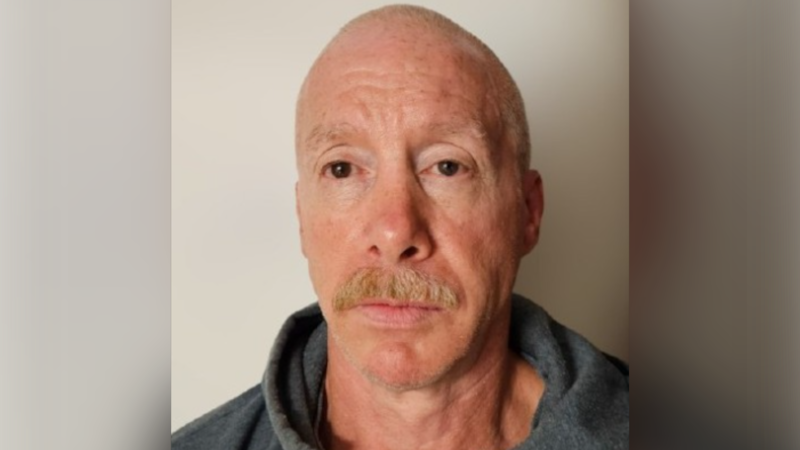
As a sentencing hearing begins for a man convicted of sexually assaulting three vulnerable women and drugging one of them, one victim is unveiling her identity and face to the public for the first time. An Alberta court lifted a publication ban on Aimee Ert’s identity on Tuesday as Crown lawyers returned to court to begin arguments for how long convicted serial rapist Richard Mantha’s prison sentence should be. Mantha, now 62, was convicted for assaults against three women, including two counts of sexual assault, as well as choking while committing a sexual assault and administering a noxious substance. He was also found guilty of assault with a weapon and uttering threats against a fourth woman. Ert previously testified she was drugged, choked and sexually assaulted after she agreed to go with Mantha to his acreage east of Calgary. She was able to escape from him, running from the property partially clothed. Ert read two victim impact statements to the court on Tuesday — one from when she was 17 months sober and the other written when she was four years sober. She said her encounters with Mantha made her believe she was “going to die that day.” “I do know no one deserves to be put through what he put me through,” her statement said. “I learned in recovery to forgive. I forgive Richard Mantha, for myself, not for him.” Ert said she hopes Mantha can receive help but also face a sentence for his crimes. ‘I want people to know what it takes’ Ert’s name is newly public after her successful application to have the publication ban lifted. She said she made the application because she wanted people to know her name and her face. “I want to inspire people. I want people to know what it takes. I want them to feel inspired, because people who knew me knew my desperation,” Ert told reporters outside the courtroom on Tuesday afternoon. Ert’s victim impact statements also spoke about how she fought Mantha and ran away from him. That moment in particular is something she also wanted the public to know, as that was “one pivotal moment” that she decided she wanted to live. “Sharing that story with people that are still out there, I want to… let them know the possibilities of overcoming it,” she said. Ert also said it was important to read two statements to the courtroom Tuesday so people could also understand the trajectory of her healing journey. “I wanted to make sure that I didn’t want to sound like a victim. I wanted to sound like a survivor, and I wanted it to be known that I’m thriving, regardless of what happened to me and the other women.” Doug King, a justice studies professor at Calgary’s Mount Royal University, said a court granting an application to lift a publication ban is “unusual thing,” especially in cases involving victims and survivors of sexual assault. But still, he said instances where publication bans are lifted usually occur with the victim’s consent to “make the rest of the world understand the magnitude of the issues related to the assault.” “I think it is a statement of survivor-hood as opposed to being a victim,” King told CTV News. He added within the criminal justice system there’s an important distinction between being a victim versus being a survivor of sexual assault. “Being a survivor of sexual assault is much more a sign of restoration of identity and taking back the identity that was largely stolen through the criminal act,” he said. “It says something about the victim who wants to reclaim her dignity and identity to the general public.” The other two victims’ identities remain under a publication ban. Crown seeking 10- to 13-year sentence Crown prosecutors are asking a judge to hand down a 10- to 13-year prison sentence for Mantha. Crown prosecutor Dominique Mathurin said an aggravating factor in her submission is there were unconscious victims while they were sexually assaulted. “Sexual assault elevates an offender’s responsibility for the degree of the crime,” Mathurin said. The defence will also make sentencing arguments on Tuesday. Justice Judith Shriar is presiding over the hearing, and both sides will lay out factors they believe she should consider. Shriar said she has “concerns” over the Crown’s submissions, arguing the “unconsciousness” of the victim may not be an aggravating factor but rather an aspect of the assault. On Tuesday, Mantha sat in the prisoner’s box, wearing a blue jumpsuit and with a scruffy grey beard. He had his head down several times, with his eyes closed. He would look up to listen to the sentencing submissions from the Crown. Court heard some of the women were picked up and driven to a rural acreage east of Calgary, where they were attacked. Other incidents occurred at a Calgary hotel and a local residence. Mantha initially faced 20 charges involving seven women, but the remaining charges were dismissed. The trial began in January 2024 and faced several lengthy delays after Mantha fired previous lawyers and suffered a stroke. He was later found fit to stand trial despite having reduced verbal skills. Mantha’s sentencing date is scheduled for Sept. 17. The judge will also have to consider any time Mantha has already spent in custody.