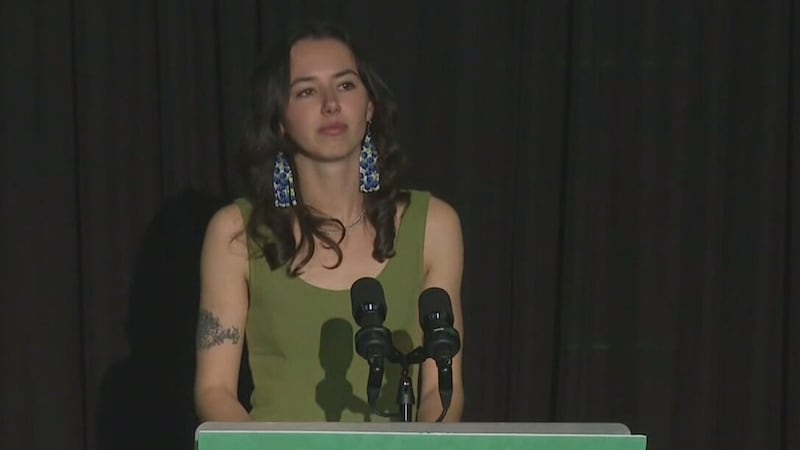
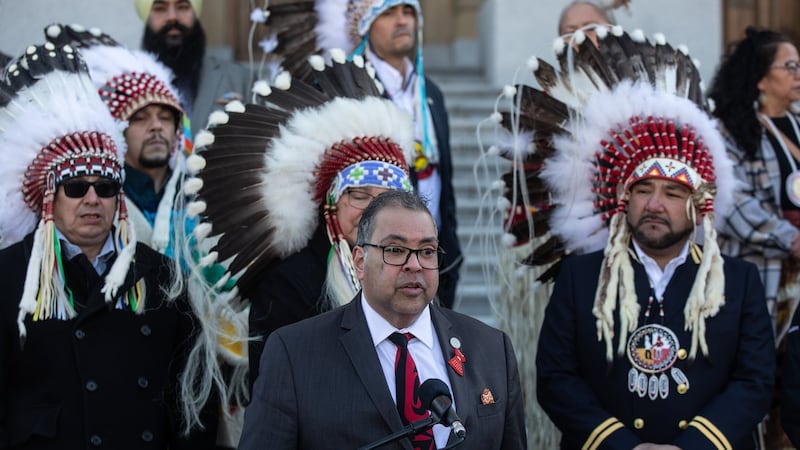
Alberta’s government is preparing to introduce back-to-work legislation as early as Monday, escalating tensions in a labour dispute that has kept thousands of classrooms empty since Oct. 6. Teachers say the province has not adequately addressed classroom resources, staffing, and wages, while the government frames the strike as an urgent crisis. The debate comes amid widespread public rallies, with thousands of teachers and supporters who called for meaningful action outside Alberta’s legislature on Thursday. Madison Nagel, a Calgary grade six teacher, was amongst those attending the public demonstration, hoping to send a message to Premier Danielle Smith. “I don’t think we should go back to work, I think that we need to hold together and show them that going back with no new deal is not sufficient, it’s a write off,” she said. “All of this was for nothing. All of the teachers not getting paid for a month was for nothing,” she said. “Sitting and going to these rallies was for nothing. It’s just basically a slap in the face if they mandate us back to work.” Nagel added that the issue is about more than just salaries. “This is our future,” she added. “This is our province’s future. In the hands of you, it is your job to fix this, and if you’re not willing to fix it, you’re not just failing today. You’re failing future generations and future kids and your grandkids.” Calgary high school teacher Zandra Cerpa Gomez echoed the message. “Listen to teachers. Listen to the students’ voices. Don’t ignore us. We need more resources, more teaching assistance, and reduced class sizes. Please listen to us,” she said. Hillary Duncan, another teacher, highlighted the broader support the movement has received. “We’re educating not just our students, our children, we’re educating our province, and we need to educate our government,” she said. How the legislation could work Christian Cook, a professor of human resources at Mount Royal University specializing in labour and employee relations, outlined how the government plans to move Bill 2, officially called the Back to School Act. “The province is suggesting that the discussion question period consultation could be as little as one hour per reading so it could move through those three stages much more quickly than almost anything else,” Cook said. “There would be very few cases, over a very long history, that could be considered under this kind of categorization for something that has been scheduled to move this expeditiously.” Cook explained that Premier Danielle Smith’s office has framed the dispute as urgent, citing potential harm to students and the broader public. “The government, specifically, our premier, has signaled that this labour dispute is causing ‘irreparable harm,’ and I’ve also heard the term ‘intolerable hardship,’ and by that, she means for the students that are currently not in the classroom,” she said. The legislation could compel teachers to return within days. “Some are suggesting in as little as 48 hours, so really a couple of business days until the teachers are forced back to work,” Cook said. She added that the bill could override the province’s labour relations code, effectively making the ongoing strike illegal. “When workers engage in an illegal strike, a number of things can happen — everything from suspensions without pay to fines against the association,” Cook said. Cook also outlined how the government could influence negotiations even after teachers are forced back. “As part of this legislation, the government could impose binding arbitration as a solution. So each of the two parties — the employer’s bargaining unit and the teachers’ association — present essentially their case to a third-party arbiter, and they will impose that decision,” she said. Despite the looming legislation, Cook stressed that the collective bargaining process and other aspects of the labour code would continue. She also addressed how teachers might legally oppose the back-to-work measures. “If they are ordered back and then challenge the legislation, which most are expecting they will do, they would need to learn more about what’s in the legislation before organizing their challenge,” Cook said. “If an injunction is granted or the legislation is overturned, teachers would not automatically return to work. They would then need to proceed to another strike vote to create the conditions by which they could legally strike under the current environment.” Cook emphasized that the right to strike could be restored if the legislation is successfully challenged. “If any of that can get overturned in a legal challenge from the Alberta Teachers Association (ATA), then that right comes back, but so does the process by which they need to have a vote, give notice, and take the steps they did leading up to October 6.” Teachers urge government to listen ATA President Jason Schilling said the Back to School Act would force teachers back into classrooms, ending the strike and the lockout currently in place. However, he stressed that details of the legislation remain unclear. “We don’t know the particulars of the bill, what it looks like, the details, any kind of timelines… we just know that it will be tabled on Monday,” Schilling said. He emphasized that teachers have signalled a willingness to negotiate and meet daily, but the government has not responded. “Last week, we said to government we did not want to do enhanced mediation, because it put too many limits around what we could talk about, primarily a student-teacher ratio. We were willing to bargain and meet and negotiate every single day, but have yet to see government come back to the table since last Friday,” he said. Schilling said recent rallies, attended by thousands of teachers along with parents, community supporters, and businesses, demonstrate the public’s commitment to improving education. “This says to me that government really needs to listen about how much people care about public education and want to see it improved.” Reflecting on Alberta’s history of labour disputes, Schilling also noted there is still hope for progress before the legislation takes effect. “We could still negotiate something before Monday, something could still happen. We could see some movement on the issues that teachers want to see. Everybody in Alberta is talking about public education, and they’re not backing down in terms of what they want to see from government,” he said. AFL warns of broader labour action The Alberta Federation of Labour (AFL) has also weighed in. “You can’t just use their legislative power to impose a contract without negotiation; that breaks the constitution,” said AFL President Gil McGowan. At Thursday’s rally, McGowan said if teachers are forced back without a negotiated deal, unions across the province are prepared to mobilize. “She (Premier Smith) will be initiating a war on workers’ bargaining powers. That means she is initiating a war on wages and, ultimately, a war on the standard of living of all Albertans. We are not going to let her get away with that without a fight,” he said. McGowan is leading a coalition of unions called the Common Front, which includes the ATA, the Alberta Union of Provincial Employees, and Unifor. He said the coalition will leverage solidarity to support teachers. “What this means for all of us and all of the people in the labour movement is that the next few days are going to be critical.” McGowan added that lists could be created of teachers and supporters who intend to resist the legislation. Union leaders from across the province are now expected to meet Friday night to discuss how they can show solidarity with Alberta teachers as the province is poised to order them back to work. Public and political stakes Observers say the dispute could have broader implications for labour rights in Alberta. Cook noted the province’s approach may be seen as setting a precedent for future labour negotiations. “Everybody in Alberta, not just parents of children, but people in other provinces are really watching this situation to see if this is a signal of an erosion of labour rights, of bargaining rights, of the collective bargaining process, and of what the labour relations system looks like in the province,” she said. She added that the sheer scale of the teachers’ job action amplifies its potential impact, highlighting that the way the province moves through collective bargaining now could influence expectations and strategies in other jurisdictions across Canada. “I know that 51,000 people is a lot. This is the biggest job action we’ve had in Alberta’s history, and that is about a tenth of the unionized workers in Alberta.” “The number of unionized workers that are paying attention to this, and their associations is 10 times that. So, this really could materialize in a number of different ways.”