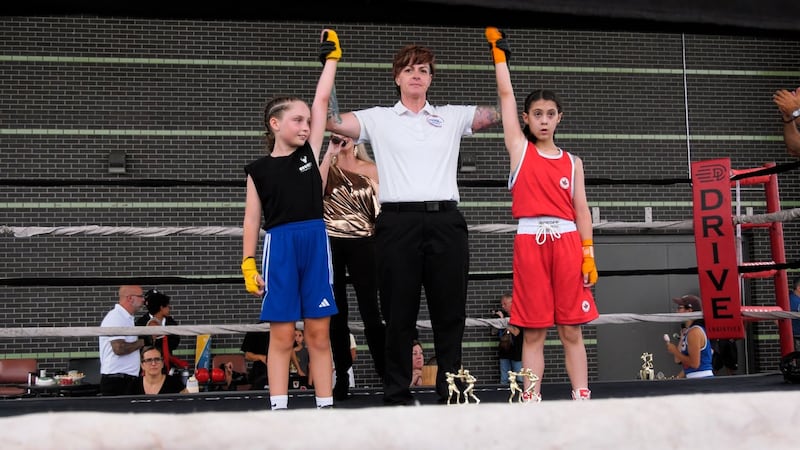
A new chapter in Canadian boxing was on display in Calgary this weekend, as para wheelchair boxing rolled into the spotlight during a national event aimed at expanding the sport and making it more inclusive. The demonstration bout held Saturday at Calgary’s Genesis Centre alongside Boxing Canada competitions, featured one of the country’s early adopters of the discipline. Brad Bartko from Edmonton faced off against an able-bodied opponent in a showcase designed to highlight both the potential and the challenges of the sport. The 34-year-old has been training for just nine months, but says the moment was about more than just stepping into the ring. “We’re here to show people what kind of athletes we are hopefully put para-boxing on the map,” he said. “It’s insane, three days a week of training, sprinting in the chair, doing the pad work, you know everything a normal boxer goes through to get to that next level.” Para-wheelchair boxing remains in its infancy in Canada, with limited opportunities for athletes to compete against others with similar abilities. Bartko said that reality has shaped his experience so far. “So for this showcase I’m fighting a former able-bodied national team member, he’s getting in a chair for the very first time and we’re going to teach him too,” he said. “He’s going to learn what it’s like to be on our level instead of standing up and boxing.” Despite the differences, Bartko said the physical demands mirror those of traditional boxing — with an added layer of complexity. “Being on two wheels adds an extra element of challenge, but it kind of makes it unique and special in that way.” Bartko, who lives with cerebral palsy and has undergone nearly 30 surgeries, said his involvement in the sport came from a desire to push boundaries. “I’ve always been a trailblazer. I’ve always wanted to blaze a trail and be the first person to ever do it,” he said. His message to others considering the sport is simple: “You can do whatever you put your mind to, regardless of your condition, regardless of your disability. Just believe in yourself.” New perspective The bout also offered a new perspective for his opponent, Winnipeg-based boxer Stefan Mezibroski. “It’s definitely a whole new experience,” he said. “I have a lot of respect in all things that these athletes have to go through and it’s a lot more tiring than I thought it would be, but it was a lot of fun.” Mezibroski said growing the sport could also open doors for more athletes and reduce the barriers currently facing competitors like Bartko. “He doesn’t have a lot of people to compete with, and it’s always able-bodied people, so I think just shedding the light on this can help maybe some more para-athletes come about.” Long-term vision Organizers say that kind of visibility is exactly the goal. Christopher Lindsay, executive director of Boxing Canada, said the showcase represents an important first step in building a structured pathway for para-athletes. “This year we’ve been able to add in this sort of exposition of para-boxing in wheelchair, because this is an initiative that our membership has said is really important to them,” he said. Lindsay adds that the organization is working to establish rules, classifications and training systems to support athletes who want to compete. “If they’re interested in doing competition, we want to have a framework available for them so that they can quickly move into a competitive team or a competitive club and be able to get in the ring,” he said. For now, the Calgary event featured just one exhibition bout, but Lindsay said the long-term vision is much broader. “What we’d really like to do is be able to prove that anyone can do para-boxing, or any show can host para-boxing,” he said. “You just need to let people know that it’s available.” The sport is not currently part of the Paralympic Games, and significant growth is needed before it can be considered for inclusion. Still, advocates say momentum is building internationally, with increasing efforts to formalize competition and expand participation. At the grassroots level, coaches are also beginning to explore how to adapt training techniques for wheelchair athletes. Alex Halat, founder of the Chestermere Boxing Club, worked with Bartko during the showcase and said the experience was eye-opening. “It’s a learning experience for us coaches as well, because we’re trying to help figure out what combos he could throw and what gaps that we could find,” Halat said. He also noted that traditional boxing relies heavily on lower-body strength, requiring adjustments in both strategy and training. “In regular boxing you would drive a lot of the power through your legs so obviously he doesn’t have that ability, but this this just goes to show you that there’s no boundaries in sport.” Halat hopes to also see the discipline grow locally and nationally. “I just can’t wait to blow up something like this in Calgary to show kids that there’s no disability in sport. It’s all in your head,” he said. As for Bartko, the focus remains on continuing to build the sport — one fight at a time — with the ultimate goal of reaching the Paralympic stage. “That is the goal, we’ve got to grow the sport both provincially and nationally first, but I want people to believe in themselves, to take a chance to get into this sport and have some fun.”