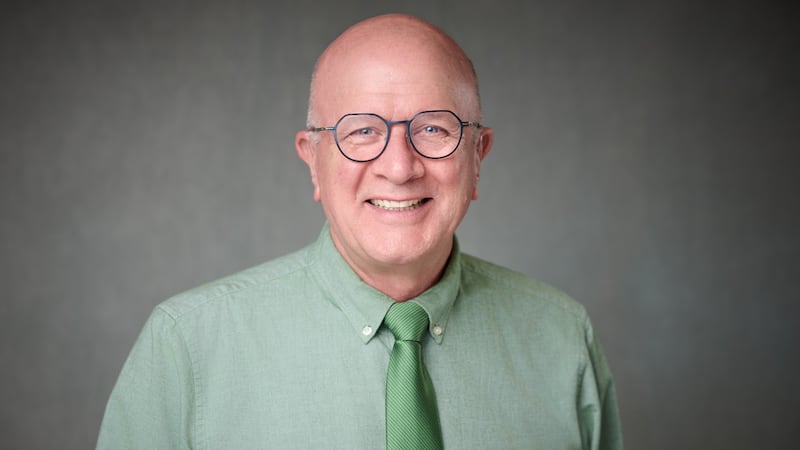
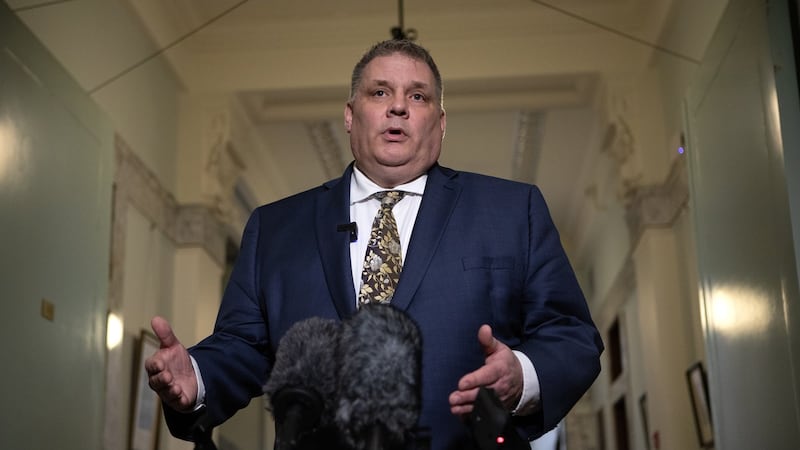
Alberta is “in a pretty good spot” but needs to think about its “long-term” financial trajectory, economics professor Trevor Tombe says. And he says that could mean thinking about a sales tax or a lot of wee charges. Tombe spoke about the recent provincial budget and what it means going forward at the University of Calgary’s downtown campus on Tuesday. His presentation was part of the U of C School of Public Policy’s Forum 2026 series. “We were previously anticipating about $79 billion in revenue, and now (we’re) anticipating a little under $75 (billion),” Tombe said. “We have about $84 billion in total spending in this current budget compared to about $76 billion in our original plans for 2026.” He said reliance on volatile resource revenues isn’t new, though that reliance and that volatility are greater than in the recent past. It’s the spending he sees as the bigger story. “We’ve increased spending, and we’ve increased it faster than population plus inflation,” he said. There’s two areas that account for “the entire ball game in increased operating spending” over this budget, Tombe said. Those include $4.6 billion in increased health spending and “a little over” $3 million more in K-12 education. Which is fine, Tombe said of both the choice to spend and what the money is being spent on, but will one day need to be compensated for. “It means, I think, we need to be prepared, if not for a big tax change, like introducing a provincial sales tax or, better yet, a harmonized sales tax, for small changes in revenues,” he said. “Fees, fines, prices of things, property taxes (and) all sorts of these other little things that do add up and compound over time,” he said. Finance Minister Nate Horner tabled Budget 2026 late last month. It predicts a $9.4-billion deficit — the largest since the COVID-19 pandemic. A $7.6-billion deficit is projected for 2027 and a $6.9-billion deficit is projected for the year after that. Spending on education and health care is boosted at rates higher than the rate of population plus inflation. Spending on education comes in at $10.8 billion, while spending on health care comes in at $34.4 billion. The 2026 budget already shows some of the small changes in revenues Tombe mentioned. Among them, he noted “some small increases on the tourism levy ... property tax increases.” On Tuesday, the minister officially tabled the legislation increasing Alberta’s tourism levy from four to six per cent. If passed, the tax hike would go into effect on April 1. “We were disappointed that the government decided to increase the tourism levy by 50 per cent in budget 2026,” said Tracy Douglas, president and CEO of the Alberta Hotel and Lodging Association (AHLA). “Given that affordability is a challenge, anything that makes travel less affordable for visitors is not great for the tourism economy as a whole.” Douglas also wrote a letter to Premier Danielle Smith on behalf of AHLA members to voice those concerns directly. In it, the group says, “The Government of Alberta has abandoned the principles on which the tourism levy was founded” and says the increase will result in millions of dollars of credit card fees and operating costs for hotels. “We would really like to see the government allocate the levy in full to grow tourism, and also to be looking at creating a regulatory framework for commercial short-term rentals,” Douglas said. Minister Horner said the tourism levy will continue to be put into the province’s general revenue, so that it can “put the dollars to the highest priorities.” “I would say the government spends more on tourism than they take from the levy currently, you know, and I think that will continue,” Horner said Tuesday afternoon. With files from The Canadian Press