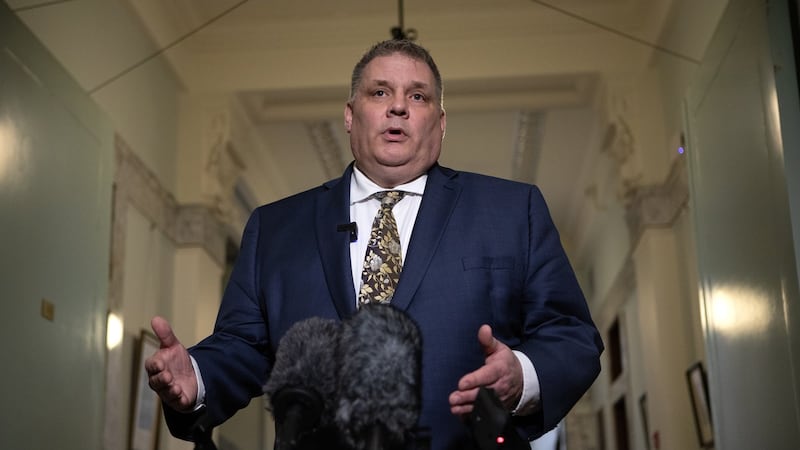
The price tag to repair, replace or build new needed infrastructure in Calgary should reach $49 billion over the next 10 years, a report to a council committee says. From crumbling concrete to transit upgrades needed for a growing city, the report from administration says major spending is needed to keep Calgarians moving. “We can’t just be going from crisis to crisis, putting fires out. We need to be proactive and that’s what that infrastructure report really says is,” said Mayor Jeromy Farkas. About $20 billion of the needed spending is for growth in order to provide for new and expanding communities, $17 billion is for maintenance or replacement of current infrastructure and nearly $9 billion of the total is categorized for improving service levels. Transit tops the list of needed 10-year capital funding at $10.4 billion. LRT vehicles and buses need replacing, the Bus Rapid Transit (BRT) service in the north needs expanding and a train connector to the airport are all listed among the unfunded projects. “If renewal does not keep pace with deterioration and demand, assets degrade beyond optimal intervention points. This increases maintenance effort, cost and reduces service reliability and service disruption,” the report reads. Roads and pathways need $8.7 billion in spending to restore aging bridges, replace old light standards and repair crumbling pavement. Dozens of roads, pathways and projects across all four quadrants have been identified as “infrastructure needs.” “The $50 billion is not a small number. The first thing my mind goes to is that this is a Canada-wide problem,” said Nathaniel Schmidt, the ward 8 councillor. Infrastructure experts agree, saying aging concrete water pipes and roads across the country are “ticking time bombs” that could give way soon. “We have completed the 50-year lifecycle for (much of that) infrastructure. So in that sense, yes, the time limit is exceeded,” said Emre Erkmen, an assistant professor of civil engineering at Concordia University. “Now, at any time, you can expect failure,” he said. Of the city’s $160 billion in total infrastructure assets, about 14 per cent of it is considered to be in poor or very poor shape. The cost to repair or replace the most critical assets that are in the worst shape is estimated to be about $7.5 billion.