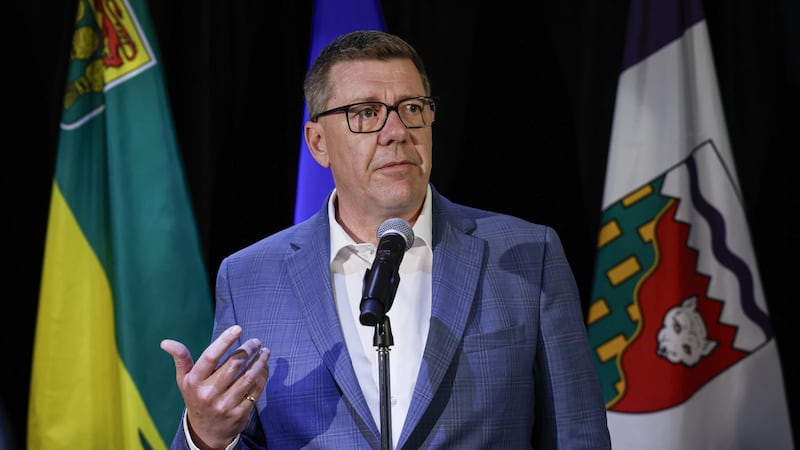
The Alberta government is poised to make an announcement about a new oil pipeline to Canada’s west coast later this week, though as of right now, Ottawa says there isn’t a private backer. Premier Danielle Smith’s office wrote in a statement a “major announcement” related to the line will take place Thursday. The province’s submission to the federal Major Projects Office is due Wednesday. But the prime minister confirmed Tuesday there isn’t a private sector project proponent. Before leaving for meetings in Edmonton, Mark Carney told reporters the pipeline work is far from over. “A variety of things have to be followed through on; a variety of stakeholders have to be engaged,” he said. Without private funding, the Smith government would likely opt to kick-start the project using taxpayer money. Experts say showing it’s viable is key. “(Smith) is seeking to de-risk this investment,“ said Evan Bahry, Energy Connections Canada executive director. “I’m sure proponents would be interested to see if it progresses, and they may likely champion it after, at some point, once it gets to the regulatory process.” But some aren’t so sure it’ll be an effective move, especially with so much market supply competition. “It’s just not something private sector companies are willing to take a risk on—in particular, the shippers, the producers and the refiners,” said Richard Masson, energy watcher. “They have to look at this compared to their alternatives, including the Trans Mountain expansion, the Enbridge expansion and South Bow’s proposal. “That’s 1.2 million barrels a day of capacity that could come on quicker, probably with lower risk and very likely with much lower cost.” The new pipeline would carry up to one million barrels per day from the oilsands to a yet-to-be-determined west coast port for tanker export to Asia. Under a federal-provincial energy accord signed last year, Ottawa’s support for the pipeline is contingent upon the building of the massive Pathways carbon capture and storage project that would offset some of the emissions impact from increased oilsands production. The Alberta government is aiming to see the pipeline designated a project of national interest by October and to get shovels in the ground as early as September 2027.