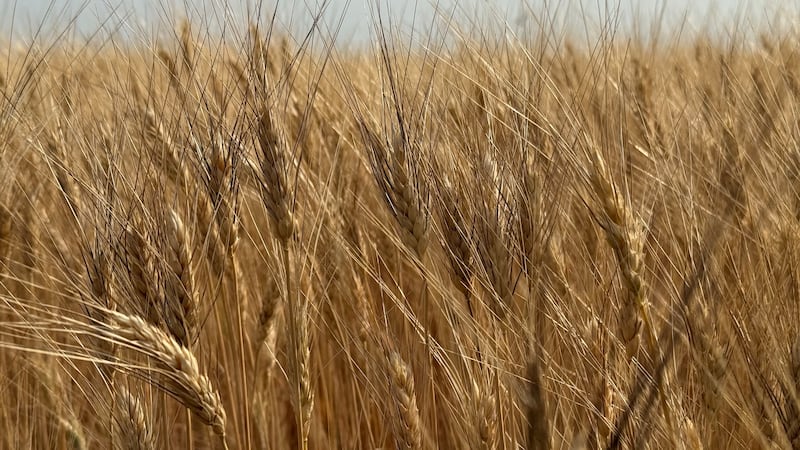
It has been a week since Joseph Upshaw took a cut of hay off one of his smaller fields. Normally, the hay returns to its lush green form a few days after a cut, but the dry drought-like conditions that are plaguing parts of New Brunswick have his fields looking more brown than green. “We don’t have enough water reservoirs and water tables aren’t full,” says Upshaw, manager of Angus Arabian Devon East. “It’s hitting harder this year, I think in a lot of ways, than it was last year.” Upshaw admits crops like his never got a chance to rebound with the grounds remaining dry with less than average snow in the winter, and not enough rainfall during the spring months. According to Environment Canada’s current drought conditions, about half of New Brunswick is experiencing abnormally dry conditions. Areas that are particularly dry include the north and eastern parts of the province. Part of the reason for the dry conditions is the province saw less than 60 per cent of its average precipitation in July. In the province’s northern half, the number was closer to 40 per cent. Without the rainfall, Upshaw’s crops are struggling. He says fields that did not get any inputs, like manure and other fertilizers, are down 60 per cent from what they tend to yield during an average cut. “We need about 2,800 bales [of hay] a year just to provide ourselves,” says Upshaw. “Right now we’re sitting about 1,700 so far this year, so we’re about 1,000 bales behind.” Farmers aren’t the only ones seeing the impacts of another dry summer. While the water levels are nowhere near as low as they were last year, the Hammond River Angling Association says the lower levels are leading to warmer waters. Projects manager for the association Sarah Blenis says last year’s drought saw several juvenile fish die. To avoid a similar situation this year, she is asking anglers to be mindful. “We’ve documented water temperatures upwards of 27 degrees,” says Blenis. “Anything above 20 degrees can really start to cause stress on the fish, so we recommend that if you are angling not to play your fish too much. Reel them in, bring them in and release them as safely and as quickly as possible.” One sector the drier summer has yet to have a big impact on is New Brunswick’s forests. In 2025, more than 3,400 hectares of forest burned during wildfires in the peak of summer. So far this year, 338 wildfires have burned around 482 hectares. Provincial wildfire ranger Natasha Ouelette says they are actively monitoring the drought situation. She says some areas, such as Chipman, are drier than other parts of the province. “It only takes a day or two for hazards to creep up,” she says. “Meaning like a warm, sort of windy day, it dries out the grasses and things [can] easily ignite.” She reminds residents to check the province’s burning restrictions before any fire activity, which are updated daily at 2 p.m. For more New Brunswick news, visit our dedicated provincial page.