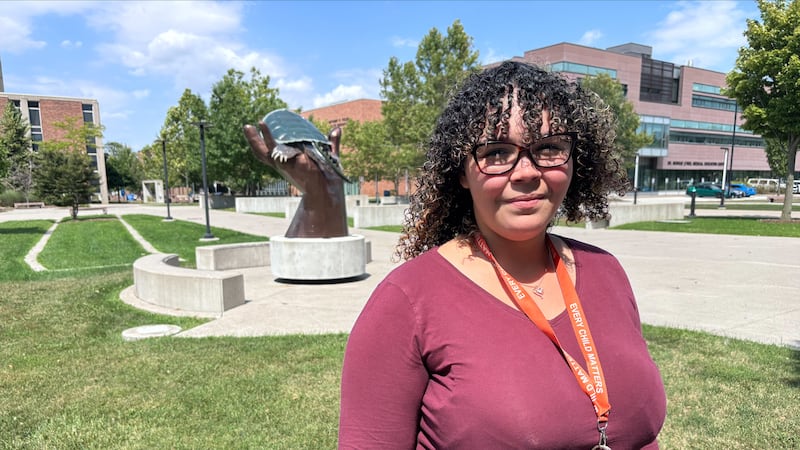
Ninety per cent of Fredericton artist Alisha Nicholson’s recent business has come from the U.S. But as 50 per cent tariffs impact roughly $28 billion in Canadian goods — including paintings and drawings — that may be coming to an end. “When I found out the news, I was devastated,” she said in an interview with CTV News. “Basically, I’m making no money, so it’s not worth it for me.” She recently took to Facebook to announce she’s no longer selling paintings south of the border. In the meantime, she’s looking for an American printer to continue producing her prints without the steep tariffs. But that means she can’t garnish and add texture to the prints — and it takes business away from her local printer. “I need to find new ways to build up my marketing in Canada and outside of the world in different places,” she said. She’s not the only one feeling the hit from the tariffs. Sophie Thériault, the sales and communication manager for Gallery 78, a private art gallery, said this is just the latest blow to artists. “Up until now, it has been mostly just the economic uncertainty that has created a lot of an effect on collection and on the collectors’ ability buy art, both in Canada, in the United States and around the world. But now there’s that added, very real impact that is being felt by artists and galleries and auction houses and anyone who works with original artwork,” she said. There are options to support local, including a local artist registry, and following artists on social media, or visiting them when they have sales or attend fairs. “Keeping them at the forefront of, when you think about Buy Canadian, think about where things are coming from,” Thériault said.On Tuesday, the federal government announced$7.5 billion dollars in tariff supports, including changes to employment insurance (EI) eligibility, amidst its counter-tariffs. Paintings are not included in Canadian counter-tariffs on American goods. For more New Brunswick news, visit our dedicated provincial page.