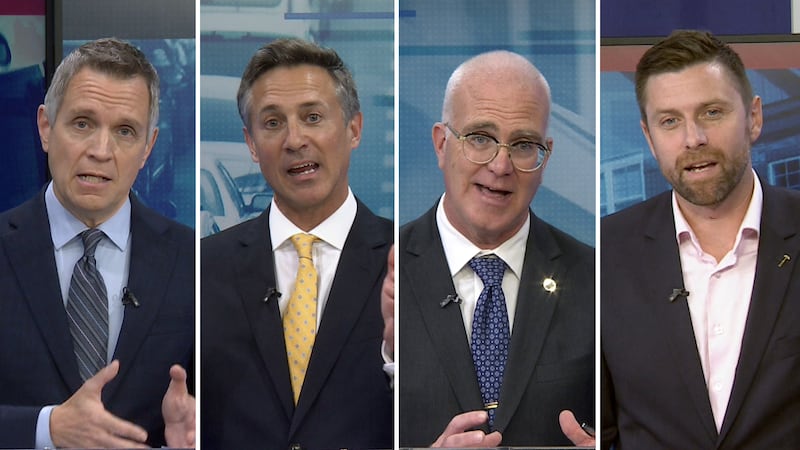
After the federal government rescinded a digital services tax targeting tech companies in the U.S. on Monday, the former minister of foreign affairs says he’s disappointed with how the government dealt with negotiations. Peter MacKay says the tax could have brought in serious revenue to a government that’s made large spending promises. “They were significant—they were $2 billion that were essentially to be collected as back tax and then going forward $7 billion, so this is a government that has made massive spending promises on a whole range of things, including defence and promises to the provinces. It’s looking increasingly like a challenge for them in terms of keeping those commitments,” said MacKay in an interview with CTV’s Todd Battis on Monday. “Backing off on this particular initiative is not elbows up—it’s the president took the gloves off and we turtled.” MacKay says the back-and-forth nature of the trade war between Canada and the U.S. is leading to decreased public interest despite the massive effects on the Canadian economy. “You know it’s a new day, new threat, new tariff, but these have grave implications for the Canadian economy, and short of getting into the natural resource industry in a big way, and that means building pipelines and facilitating the export of LNG, the same I would say for critical minerals, we are in for a world of hurt in the Canadian economy come the fall.” Despite the Carney-led Liberals trying to distance themselves from the government led by Justin Trudeau, MacKay says much of the spending is looking the same. “A lot of this has been framed as ‘that was the old government and we’re a new government.’ Well, putting a Cadillac hood ornament on a Chev doesn’t make it a Cadillac,” he said. “This is the same government—these were the same commitments with respect to tax revenues. In fact, the spending promises are even larger, and the deficit, therefore, will be even bigger, and that, I think, should garner more attention from the public.” MacKay says he’s disappointed with the discussions as he feels Canada got no clear return from the deal. “These aren’t my words. It was ‘leverage.’ This is coming from some of the trade representatives in the White House today—they were gloating about the fact Canada had capitulated, so I don’t know what we’re getting in return for backing off this particular issue,” he said. “Of real concern should be those in the dairy industry, the supply management industry. What’s next? We still have tariffs on aluminum, on steel. We’re not in the best place in terms of being able to actually diversify our trade relationships, which has been talked about since before the election, to be quite frank.”