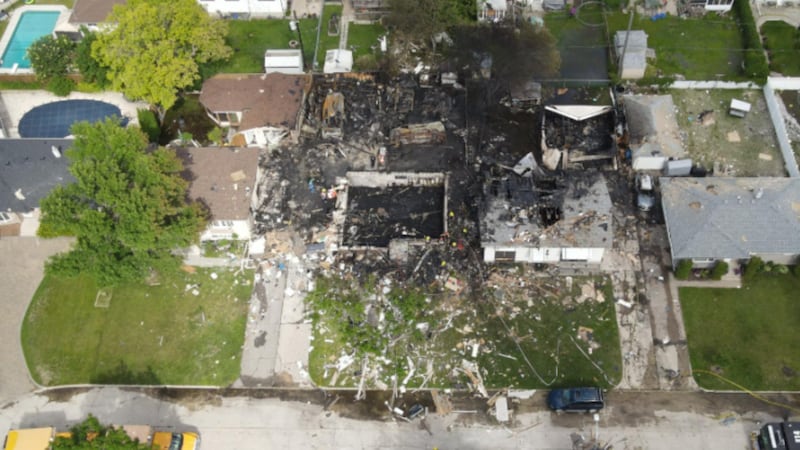
The city has only collected a fraction of the $3.5 million in fines issued to owners of vacant properties that have caught fire over the past three and a half years. According to Winnipeg Fire Paramedic Service (WFPS) data, the city has recouped $232,517 in partial or full payments from 14 of the 150 outstanding invoices issued since 2023. That means more than $3.28 million in fire protection service fees haven’t been paid. “We need property owners to take care of their properties,” Mayor Scott Gillingham told reporters Wednesday morning at an unrelated event. “We need property owners who have vacant and derelict buildings to redevelop those properties, and so we’re using a combination of carrot and stick approach.” Under current bylaws, the city can fine owners $10,250 the first time a vacant building goes up in flames, $20,500 for a second infraction, $30,750 for a third, and $51,250 for each fire after that. The city has issued a total of 202 fire protection service fees since 2023 but 52 were either waived or voided. The city introduced the fee system to encourage owners to maintain and secure properties and recoup some of the costs associated with extended fire responses. Vivian Santos, councillor for Point Douglas, said vacant fires are happening in her ward far too often and have a domino effect on the people living there. “Residents are very tired and they’re really upset with property owners that continue to have these properties remain derelict and vacant,” Santos told CTV News Wednesday. Gillingham said council wants the provincial government to amend legislation to allow the city to recover the outstanding fees through property taxes. “Then we can take any of those unpaid fines and we could put that onto people’s property tax bills like we do with water and waste fines,” Gillingham explained. According to the city, the public service submitted a formal request to the province in October 2024 to amend existing legislation but said it hasn’t received a decision. Unpaid accounts are referred to the city’s collections service, but the WFPS data suggests the repayment system isn’t working. “They think maybe they can get away with it, but at the end of the day, we’re going to get these properties turned into housing,” Gillingham said. “We’ll continue to use both incentives and penalties to find ways to motivate people to deal with their properties. So, the message is this to property owners: take care of your property. If you’ve got a boarded-up house, redevelop it; if you’re not going to redevelop it, sell it to someone who will.” Gillingham said the city can take property owners to court but added it’s not a cost-effective approach. “It would make it a lot easier if the legislation could be changed as we requested,” the mayor said. In an email, a spokesperson for Municipal and Northern Affairs Minister Glen Simard said the province is working with the City of Winnipeg to address their priorities. “The issue of amendments to the municipal act to allow Winnipeg to add these fees to tax bills is an issue that is currently being discussed,” the spokesperson wrote.