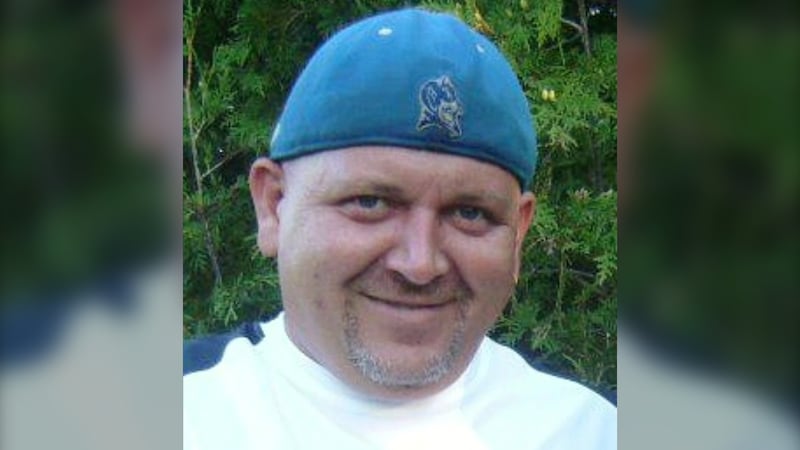
Warning: This article contains content that may be disturbing to readers. Discretion is advised. A Manitoba judge has lifted the “high-risk accused” designation for a man found not criminally responsible in the killing of his parents and the attack of a colleague during a psychotic episode — marking the first time a Manitoba court has dealt with the rare designation. On Tuesday, Manitoba Court of King’s Bench Justice Kenneth Champagne ruled that Trevor Farley — now in his 40s and present during the hearing — no longer warrants the high-risk accused (HRA) designation and revoked it. With the HRA designation lifted, Farley’s path forward — including any potential conditional or absolute discharge — will be handled through the provincial review board, the body that oversees individuals found not criminally responsible. The HRA designation, introduced under the Criminal Code in 2014, applies to individuals found not criminally responsible for a “serious personal injury offence.” The label carries significant restrictions, prohibiting the accused from leaving a hospital except under specific, structured circumstances — such as for medical treatment. It can be applied when a court finds there is a substantial likelihood the accused will use violence endangering another person’s life or safety—or when the crime was so brutal it points to a serious risk of grave harm to others. Justice Champagne had originally designated Farley as high-risk on Oct. 18, 2023. ‘Mental health was in serious decline’ In his decision, Champagne said Farley’s wife first noticed signs of paranoia shortly after he graduated from nursing school — symptoms that would periodically subside before returning. Farley had been working as a registered nurse at Seven Oaks General Hospital since 2014. Court heard by 2021, the paranoia had severely strained his marriage, leading Farley to develop an unfounded belief that his wife was unfaithful. The couple separated, though she remained close and concerned for his wellbeing. On Oct. 26, 2021, Farley attended Winnipeg’s Crisis Response Centre, requesting mental health services and stayed the night. The following morning, he was involuntarily admitted under the Mental Health Act after a psychiatric assessment — but walked out shortly before noon. “Staff from the crisis centre called police to advise Farley had left,” Champagne said. “Within three hours, Farley committed the carnage that brings us here today.” ‘Beyond the definition of stark horror’ Champagne said Farley’s mental health “was in serious decline” at the time, citing details including an “auditory hallucination of an angel telling him he is the prophet of God.” Court heard Farley went directly to his father’s home in Winnipeg, where he stabbed him more than 30 times as he sat in his living room chair. He then travelled to New Bothwell, where he killed his mother — stabbing her multiple times and using an angle grinder and a hammer. “The level of violence was beyond brutal and beyond the definition of stark horror,” Champagne said. “Farley was in his mother’s home for no more than seven minutes. In that time, he destroyed her physical being.” Farley then proceeded to Seven Oaks Hospital, where he stabbed his supervisor multiple times, who survived the attack. He was tackled by a physician before being arrested. Champagne said Farley believed he was helping his parents by “cutting out the contamination” — that the devil had contaminated their souls — and that he had intended to do the same for his colleague. In 2023, he was found not criminally responsible due to a mental disorder. ‘No behaviour concerns’ Champagne said Farley has been held under strict detention at the Selkirk Mental Health Centre and referenced assessment reports indicating no violence, aggression, or signs of psychosis. “The assessment reveals that Farley has good insight into his illness and understands his diagnosis,” he said, adding that Farley has been diagnosed with bipolar disorder. “There are no behaviour concerns, and he is not presented with any acts of aggression or acts of violence.” However, Champagne also noted concerns raised by nurses and staff during Farley’s time at the facility, including observations that some of his responses were seen as “calculated.” “Another observation by staff related to subtle defiance. One example provided was that Farley would pace in the dining hall when he finished his meal, rather than remain seated until everyone was finished,” Champagne said. “When directed to take a seat, one staff member noted Farley would briefly show agitation and roll his eyes but then would take his seat.” Champagne ordered Farley to remain detained in hospital subject to conditions the review board views as appropriate, adding that the evidence suggests he remains a “significant threat” to public safety. The Crown had argued the designation lift was “too soon,” claiming more could be done within the confines of the HRA designation to allow Farley to demonstrate the elevated risk no longer exists. ‘Very long road ahead’ Farley’s lawyer, Carley Mahoney, said she believes the revocation is the “correct decision,” adding that he is already receiving supervised passes to the grounds of the Selkirk Mental Health Centre and to the community. “What changes is that it has the potential for increase in his liberties as time goes forward,” Mahoney said. “For example, as a high-risk accused person, you cannot have unsupervised passes to the community for any reason. That’s not something he’s going to get immediately, but it is something that is now possible for him in the years that follow.” She said unsupervised passes to the grounds of the Selkirk facility will be sought at the next review board hearing. “Eventually he can apply for a conditional discharge, and sometime after that, an absolute discharge, but he has a very long road ahead of him.”