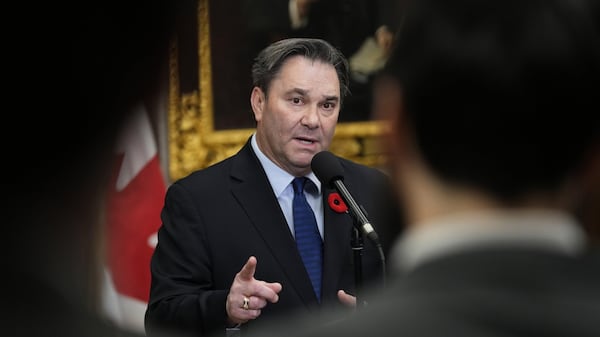
Windsor city council has officially approved the 2026 budget, locking in a zero per cent tax levy increase after a full day of debate and last-minute adjustments aimed at addressing community concerns. Council wrapped up deliberations Monday by agreeing not to introduce any further amendments or trigger mayoral veto powers, finalizing a budget that keeps property taxes flat. The approved operating budget totals about $1.23 billion, roughly $40 million higher than last year, while the portion funded through property taxes remains unchanged at $504.9 million. City administration said the plan balances affordability pressures with the need to manage rising costs tied to wages, inflation, and service delivery. Amendments to operating budget During Monday’s meeting, council approved a set of concessions put forward by Mayor Drew Dilkens following public feedback earlier this month. 1. Proposed recreation fee increases that were expected to climb as high as eight per cent will now be capped at three per cent. 2. Transit fares will still rise next year, but the increase was scaled back, setting the adult fare at $3.95 instead of the originally proposed $4. 3. Council also voted to temporarily bring back the Route 1000 school bus extra for the remainder of 2026, responding to concerns from parents and students about long and complicated commutes to and from Holy Names and Vincent Massey high schools. “This is a response to the delegates who came here a couple weeks ago,” Dilkens said during Monday’s meeting. Route 1000 to return — but temporarily The Route 1000 was introduced in September 2024 as part of changes to student transit service, following the removal of several school-focused routes. The bus provided a more direct option during peak hours for students travelling to Holy Names and Vincent Massey high schools — but was later discontinued ahead of the 2025-26 budget as part of broader transit service adjustments. Dilkens said the route’s return is limited to the end of the 2026 calendar year and the city does not intend to operate Route 1000 beyond this year. He added that student transportation falls under the responsibility of local school boards and that Windsor taxpayers should not be expected to permanently subsidize school-specific transit service. City staff estimate the combined cost of all three changes to be approximately $389,000, which will be covered by reducing a planned transfer into the city’s budget stabilization reserve (BSR). “So instead of transferring $2.4 million to the BSR, it’ll be a $2 million transfer,” Dilkens said. Changes to paid parking Parking changes were also finalized as part of the budget process. Paid parking enforcement, which was extended from 6 p.m. to 7 p.m. in 2024, was initially proposed to stretch further into the evening until 9 p.m. under the 2026 budget. Following a motion by downtown councillor Renaldo Agostino, council voted to reject that proposal, instead rolling enforcement hours back to 6 p.m. The hourly cash rate at parking meters will increase to $2.50 — up from $2.25 — but drivers who pay using the city’s parking app will not see a price increase. Council also approved plans to introduce angled parking on select downtown streets, a move city staff said could increase on-street parking capacity without major construction costs while freeing up space in municipal parking garages. “Angled parking would give us about 40 per cent more spots in the same geographical space,” said parking enforcement manager Bill Kralovensky. “If I can move those people out of the garages, because everybody wants to park in front of a business, that frees up more spaces in our two large structures and possibly more for residents to park in them.” The downtown parking changes — including the return to a 6 p.m. paid parking cutoff — will not take effect immediately, Agostino said, and will be implemented alongside new angled parking once weather conditions allow. “I’d hate to do it in spurts. I like to just do it all in one shot so everybody knows, and it all happens in a very short period of time,” Agostino said. Dredging of Peche Island Council also approved the next phase of work planned for Peche Island, signing off on a staff recommendation to move ahead with a dredging project aimed at restoring water flow into the island’s interior. The work will be funded with $600,000 already included in the capital budget, with city officials saying that amount should be sufficient to get the project started while the city continues to pursue outside grant funding. Staff and consultants told council the goal is a long-term solution, not ongoing dredging. “We don’t anticipate any future works if the work is done properly,” said Dan Krutsch of Landmark Consulting Group, the engineering and environmental consulting firm hired by the City of Windsor to design and oversee the Peche Island dredging project. “Once we dredge it, it should be one and done.” More budget details coming According to a city media release, Mayor Drew Dilkens and senior administration will provide a further update Tuesday on the finalized 2026 budget, including “key investments and initiatives” planned for the year. “No one ever gets 100 per cent of what they want,” Dilkens told reporters after Monday’s meeting. “We found a pathway that addressed the biggest concerns in the community.”