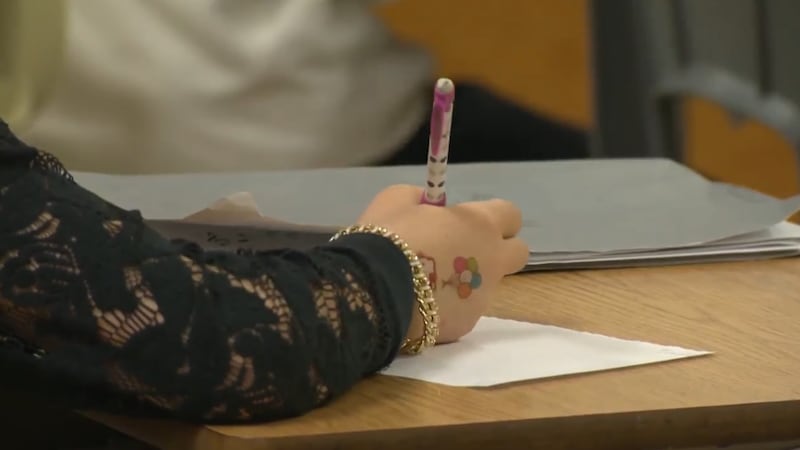
Local unions rallied outside MP Andrew Dowie’s office on Saturday, calling for governments to step up. Local President of the Elementary Teachers Federation of Ontario (ETFO), Mario Spagnuolo, along with union members, gathered in attempts to put pressure on the Ford government to come to the bargaining table with serious intent to negotiate fairly with education workers across the province. “We are doing the best we can to make it an education system that we can be proud of. But we need this government to be a willing partner to help fund these classrooms,” said Spagnuolo. Teachers and education workers in Ontario will start the school year without new collective agreements after negotiations between most unions and the province stalled. Ontario’s education minister says he’s hopeful the province can strike a deal with all of its teachers and education workers unions, pledging that schools will open “as usual” after labour day. But ETFO says a strike is under consideration should they fail to reach an agreement, but job action is not their first choice. Spagnuolo says the focus for this round of bargaining is class size. “We don’t have a class size cap in Grade 4-8; we also don’t have a cap in kindergarten. And kindergarten seems to be where we have the most needs because kids are coming to us without diagnoses, and at times they’re coming and they’re not toilet trained and yet there’s 29, 30, 31 kids in a classroom with just a teacher and ECE,” said Spagnuolo. Also rallying Saturday, the Windsor-Essex Health Coalition. They say they will be joining other health care workers across the country for a day of action against Alberta’s Bill 11, the Health Statutes Amendment Act. “We are building momentum, awareness, and mobilizing people to let them know how this government is selling out their public health care,” said Patrick Hannon, cochair, Windsor Essex Health Coalition. It is similar to Ontario’s Bill 60, also known as the Your Health Act, a bill allowing private clinics to conduct more OHIP-covered surgeries. But the province of Alberta says there will be rigorous guidelines for physicians to meet before they can practice privately. And that those who want to do dual practice must continue providing the exact same service to the public system that they are today.