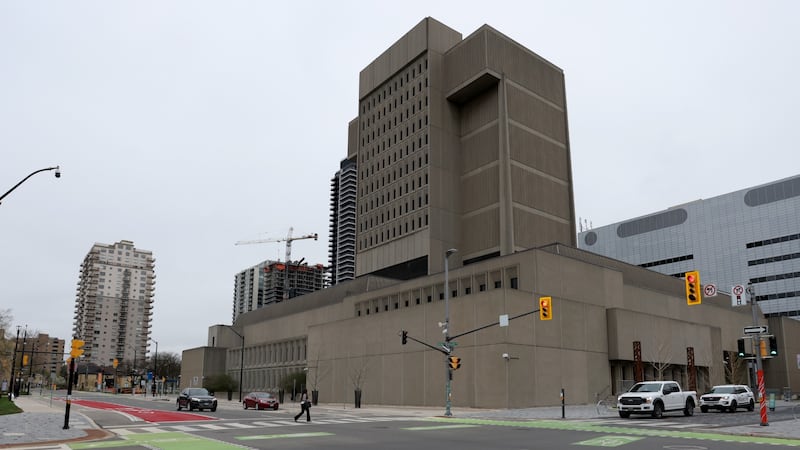
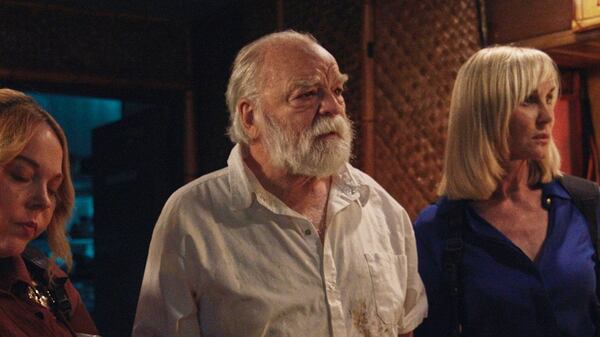
The family of a 72-year-old man is seeking answers and change within the health-care system after he was reportedly made to lie on the ground for several hours before receiving care. Last week, a photo of Edward Guenther lying down on the floor at Saskatoon’s Royal University Hospital circulated online. It was shared by his daughter Angela. She said he was undergoing an acute medical and mental health crisis, suffering through numerous seizures over the course of several days. “Since sharing my dad’s story on social media, I have heard from many other people who have shared difficult and heartbreaking healthcare experiences of their own. That deserves attention,” Angela wrote in a statement provided by the Saskatchewan NDP. What happened According to New Democrats, Edward first sought care on Sept. 9 around 8 p.m. after he was found on the street following a seizure. On Sept. 10 around 4 a.m., he was discharged from the hospital, however, his daughters were not available to pick him up, so he was sent home in a cab – reportedly still disorientated and in need of care. He returned to RUH on Sept. 13, this time with his daughters, and they were told the wait time to see a doctor could be 14 hours. After speaking with CPAS, they returned again to the hospital on Sept. 14. During that day’s visit, Edward, while suffering from exhaustion, said he needed to lie down, but the only available place to do so was on the floor, where he remained until he was eventually able to find a temporary room with a bed. “But it is the room used when prisoners are brought into the hospital, and we have been told he can be moved out at any time if that room is needed,” read Angela’s post. “What he actually needs is emergency housing and appropriate care as soon as possible. He is not currently in a state where simply sending him home is a safe or realistic solution.” As of Sept. 17, Angela wrote that Edward was still receiving care and waiting to be transferred to neurology for further assessment. She wrote that he was also continuing to suffer through daily seizures. According to the NDP this was also the case as of Monday. ‘Unacceptable’ says opposition Speaking to media on Monday, NDP MLA Keith Jorgenson said what happened to Edward was unacceptable and frustrating. Asked what he thought when seeing the photo of Guenther, Jorgenson said he felt a mixture of “frustration, sadness and anger.” “I think of my own grandparents or my dad. That’s not how anyone wants to be treated,” he said. “You want to be treated with dignity and privacy and this is like a busy, chaotic waiting room. It’s unacceptable.” Jorgenson said the situation is indicative of broader capacity issues at RUH and in Saskatchewan’s health-care system in general — adding the government isn’t even acknowledging the full extent of the issue. SHA response “Hospital emergency departments operate on the triage system, not a first-come, first-served basis,” said the Saskatchewan Health Authority in a statement to CTV News. “This means patients are seen based on the most urgent need for care, with the most immediate needs being seen first. Emergency departments can experience fluctuation in patient volumes, and we always adapt to meet demand.” The SHA added it was unable to comment on the specifics of Edward’s care experience due to privacy legislation and patient confidentiality. However, the health authority stated it was implementing a number of strategies to improve access to care in emergency departments. “… including adding acute care capacity, such as the addition of 109 new acute care beds at Saskatoon City Hospital, the additional 24 acute care and four ICU beds at St. Paul’s Hospital, and 36 acute care beds at Royal University Hospital that were announced as part of the Patient’s First Health Care Plan,” the SHA added. The SHA also directed individuals with questions or concerns about the care they received to contact its Client Concerns Office. In Guenther’s statement, she said a serious conversation is needed about what people experience in the health-care system, and what can be done to improve care. “I am sharing this because my dad’s experience matters, but this is not only about my dad. It is also about the other patients and families who are struggling to get the care they need,” she said.