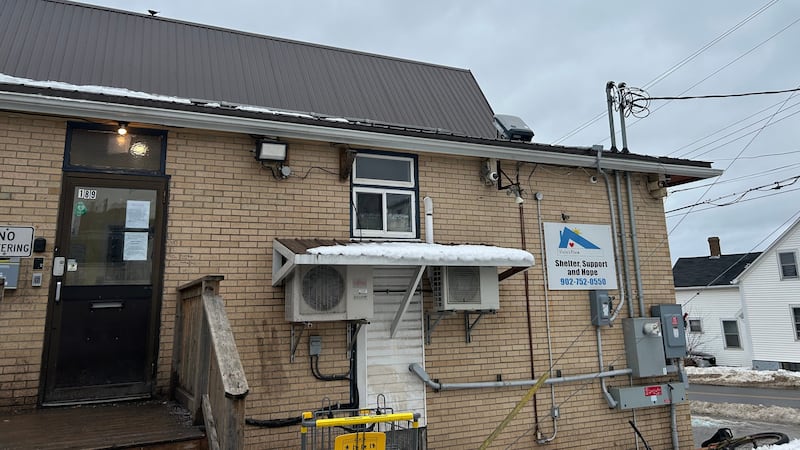
A debate over emergency funding for the Welcome Centre Shelter for Women and Families has been pushed to later this summer after a 6-5 vote at Windsor city council. A motion, brought forward by Coun. Kieran McKenzie, asked council to consider a one-time emergency funding allocation of up to $192,523 for the shelter. The money, which would have come from the city’s Budget Stabilization Reserve, was aimed at expanding and staffing the shelter’s gendered emergency shelter capacity from 32 beds to 44 beds. Instead, a slight majority of council supported a separate motion from Coun. Jo-Anne Gignac to send the item back to administration for a report at a later date. That meant nearly 18 delegates, including community members, advocates, experts, and women with lived experience, were not heard Monday. Gignac said the issue was not the dollar amount, but the need for more information. “I have not heard that women and children were being left on the street. So my request to refer back to administration is to get the full picture,” said Gignac. McKenzie challenged the timeline of when the motion was made available to councillors, saying there was no need to defer the discussion because it was available on Wednesday, giving councillors five days to look over its contents. Gignac clarified she did not open the agenda and see the wording until Friday. Her motion to delay the discussion was supported by five councillors and the mayor. McKenzie called the decision to delay the discussion “disappointing,” saying many delegates had taken time off work to attend the meeting. “When we meet at 10 on a Monday and you have a gallery packed on an issue, we need to be extremely mindful as to whether or not we should allow for that conversation to proceed,” said McKenzie. “We had several dozen people and registered delegates that I think we’ve shown disrespect to.” The city says it reviews capacity across the entire shelter system daily, and that its numbers show there is enough space to remove the need for anyone to sleep outside. Dilkens said if the Welcome Centre is full, that does not necessarily mean there is no space elsewhere in the shelter system. The mayor added the city has to look at the shelter system as a whole, rather than one facility at a time, “If this was a case where we had women and children on the street, it would be an entirely different conversation. That’s not the case.” The city and the Welcome Centre also appear to be using different ways of counting turn-aways. In an email, Human and Health Services Commissioner Dana Paladino said the city uses HIFIS, the Homeless Individuals and Families Information System, to track people experiencing homelessness and the services they receive. Paladino said the city primarily reports on known, unique people who have been turned away, calling it a more reliable metric. “You can have an ‘anonymous’ who is one person, turned away 25 times, or 25 different people turned away one time. The system does not differentiate,” Paladino wrote. She added the city knows the Welcome Centre will turn away the same person multiple times within the same hour or day and count each occurrence. Paladino said the city is working internally and with service providers to have everyone use HIFIS as the “one true source” for homelessness data. But Lady Laforet, executive director of the Welcome Centre Shelter for Women and Families, said the city’s view misses the issue facing women and children in crisis. She said an open bed somewhere else in the system is not always the same as a safe or appropriate bed. “We had capacity over this weekend and yet the Welcome Centre did 44 turn-away calls,” Laforet said. “This isn’t about choosing the Comfort Inn versus the Hampton Suites. This is about really making a choice for your safety, and what level of supports that you and your family need.” Laforet said some women continue to stay in unsafe situations when the Welcome Centre does not have space. “In the past several weeks, we’ve had women staying in vehicles, some on our property, while waiting for beds to become available,” she said. The issue dates back to May 19, when Laforet put out a public letter saying the shelter would have to phase out eight temporary beds after funding requests to both the province and city were denied. The mayor responded with his own letter the next day, saying budget dollars had already been allocated for the year. Laforet has said the shelter first asked the province for a five-per-cent cost-of-living increase after five years without one, but only learned that request was denied on April 3, after the city’s budget had already been set. About a month later, the shelter went public, saying requests to both the province and the city — which allocates those provincial dollars — had been denied. The Welcome Centre’s request to the city was for about $192,000 to keep eight temporary beds open and add four more. Dilkens said the city already provides significant funding to the Welcome Centre and the broader shelter system. “The Welcome Shelter, they get $1.6 million a year,” Dilkens said. “We fund the building, we fund the operating and the utility costs of that building. So the city is heavily invested in the shelter.” When asked about Laforet’s argument that women may choose the Welcome Centre over other shelters for safety reasons, Dilkens said the city also has safety measures in place at its other shelter sites. “We have police and security at our shelters, including at H4. But city council has a responsibility to look at how taxpayer money is spent,” said Dilkens. “I appreciate the strong advocacy Lady Laforet has for her shelter, and for selling her shelter. I understand that.” Administration said it hopes to bring a report back to council on July 29.