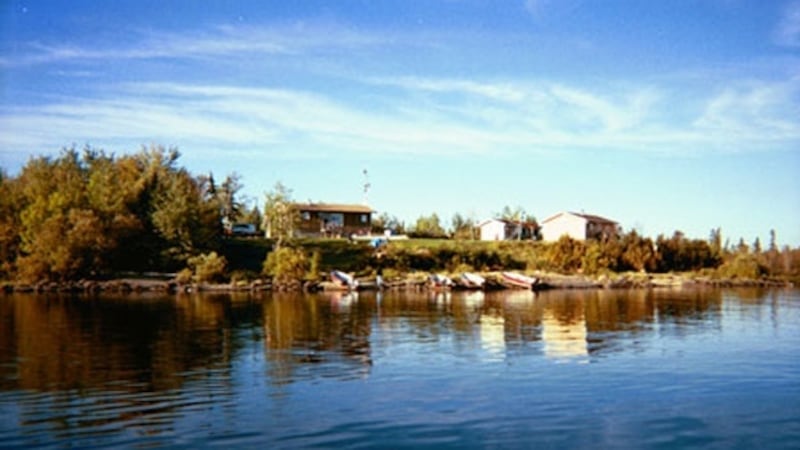
With recent summer heat descending on Vancouver Island, a campfire ban and water restrictions now in place, regional districts are monitoring access to drinking water. At the Sooke Watershed, 31 people disembarked from a tour bus hoping to learn more about where the Capital Region’s drinking water comes from. Alicia Fraser is manager of infrastructure and water services with the Capital Regional District. “They’ve been going on for 37 years and last year, for instance, we had about 1,800 people go on those tours,” Fraser said. Lliam Phillips and Patrick Sand were among the participants who took the CRD up on the free tour. “Just getting access to here is pretty impressive,” Sand said. “It has just been so awesome to learn how lucky we are to get the great drinking water that we do get,” Phillips said. A 22,405-hectare protected area feeds the Sooke Reservoir, supplying clean drinking water to roughly 430,000 people in the CRD. The reservoir is currently at 98 per cent capacity, thanks to a warm and relatively wet winter. “We are a rainwater-based system, so we are not dependent on snowpack,” Fraser said. The Sooke Reservoir’s water levels are monitored weekly. In 2002, the Sooke Lake Dam was raised, adding significant storage capacity to the Capital Regional District’s water supply system. Since then, the CRD has never had to raise conservation levels to Stage 2. “Sooke Lake has really been a great water source for us,” Fraser said. Unlike other parts of Vancouver Island that rely on snowpack, the Capital Region relies solely on rainfall and the reservoir’s capacity to store water collected during the winter season. Last week, the B.C. River Forecast Centre released its April snowpack report. Jonathan Boyd, a hydrologist with the provincial agency, said recent temperatures have dramatically affected conditions. “It has been a dramatic change in the snowpack just in the past week because of the heat that we’ve had,” Boyd said. In April, snowpack levels on Vancouver Island were at 44 per cent of normal. By May 1, after a stretch of unseasonably warm weather, levels had dropped further. “The May 1 numbers are coming in at 27 per cent of normal,” Boyd said. The low snowpack, combined with seasonally warm weather, could increase the risk of drought in many parts of the Island, resulting in stricter water restrictions for some communities. “Raising the dam all those years ago, we have really benefited from that,” Fraser said. The Capital Regional District says there are no plans or need to raise the dam again and that it has secured a future water supply source through the Leech Watershed. The CRD says it plans to begin using that water source by 2045, based on projected population growth and future regional demand.