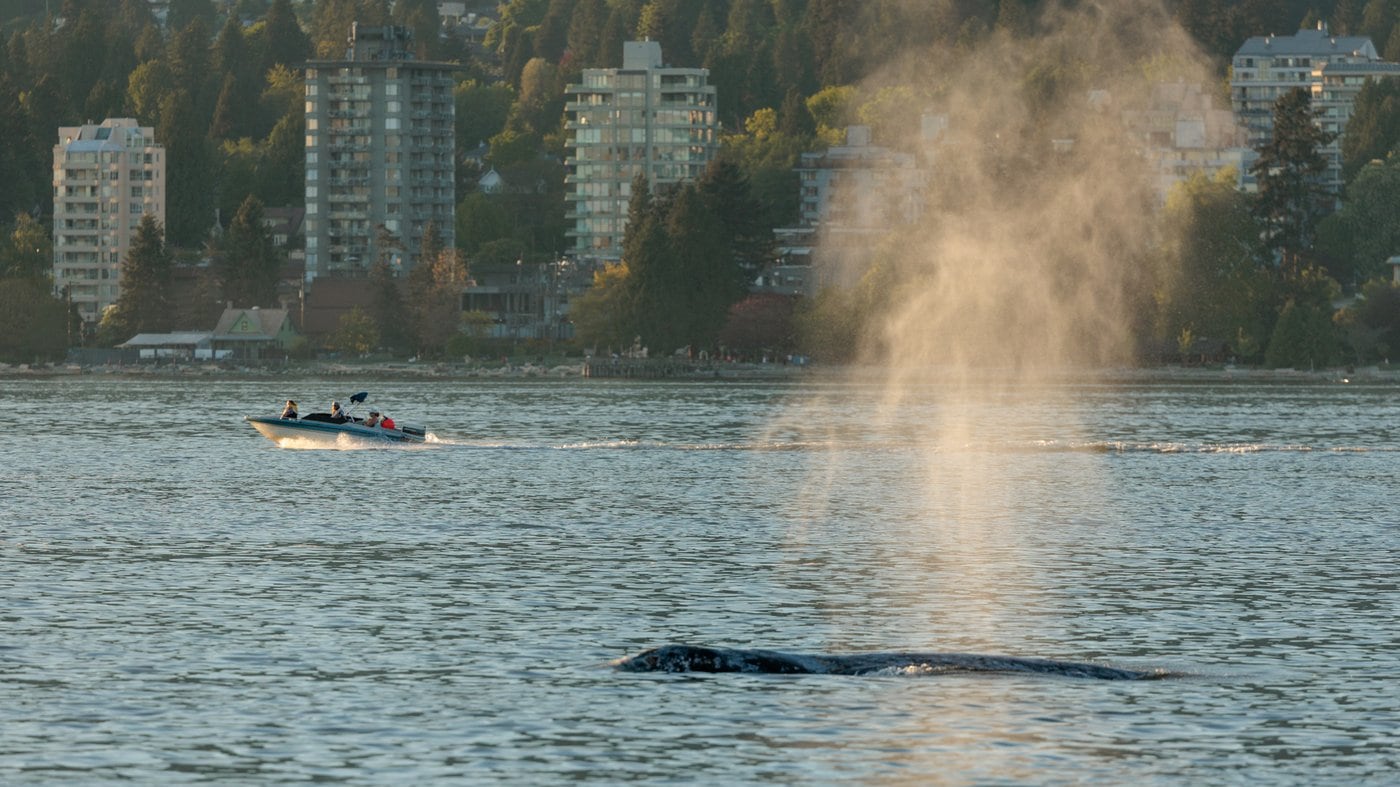
From killer whales in Burrard Inlet, to a grey whale hanging around Kitsilano beach, whale watchers in the Lower Mainland have not had to travel very far the last few weeks. Now a new study out of UBC has confirmed that after years of conservation efforts, more whales really are visiting local waters. Researchers say that transient killer whales are now seen in the Salish Sea about 250 days out of the year. The whales typically return to B.C. waters after fasting in their winter breeding grounds, but the recovery of seal and sea lion populations has created what researchers are calling a “year-round buffet.” “Seals and sea lions were heavily culled until the 1970s, but protections allowed their numbers to recover—and the killer whales followed,” zoology masters student Taryn Scarff said in a news release Wednesday. The number of humpback whales has also rebounded, more than a century after populations were decimated by commercial whaling. “Historically, humpbacks were common in B.C. waters, but three years of commercial whaling from 1907 to 1910 eliminated all of them from this region,” said Dr. Andrew Trites, who is a professor in UBC’s Institute for the Oceans and Fisheries. “There were no whales left to pass on knowledge of feeding grounds to the next generation, so it has taken roughly a century for humpbacks to rediscover parts of their former range.” Researchers say it’s a different story for grey whales, who typically spend the summer and fall feeding on tiny seafloor crustaceans near Alaksa. They say climate change is reducing sea ice, which in turn decreases the amount of algae those crustaceans feed on. “As a result, some grey whales are stopping off in places like Vancouver in a desperate attempt to refuel their emaciated bodies,” Trites said. Starvation is also believed to be behind the increase in the number of dead grey whales found off the B.C. coast this year. The fisheries department says 10 dead grey whales have been discovered so far in 2026, with at least two in “extremely emaciated” condition. That is compared to a total of 11 dead grey whales in 2019, which was considered a record year. Researchers say the best way to keep whales safe is to give them space, which is reflected in new distance rules from the federal government. Starting June 1, under an interim order from Transport Canada, vessels must stay at least 1,000 metres away from southern resident killer whales in southern B.C. coastal waters, including the Strait of Georgia, the Juan de Fuca Strait and waters off Vancouver Island. This is up from the previous 400-metre approach distance. If you’re having a hard time estimating distance, whale biologist Julia Adelsheim shared her rule of thumb: “if you see a blow, go slow.” With files from CTV News Vancouver Island’s Megan Yamoah.