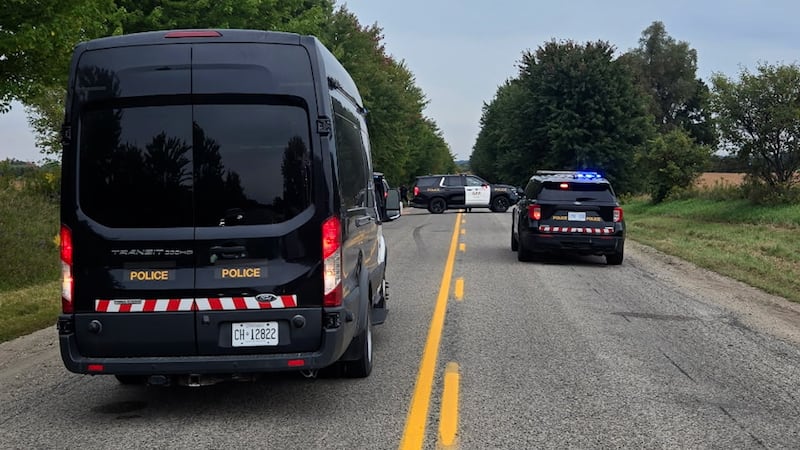
Police, ICBC and community volunteers are reminding drivers to watch for pedestrians and cyclists as darker, wetter weather returns to Metro Vancouver. “Today we’re doing our annual pedestrian safety event here with our partners, the Collingwood Community Policing Center, as well as Vancouver Police and Transit Police,” said Paul Goodman, ICBC’s road safety and community co-ordinator. “So we’re out here this morning reminding drivers to be on the lookout for pedestrians and cyclists. This is the darkest, wettest times of the year, and most of the crashes involving pedestrians occur between October and January.” Distracted driving and speed remain key factors Goodman said distracted driving and failing to yield are among the leading factors in pedestrian crashes. “So if you’re stopped at a light and your head is down and you’re not looking up to see where the pedestrians are going, you’re not paying attention,” he said. “A lot of crashes involving pedestrians occur because of distracted driving, as well as failure to yield for pedestrians.” He added that posted speed limits are meant for ideal conditions. “So if it’s dark and rainy, or if there is snow, we really need to follow the speed limit and go under and look and scan those intersections for pedestrians,” Goodman said. Pedestrians urged to make eye contact and be visible Goodman said pedestrians can help by making eye contact with drivers and wearing reflectors to be seen. ICBC’s latest giveaway features a mountain-themed reflective zipper pull, designed to increase visibility for people walking or cycling in low light. The reflectors are available for free at ICBC service centres and community policing offices across the region while supplies last. Time change can affect alertness, says sleep expert Sleep experts also warn that the seasonal time change can affect alertness. “What happens is in every individual there’s something called a circadian rhythm or a biological clock,” said Dr. Najib Ayas, a professor of medicine and director of the Sleep Disorders Clinic at UBC Hospital. “The major thing that tends to establish the circadian rhythm is light exposure.” Ayas said people may feel more tired or less focused right after the time shift. “Especially you could argue and say that if you’re not used to driving at a certain time, you know, and then you have your clock going forward or going backwards, that can do it as well,” he said. “In addition to perhaps driving home from work as well, you might be a little bit less alert.” He added that light exposure can help people adjust. “Exposing yourself to a lot of light, especially in the morning, can also reset your circadian rhythm,” he said. Province still waiting on permanent time change B.C. passed legislation in 2019 to make daylight saving time permanent, but the change has not yet taken effect. The province has said it will only move forward once neighbouring U.S. states — including Washington, Oregon and California — make the same switch, to keep regional business and travel schedules aligned. Until then, British Columbians will continue to “fall back” and “spring forward” each year.