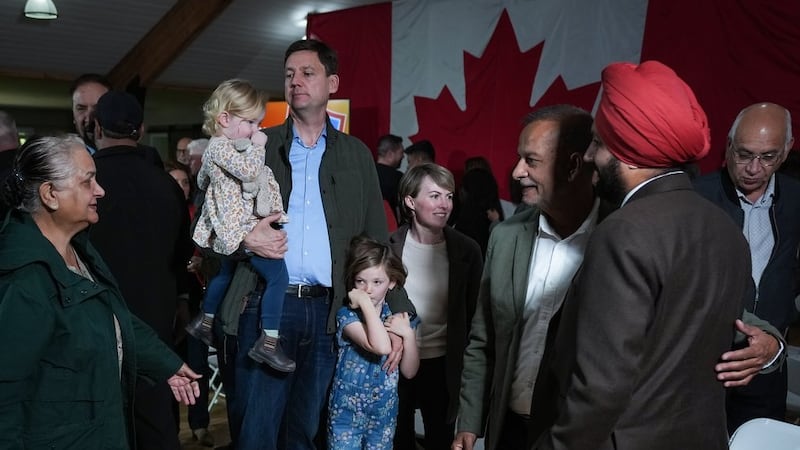
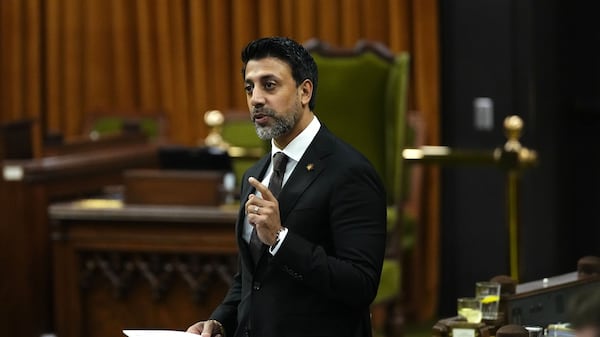
The mayor of Vancouver is forging ahead with a proposal to build a Filipino cultural centre, despite a lack of support from some Filipino community organizations. On Thursday, Mayor Ken Sim revealed details about a motion he’s tabling Nov. 26 with ABC Coun. Lenny Zhou. “This is something that is dear to our hearts and it’s the least we can do,” Sim said. As per the motion, the centre – located across two sites on 1940 Main St. and 143 East 3rd Ave. – would offer language and cooking classes, gallery spaces, and a 500-room hotel built on top. A preliminary proposal has already been brought forward by developer PortLiving for the site. If the motion is successful, it will direct staff to prioritize the review of the proposed Main Street Filipino Cultural Centre and hotel project. ‘We’re going to make it happen’ Sim said he’s adamant the centre will occur, even if he’s no longer the city’s top politician. “We’re going to make it happen while we’re in office, but if it won’t for whatever reason, we’re not going away,” he said. “We will do it as private citizens. We are totally standing behind this and it’s the right thing to do.” Support for the site is coming from the newly formed Filipino Legacy Society, who will work with other organizations to establish the project. Warren Dean Flandez, the chair of the Filipino Legacy Society, said the group’s sole goal is to deliver the centre. “This was a time that we saw an opportunity and we decided to act,” he said. For at least four decades, numerous organizations have been advocating for a dedicated cultural hub in the Lower Mainland. Calls for a cultural centre have become even stronger following the devastating events on April 26 during the Lapu-Lapu Day Festival attack, which killed 11 people and injured dozens more. ‘Standalone building’ Sim’s motion has drawn criticism from dozens of Filipino organizations, who say there’s been a lack of consultation and add they don’t want a hotel attached to the project. Lester De Guzman, the chair of Mabuhay House Society, said he would prefer a standalone centre. “That space needs to be a standalone building that will really replicate the diversity of our culture,” he said. “And having that hotel may take away some of the freedom and also some of the accessibility that our community may need.” The Mabuhay House Society has been working with the province for the last few years on a designated location for the community. Sim weighed in, saying, if another group wants to develop another centre, he would support it. “The analogy I would draw is when you go to Chinatown, there’s more than one benevolent society,” he said.De Guzman said the motion lacks structure and governance, and questioned the timeline of the project, which Sim and other stakeholders did not provide an update on Thursday. “When is it going to be built?” De Guzman asked. “Those questions haven’t been answered. So, it’s challenging for us as a community to really buy in or at least get that understanding of, ‘What do we need to do as a community at the same time?’” ‘Success of the centre’ Asked about why the hotel was needed, Flandez said it would be the “success of the centre,” and that it would be playing a financial role. “The hotel will be contributing, in perpetuity, funds from their revenue to the operational costs of the cultural centre,” he said. Representatives from Filipino BC were not at Thursday’s news conference. In a statement to CTV News, Filipino BC said any development of a cultural centre, especially following the events of April 26, “must be undertaken with the utmost transparency, genuine consultation, and the informed consent of the community.” The group added it had reached out to the Filipino Legacy Society (FLS) to express that it was open to engaging. “We also asked FLS to address community concerns including potential risks, as well as transparency around leadership and the consultation process,” the statement added.