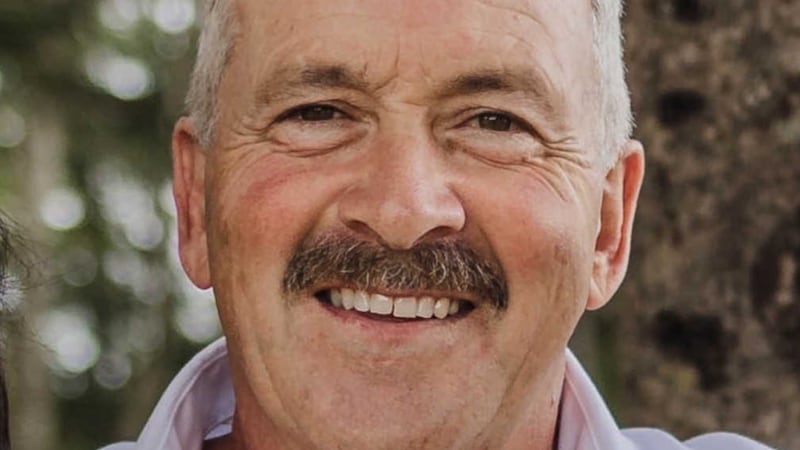
What does it mean to be someone’s child? The courts in B.C. are being asked to consider precisely that question in a potentially precedent-setting case. Mary Diane Stainer is arguing the definition of a child, for the purposes of estate law in B.C., can and should be expanded to include non-biological and non-adoptive relationships after she was disinherited by a man she claims was her father in every other sense of the word. Wilfred Joseph Landry died in 2024, leaving a will that contained a declaration that he had no children—biological or adopted—and specifically that he “has never considered” Stainer his child. However, Stainer is arguing their relationship when Landry was alive belies the declaration, and that he was her parent for all intents and purposes. The court heard that Landry married Stainer’s mother four months before she was born. “Mr. Landry is on Ms. Stainer’s birth certificate, she was raised as his child, and she has maintained a lifelong relationship with him, though their relationship suffered rough patches and was strained at times.” Judge Ardith Walkem wrote in a Feb. 27 decision. “The respondent maintains that her claim raises a genuine triable issue. She asserts that shifting social norms have vastly reshaped family law concepts such as marriage, gender, and parenting … and thus the definition of what constitutes a ‘child’ ought to be revisited with contemporary standards in mind.” Last week’s decision means the case has cleared its first significant legal hurdle, with the judge dismissing an application by the estate’s executors to have the lawsuit thrown out. Legislation leaves ‘children’ undefined British Columbia’s Wills, Estates and Succession Act contains a clause saying applications to vary a will can be made and adjudicated in circumstances where the deceased does not “make adequate provision for the proper maintenance and support of the will-maker’s spouse or children.” In those cases, the court can step in and “order that the provision that it thinks adequate, just and equitable in the circumstances be made out of the will-maker’s estate for the spouse or children,” according to the legislation. However, the statute does not define the term children, meaning it can and has been litigated in court. B.C.’s highest court has ruled on two cases on the issue, each of which resulted in a decision not to expand the definition while not precluding future cases from being brought. “The Court of Appeal expressly left open the possibility that the definition of ‘child’ may be expanded beyond biological and adoptive children where the factual circumstances are compelling enough,” Walkem’s decision said. ‘That was then, this is now’ Myron Plett, with Vest Estate Lawyers and Spectrum Family Law, is the lawyer who is representing Stainer. He notes the most recent decision from the B.C. Court of Appeal was handed down roughly 15 years ago. “Our argument is that that was then, this is now,” he told CTV News. “The standards and mores and the general cultural values have changed to the effect that it’s well past time for the court to go back and to do a thorough reconsideration of what the word child means in today’s society.” One of the tensions at play in estate law, and in cases like this, is the right of someone to do what they wish with their estate and the “moral and legal obligations” a will-maker has upon their death, according to Plett. While a statutory declaration like the one Landry made signals a clear intention that he did not want to acknowledge Stainer as his child, and did not want her to be a beneficiary of his estate—Plett said it is not the final word on the matter given what the law says about providing for one’s spouse and/or children. The evidence the court will consider in support of his client’s claim is, in Plett’s opinion as her advocate, precisely the compelling set of circumstances that could expand the definition of a child. Stainer enumerated more than a dozen factors in her notice of civil claim that she said showed her relationship with Landry was a father-daughter relationship. “In all respects, the deceased presented himself to (Stainer) and the world (as far as she knew) as her father,” the notice said, followed by a list of examples including paying for her education, introducing himself as her father, treating her children as his grandchildren, helping her through a divorce, and sharing in both “solemn observances” and celebrations to mark milestones in her life. The value of Landry’s estate is not something Plett said he could disclose, but he stressed that estate cases are often about a lot more than money. “These are very, very human cases and I would say it’s reductionist to say it’s about the dollars,” he said. For Stainer, the effect of not being recognized as Landry’s daughter in his will amounts to the negation of a lifetime of memories and an erasure of a foundational relationship, according to Plett. “It’s really, really dehumanizing,” he said. ‘Valuable conversation to be had’ Social and legal ideas of what constitutes a family have changed over time. And this case could herald another such change in the context of estate law, according to Plett. “We live in a day and age, in fact, where a number of the sacrosanct, what I would call shibboleth social structures and family structures are being transformed by a more enlightened view of relationships and families,” he said. “We say this is a set of facts that is compelling. And we say it’s a set of facts that merits a reconsideration of how child is defined, and we say that it is worthy of the court’s time and effort to think about this in terms of where society is at today.” Even though the court has agreed Stainer’s case presents a “triable issue,” Plett noted a settlement could still be reached to pre-empt a trial. “In a way, it would be unfortunate, because I think the larger social issue is extremely important, but I’m not society’s lawyer. I’m my client’s lawyer,” he said. “It’s a real opportunity, I think, to participate in law to do a social good. And I think no matter the outcome, this is a valuable conversation to be had.”