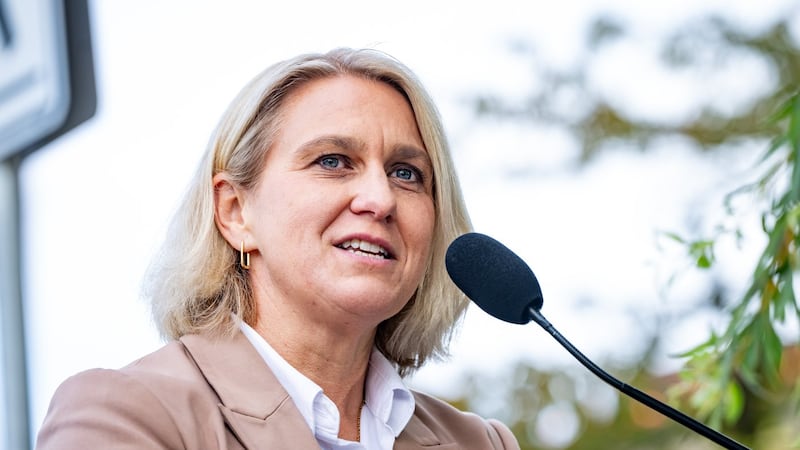
Albertans are just weeks away from ticking boxes on 10 questions in the fall referendum — but there are still some additional questions about what their votes could really mean. Question 1 will ask if “you support the Government of Alberta taking increased control over immigration for the purposes of decreasing immigration to more sustainable levels, prioritizing economic migration and giving Albertans first priority on new employment opportunities?” Currently, immigration is a shared responsibility between the federal and provincial governments, with the former holding the majority of the power. Ottawa sets a yearly capacity for all of Canada, and then assigns every province an individual quota of permanent residency nominations. Alberta’s minister of jobs, economy, trade and immigration claims the program would be more effective — and potentially more efficient — with less federal input. “The provinces should be consulted more and they should be given more consideration on those numbers they’re suggesting,” Joseph Schow told CTV News Calgary. “We know the sectors that are investing in Alberta. We know the trends that are coming. The federal government does not, and so we think we’re best position to make those recommendations.” But not everyone agrees. Economists say the ins and outs of a new system would be “nearly impossible” to finalize, and some business owners and employers worry what it could mean for jobs outside of Alberta’s marquee industries. Smith and Schow’s strategy At the beginning of his term, Premier Danielle Smith tasked Schow with wrestling some control of immigration away from the feds. She claims the federal government’s immigration levels over the past 10 years have been “unsustainable.” Like many other questions, she implies former prime minister Justin Trudeau is almost entirely to blame. The argument is that more immigrants have impacted the province’s ability to fund and deliver social services like health care and education. Those issues are addressed more head-on in referendum Questions 2 to 5. Question 1 is instead somewhat of a doorway inquiry into the others: it’s broad enough to start an immigration conversation, but short on details. We asked Schow what implementation would specifically look like, and he admitted much of the outcome relies on the other four immigration-related ballot questions. If the yeses sweep there, he claims it offers a larger chance for the government to make extensive changes. “We as a province can provide those services that people are being told they will have access to when they get there, and a full understanding of what is available to them when they arrive in Alberta,” Schow said. “Writ large, the immigration program in Canada needs to be evaluated.” The minister says a ‘yes’ vote would “hopefully” allow the province to revisit both the temporary foreign worker and permanent resident programs. He claims the goal is to strategically choose immigrants who can meet demands of industry. “To me, this is really about not who shouldn’t come in, but who should be coming in,“ he said. “What we’re really saying is we’re making sure that those coming to Alberta have the skills we need to meet the demand today and tomorrow.” Last year, Ottawa allowed Alberta to nominate about 6,400 people for permanent residency. Schow says under a provincially-led system, that number would fluctuate year-to-year based on which industries are in-demand and growing. He sees it as a chance to fill vacancies as Albertans move through post-secondary training. Currently, Quebec sets its own annual immigration levels and manages its own economic selection criteria. That’s the freedom Alberta wants, Schow says. Economic impact A Concordia University economics professor believes hypothetical sweeping provincial changes would scare off potential immigrants — “wanted” or not. “It could send a signal that not only are you unwelcome now, but you might be unwelcome in the future,” Moshe Lander said. “Part of the problem is this assumption that there’s no other place in Canada that would want the skills that the immigrants are bringing. “So it could be a situation where Alberta spends a whole bunch of money and people merely use the province as a starting point to jump to somewhere else.” Ottawa’s allocated permanent resident nominations come with an expectation that the individual try to settle in their nominating province, but there is no official law or minimum mandatory timeframe policing them. That means those nominated people aren’t always guaranteed to stick around. Someone could, for example, immigrate to one province, train in and be nominated in another and then move to another still for better employment. Lander says that would make the provincial policy confusing. “How exactly do you stop someone from leaving Alberta once they come here, or how do you stop somebody from Ontario coming to Alberta?” He believes the province has misrepresented the situation and not been forthcoming about what “sustainable levels” of immigration would be. “Alberta does have some control over immigration right now,” he said. “It can create programs that incentivize certain immigrants to come, so it’s not like it’s completely powerless. “Part of the problem is that they’ve presented it as if they have no control of our policy whatsoever. That’s not true.” A missed opportunity? The question also claims lowered immigration would give “Albertans first priority on new employment opportunities.” Business owners and employment experts believe that’s a tricky thing to guarantee. They acknowledge some large companies have taken advantage of the temporary foreign worker program, but say concerns over a few bad actors have poisoned the entire conversation. “I’m happy to hire anyone,” Espy Experience owner Megan Szanik said. “But (most born-in-Canada applicants) don’t want the job that I have for them. They’re unwilling to put in the work in most cases, and they put too many parameters around what they need. So they do not fit into my business as well as new immigrants to Canada do.” Retail and food sector positions are often scapegoated in the immigration conversation, though Szanik said oftentimes new Canadians are the only ones who want those jobs. “We need more people who want to work, especially for lower paying jobs,” she said. Christina Schultz from employment agency About Staffing agrees. “If we do have that Alberta-first mentality, depending on how it’s structured or managed, I think vacancy rates will remain open for a lot longer because Albertans aren’t so keen to step into some of these positions,” she said. “I think it will be a logistical nightmare in some capacity or another navigating that.” As of now, there’s no information about who specifically in the government will make the final call on labour-related immigration. Szanik worries more provincial control could actually hurt the “smaller job market” as the government focuses on more jobs in larger sectors, like energy, tech and aerospace. “The question is so vague,” she said. “What does that control look like? I don’t think we have the context to make an informed decision.” Albertans head to the ballot box Oct. 19.