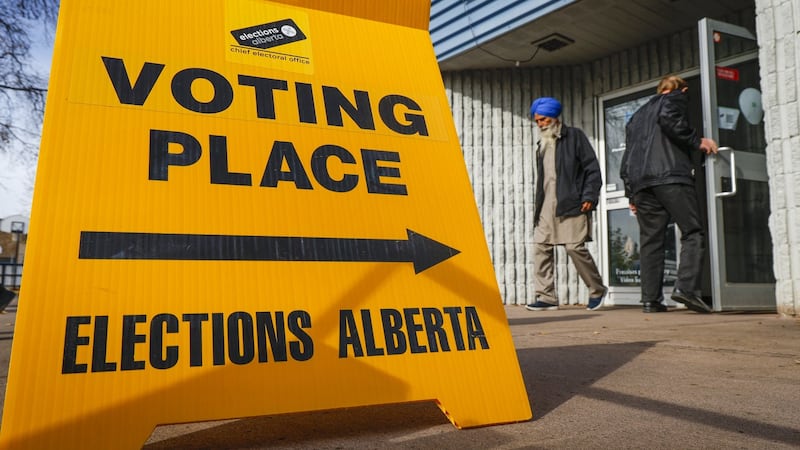
British Columbia voters elected a new slate of MPs Monday, and while some races are still too close to call, the general trend in the results is becoming clear. Nationally, CTV News is projecting a Liberal minority, with Mark Carney maintaining his position as prime minister. Early returns from B.C. showed both the Liberals and the Conservatives on pace to make gains at the expense of the NDP, continuing the trend seen in polling and in results from elsewhere in the country. As of 10:20 p.m., CTV News had declared Conservative Party candidates elected in 16 ridings, Liberal candidates in 11 and New Democrats in two. Fourteen races were too close to call, with the Liberals leading in eight of those, the Conservatives in four and the NDP in one. Green Party Co-Leader Elizabeth May was re-elected in the Saanich-Gulf Islands riding she first won in 2011, but NDP Leader Jagmeet Singh was in a distant third place in his Burnaby Central riding. The decline of the New Democrats in B.C. matched the party’s fortunes elsewhere in the country. Of the NDP’s 24 seats in Parliament at dissolution, 12 were located in B.C. Five of those were on Vancouver Island. The party looks set to be reduced to just a fraction of its previous seat count. It was leading or elected in just seven seats nationwide. In B.C., the New Democrats lost seats to the Liberals on southern Vancouver Island in Victoria and Esquimalt—Saanich—Sooke. They lost seats to the Conservatives in the Interior and on the mid-Island, and were trailing both Liberals and Conservatives in some Metro Vancouver ridings. A rainbow on Vancouver Island Vancouver Island’s map – which was entirely orange except for Elizabeth May’s riding in 2021 – looks set to be considerably more colourful this time around. As of 10:20 p.m., CTV News had declared a winner in each of the island’s seven ridings. The Conservatives picked up three seats on the Island, including controversial candidate Aaron Gunn’s North Island—Powell River riding. The Liberals took two seats on the South Island: Victoria and Esquimalt—Saanich—Sooke. May held her seat and NDP incumbent Gord Johns held onto Courtenay—Alberni. Metro Vancouver mostly red A smaller proportion of ridings had been called as of 10:20 p.m. in B.C.’s most populous region, but the Liberals were leading or elected in the majority of districts there. Liberal candidates had been elected in eight of the 22 ridings in Metro Vancouver, and were leading in seven others. The NDP had one candidate elected in the region and another was leading. The Conservatives were leading in three ridings. Rest of B.C. a sea of blue Outside of Vancouver Island and Metro Vancouver, the Conservatives were dominant, with CTV News declaring the party’s candidates elected in 13 of 16 ridings as of 10:20 p.m. Liberal incumbent Patrick Weiler was elected in West Vancouver—Sunshine Coast—Sea-to-Sky Country, which includes a portion of Metro Vancouver but is geographically mostly outside the region. The other two uncalled ridings in the province were Kelowna – where Liberal Stephen Fuhr held a narrow lead – and Skeena—Bulkley Valley, where Conservative candidate Ellis Ross was leading NDP incumbent Taylor Bachrach. At dissolution, the Liberals and Conservatives each held 14 seats in the province, with the Liberals largely concentrated in Metro Vancouver and the Conservatives dominating the Interior and the north. More than 1.1 million people in B.C. cast their ballots in advance polls in this election, up about 35 per cent from 2021 when 813,000 people voted in advance. With files from The Canadian Press