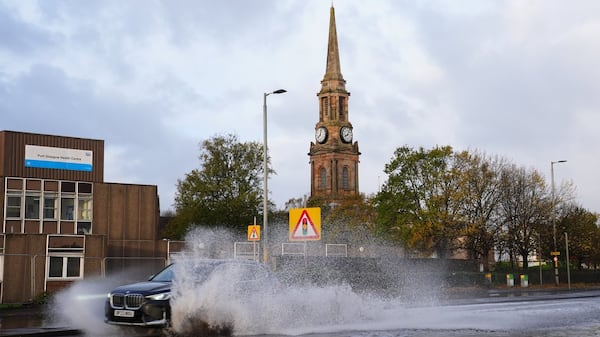
The amount of rain that Toronto has seen over the last week might cause mosquitoes to buzz through the city for longer than usual. Mosquito season typically lasts from May through September, with populations peaking in early June in southern Ontario before dropping rapidly after Labour Day. But some experts who spoke with CTV News this week say that the city appears to still be seeing a significant number of mosquitos, likely due in part to the wet start to September, including a massive storm on Sept. 2 that dumped more than 130 millimetres of rain on parts of the GTA. Toronto got another 10 to 20 millimetres of rain on Wednesday. “It is largely because of, well almost entirely because of that huge amount of rain that we’ve received,” Rosalind Murray, an assistant professor of biology at the University of Toronto Mississauga, told CTV News Toronto. One reason why there are more mosquitoes buzzing around Toronto, Murray says, is due to an “explosion” of floodwater mosquitoes. Dormant mosquito eggs can be activated when an area is flooded by water, Murray explained. Last week’s storm caused widespread flooding across Toronto, even resulting in an extended closure of Don Valley Parkway. “We can have these dormant eggs all of a sudden become living, breathing, active mosquitoes,” Murray said. Another reason there are more bloodsuckers around is due to the temperature, Murray noted, as there wasn’t a “crazy hot” summer this year and they tend to thrive in slightly cooler temperatures. Mosquitoes are at their most active when it is humid outside, she said, which is typically during dusk and dawn. “They don’t want to desiccate, they don’t want to dry out,” Murray said. “When it’s a bit cooler, when it’s overcast, the risk of desiccation is a lot lower and so you start to see them become more active during the day.” Coupled with lower temperatures, this leads to longer-lived mosquitoes. Garrett Brown, branch manager for Orkin Canada’s downtown Toronto location, told CTV News Toronto that he has seen a slight increase in calls for mosquitos this year but he said that has been somewhat offset by a later start to the season amid cooler spring temperatures. “I initially thought it would be more of a worse season because we had such a deep snowfall last winter,” Brown said. Amid the extended season, Brown recommends removing as much standing water as possible to prevent mosquitoes from breeding, like buckets, children’s toys, and frequently changing out the water in bird baths a couple of times a week. “Often, leaves will get in the roof gutters. I twill cause drainage problems and now you’ve created a source for the mosquitoes to breed in,” Brown said. The pest expert also advised keeping grass short and trimming shrubs frequently, so they don’t get overgrown. “They’re hiding inside those shrubs in shaded areas, so if you can trim those back, allow as much airflow and sunlight to get in, the better it will be,” he said. As soon as it gets colder in Toronto and freezing temperatures set in, Murray says the mosquitoes will disappear. “So, for now, in the immediate, acute mosquito season, it’s only going to be a few more weeks max, because they are ectothermic,” Murray said. “Any cold temperatures, as soon as we start seeing those really cold nights compared to the days that we get in the early autumn, then we should see a drastic decrease in the number of mosquitoes.”