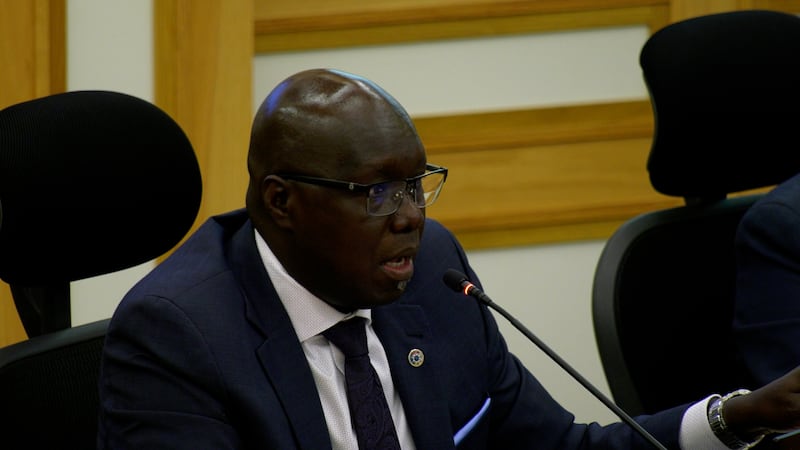
The Government of Saskatchewan is looking to increase administrative penalties for impaired drivers going forward. “Our primary goal is community safety and making sure that we get impaired drivers off the streets as quickly as possible,” Minister of Justice Tim McLeod told reporters Monday. “The deterrent factor with administrative penalties, making sure that we don’t have repeat offenders as well. And so, if the added advantage of that is that we lighten the burden upon our court system, that’s great.” The changes are intended to be implemented through changes to the Traffic Safety Act. The changes would allow for police officers to immediately use administrative penalties for drivers who fail a roadside breath test, including driver’s license suspension, vehicle impoundment, requirement for ignition interlock, and impaired education courses. Additionally, impaired drivers could face new financial penalties up to $2,000 plus a 30 per cent victim surcharge for repeat offenders. These fines would be in addition to any charges or education that SGI deems necessary. “We recognize in those conversations that administrative penalties are a proven and effective way to reduce impaired driving,” MADD Canada CEO Steve Sullivan explained. “They empower police to process some impaired drivers through administrative regime, rather than through the criminal process. This helps improve efficiency, reduce a strain on the justice system which we know is overburdened, inefficient and we see cases, sadly all across the country being thrown out every day.” According to the province, an average of 37 people are killed and another 360 are injured annually due to impaired driving in Saskatchewan. “These are all preventable tragedies, and they have a lasting impact on families and communities across the country,” Sullivan said. “Although we have made progress in reducing impaired driving deaths and injuries over the years, there is still a lot of work to be done. A recent MADD Canada survey found that over 90 per cent of Canadians agree that impaired driving remains a serious public safety issue, and they want their governments to do more.” The administrative penalties would be implemented at the discretion of each individual police officer as they see fit. However, there are still situations where these sanctions would not be an option and require charges under the Criminal Code. “There will be certain restrictions where the administrative penalty will not apply. If there’s a child in the vehicle, if there’s been property damage or a collision. Certainly not if there’s a fatality or an injury, that opportunity is not there for those instances,” McLeod explained. “However, the police will have the discretion if, if they pull a driver over who’s impaired, it will be up to the officer whether they pursue an administrative penalty or criminal code offense.” These new penalties would only apply to drivers found to be under the influence of alcohol. However, McLeod shared the government would consider including drug impairment under the same penalties in the future. “For logistical reasons, that’s the case right now. We certainly are open to looking at that and expanding that opportunity further in the future. But for right now, all drug impairment will continue to be proceeded and will proceed under the Criminal Code,” the minister added. For those who have lost loved ones to impaired driving, like Bonny Stevenson, the president of MADD Canada’s Saskatoon chapter, these changes are much more than just amendments to the law. “Every impaired driver stopped before they cause crashes represents a tragedy prevented,” she said. “It means another family will not receive that devastating knock on the door from the police. It means another loved one will make it home safely. It also means other families will not have to cope with the life altering injuries.” Stevenson added that she believes this change could make a meaningful difference in preventing impaired driving collisions in the future. “While no law can bring back the people we have lost, but every step that helps prevent future deaths and injuries matter,” she explained. “My son should be here today. We cannot change the choices that took his life, but we can take action to prevent other families from experiencing that same devastating pain.” After consultation with partners and stakeholders, the government plans to introduce legislation in the fall.