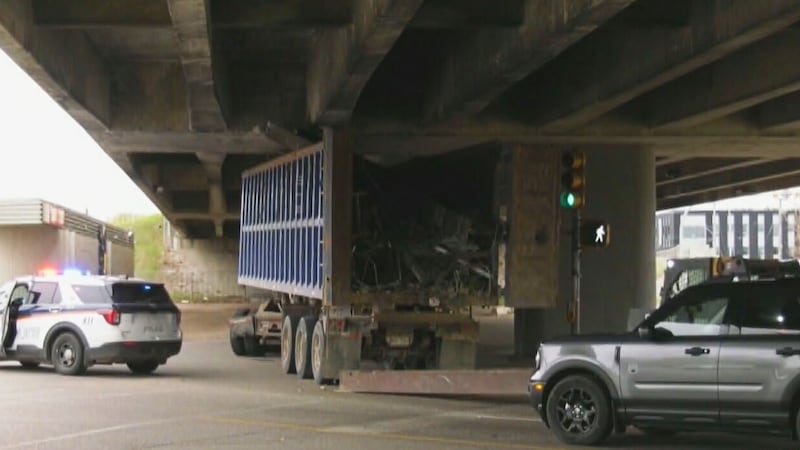
A longtime truck driver from Edmonton has developed a phone app aimed at reducing the number of bridge and overpass strikes involving commercial trucks across Canada. Nine overpass collisions have been recorded in Saskatchewan this year. Seven of those collisions occurred in Saskatoon, taking a costly toll on the city’s infrastructure. Industry experts say while technology can help prevent these incidents, it must be combined with proper safety practices, greater accountability, and stronger government involvement. Walter Machel says he created the app, called Rig Rest, to help drivers avoid costly and potentially dangerous collisions. “The app came about because there’s just too many guys hitting bridges and it’s making trucking look bad,” Machel, founder of RestApps, told CTV News. Originally designed to help truck operators find rest stops, Rig Rest has evolved into a tool that can also warn drivers about low-clearance bridges and overpasses. Drivers enter their truck height, allowing the app to provide warnings as they approach structures that could pose a risk. “You tap route if you want to. If not, just leave it on your dash and drive along. At five kilometres, it’ll warn you about a bridge; again at two and a half, again at one kilometre, an alarm goes off and at 500 metres the alarm goes crazy,” Machel explains. Over the past seven years, while working on the app, Machel has collected height data on approximately 1,700 structures in Saskatchewan and more than 20,000 across Canada. He says the information is updated daily. But the Saskatchewan Trucking Association says technology is only one part of the solution and should not replace industry standard due diligence. Executive Director Susan Ewart says proper pre-trip inspections, checking cargo and obtaining the necessary permits can significantly reduce the risk of a truck striking a low-clearance structure. “If a carrier and driver are doing the proper pre-trip inspection, stopping to check cargo and getting permits from all appropriate places, they can drastically mitigate their chances of running into a low-clearance zone,” Ewart said. One industry expert with two decades of experience says governments also need to take a more active role. Konner Siemens, co-founder of Saskatoon-based Drive Chain Logistics, says governments should support programs that ensure drivers have access to reliable and approved technology. “Government has to step up and get behind a program so that the people in the industry, or industry boots on the ground, know what to use and know it’s safe,” Siemens says. He adds that greater accountability at weigh and toll stations is also needed, saying it is an area where he believes the industry is falling short – especially given the number of structures that have been hit. “Feels like we’re going backwards, but we do need to work out these kinks in order to iron out what is required in the industry. And trucking is a little bit far behind the technology gap, but we’re getting there,” he says. Machel acknowledges governments will not endorse individual apps but says he makes every effort to ensure the information is as accurate as possible. He also stresses that posted road signs must always take precedence. Rig Rest is available in 18 languages, which Machel says is important as more newcomers enter the trucking industry. The app has been accessed approximately 39,000 times so far, according to Machel. “I’m hoping that nobody’s ever get hit again. And I’m hoping that every truck driver carries it in their truck with them. And then we get the whole 300-to-400,000 Canadian drivers using it,” Machel says. He says Rig Rest is free to use, with the sole goal of making Canada’s roads safer and preventing future bridge and overpass strikes.