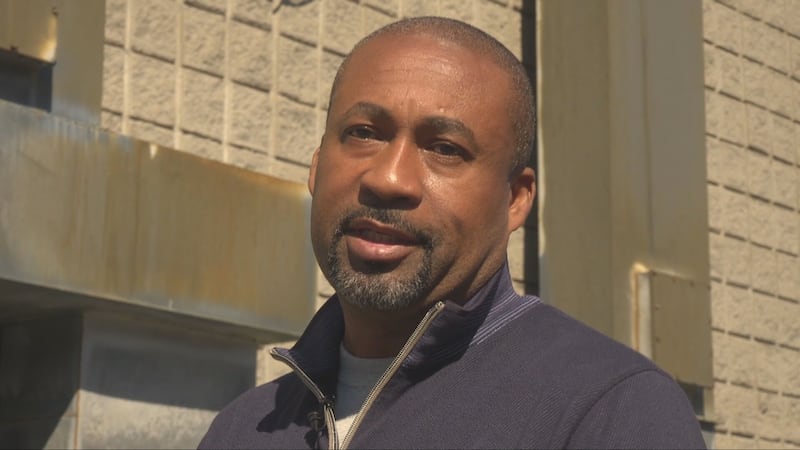
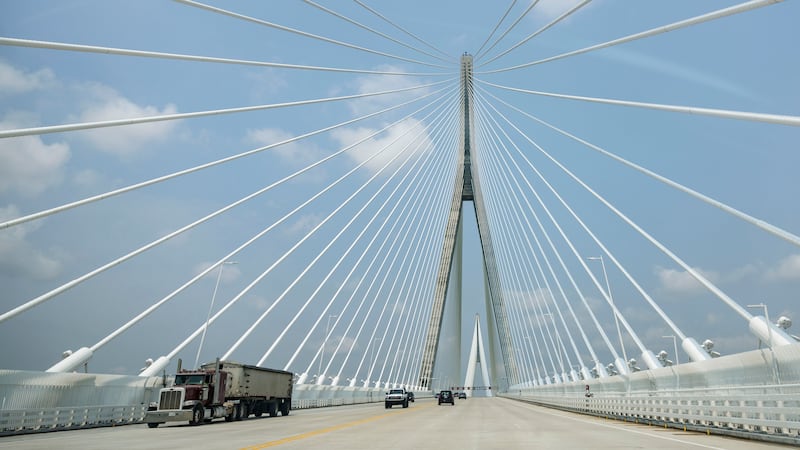
Six months of construction began on the Broadway Bridge Monday, and the project is set to remove a bit of motoring history in Saskatoon. As part of the project, the intersection of 4th Avenue South and 19th Street East will change to a traditional “T” intersection to allow for overall safety improvements and make way for a future bus rapid transit route. The right northbound flow-through lane on the bridge will be removed, traffic signals will be relocated, pedestrian signals will be added, and the island and centre medians will be removed. With a bridge and two streets meeting at one intersection where a few yield signs control right-of-way traffic, the unique and often confusing configuration has caused plenty of issues over the years. “I’ve made that left turn up 4th Avenue maybe three times in my entire life. And each time, I close my eyes and just pump on the gas,” city archivist Jeff O’Brien said. The reconfiguration might be more of a return to normal for the area. Originally built in 1932, the Broadway Bridge is what made the intersection necessary in the first place. Prior to 1932, 19th Street ended at 3rd Avenue where drivers would have to use the Traffic Bridge to cross the river. But once the Broadway Bridge was built to get a rapidly growing number of automobiles through or around downtown, changes needed to be made on Spadina Crescent. Ultimately, officials decided the Crescent Rink and neighboring businesses would be demolished. “That’s where that whole flow-through comes and then a little funny left-hand turn,” O’Brien said. “That intersection looks almost exactly the same in 1932 as it does today.” The intersection won’t exactly be missed by drivers. “I’ve been a little bit uneasy, too, because you’re never really sure who’s kind of got the right of way. It’s a little bit confusing that way,” Clay Sparks said. “I think in, like, the last four months, I’ve kind of almost got wiped out two or three times by other vehicles at that weird yield sign, so I don’t think I’ll miss that at all,” Travis Hebert said. Mike Gauthier wasn’t sold on the changes being planned. He thinks it will be chaos when construction is finished in the fall. “Now, it flows,” he said. “It works because you can actually get from one side of downtown way over to the other quite quickly.” Saskatoon is no stranger to changing historic intersections. In 1969, 8th Street and Circle Drive met at a traffic circle intersection before it was eventually replaced in 1988 with a split intersection after years of complaints. “People here had a really hard time with it,” O’Brien said. “And I tell you, I remember the first time I drove that traffic circle, I got in the inside lane in rush hour, and I thought, ‘I’m going to run out of gas before I get off this damn thing.’ ” That intersection was then converted to an overpass diamond interchange in 1999. At the top of Broadway Bridge is another historic intersection that has caused plenty of confusion. Still known as Five Corners — where 12th Street East, Broadway Avenue, North Broadway Avenue (University Drive) and Saskatchewan Crescent all met — also became a problem once the bridge became a major route into downtown. Changes in 1965 and then again in 2000 closed off traffic to 12th Street West and University Drive to reduce it to three corners. “The goal is always, you know, to keep traffic moving to make it safer,” O’Brien said. With another unique part of Saskatoon’s roadway history set for a major change, O’Brien says it’s usually the river that causes these debates and eventual projects. “You look at the original maps of Saskatoon, they’re all grid pattern except for the streets that run along the river, because some bright guy said, ‘Oh, let’s run streets along the river and they’ll have a beautiful view,’” O’Brien said. “But then you have the problem, what do you do when your grid streets meet your curvy streets? And then you get weird intersections.”