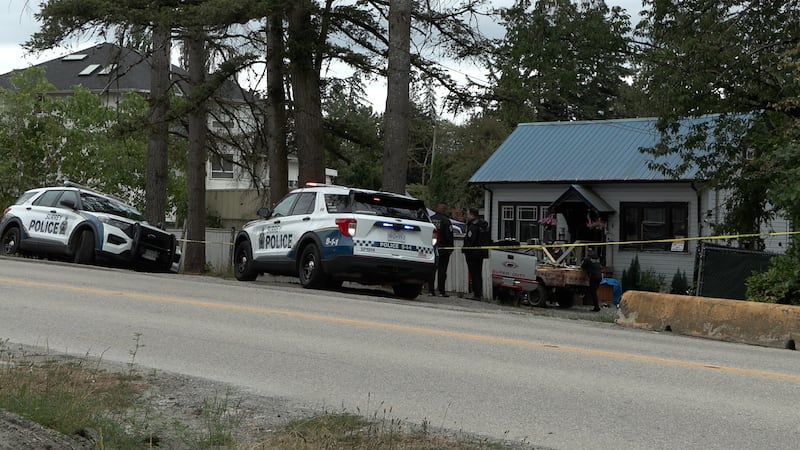
Peanut Butter the cat was recently rescued from a condemned home. RCMP conducted a wellness check, and found one of the cat’s owners dead in the house. Police say criminality wasn’t a factor. After hiding among the nearly five-foot-tall piles of garbage in a home with no heat and urine and feces dripping from the ceiling, Peanut Butter was lured out of the mess thanks to the patience of the volunteers at S.O.S Prairie Rescue. “He was one of the ones we were kind of flagged about before I walked into the home, and so we really wanted to secure him. It was a lot of emotion inside the home. Just trying to secure him and not wanting to lose him into the home and just get him that care,” Ashlyn Weninger, president of S.O.S Prairie Rescue said. Peanut Butter was rushed to Saskatoon for emergency veterinary care, where his eye had to be removed due to a rupture. He is just one of more than 30 cats that have been removed from the home. “He’s doing a lot better now, and he’s all cleaned up. We’re already seeing with all the animals that they’re just feeling so much better and starting to trust...upon arrival, all these cats are very shell shocked [and] shut down from the trauma that they’ve experienced,” Weninger said. Alongside Street Cat Rescue (SCAT) and Mozart SymPAWthy Animal Sanctuary (MSASI), S.O.S Prairie Rescue has been returning to the home to lure the countless other cats believed to be hiding among the debris. “When you come into those situations, it’s just pure devastation. It shakes you to your core. I think about not only the people that lived in those conditions for their families, and then, of course, the animals are also victims in all of this,” Weninger said. While the images shared by the rescue were shocking to many, those involved in animal rescue say scenes like this house are all too common. “Unfortunately, it’s quite a widespread problem of people not having the support or the resources they need to prevent ... scary situations like this. And then there not being adequate response resources in place,” Caitlin Stickney, a board member for SCAT said. Weninger echoed these sentiments, citing a gap in provincial supports. “This is not an isolated incident. This is an every community in Saskatchewan and in Canada. There are just not supports, and we’re failing people and animals,” Weninger said. In the 2026 provincial budget, $1.6 million has been proposed for animal protection, which is a decrease from the $1.8 annual average which was invested over the last three years. In a statement to CTV, the province says it decided to cut funding and amend the Animal Protection Act after a round of public consultations. “These amendments will strengthen the protection of animals and enhance public transparency and fiscal responsibility of animal welfare enforcement,” the emailed statement said. “We have funded animal welfare enforcement in the province and will continue to do so. The proposed budget of $1.6 million reflects funding to continue fully supporting enforcement under a new provider.” Government funds are dedicated to specific programs such as Animal Control or the SPCA. Most other rescues such as S.O.S and SCAT are run exclusively through volunteers and donations. “Animal control is always playing catch up. They don’t have resources to keep animals that are brought into care for any length of time. There’s a lot of humane euthanasia happening because there just aren’t places for these animals to go,” Stickney said. Weninger added that this overflow of demand will likely increase as funding for animal protection is decreased. “Organizations like SCAT and Mozart and S.O.S. are picking up the slack, if you will, in areas where there [aren’t] shelters or there [aren’t] animal control...we’re taking those in and supporting the animals that need us without the government funding or supports — or even recognition or a seat at the table,” Weninger said.