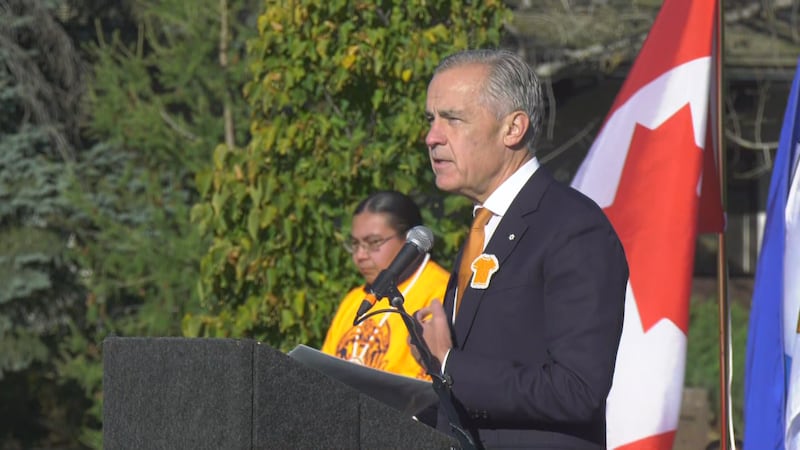
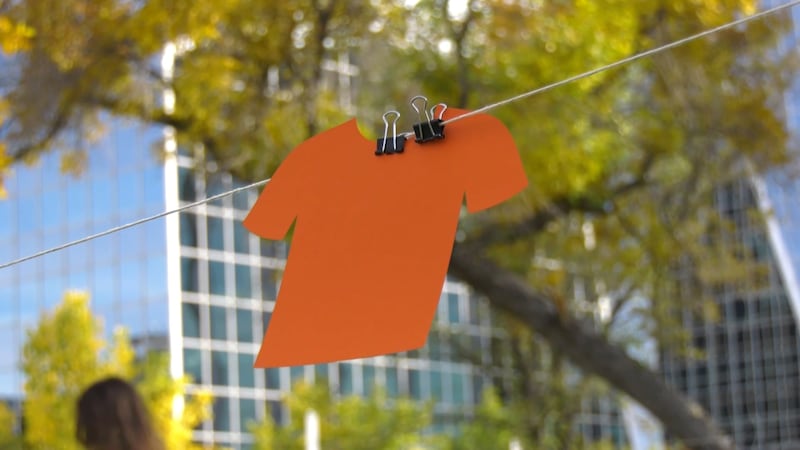
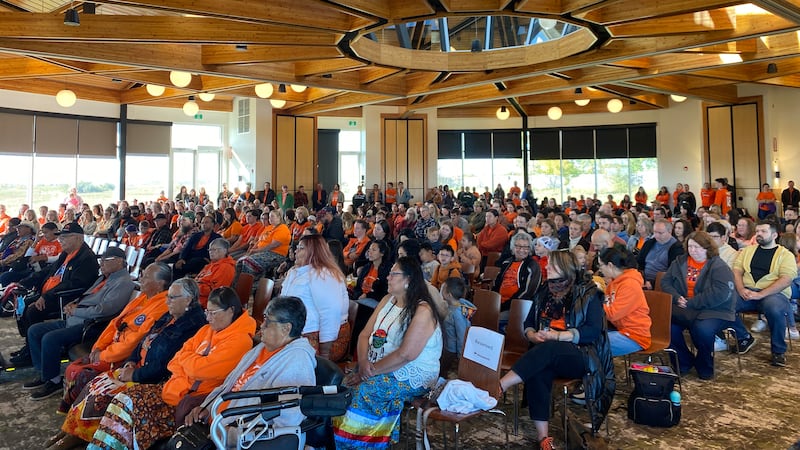
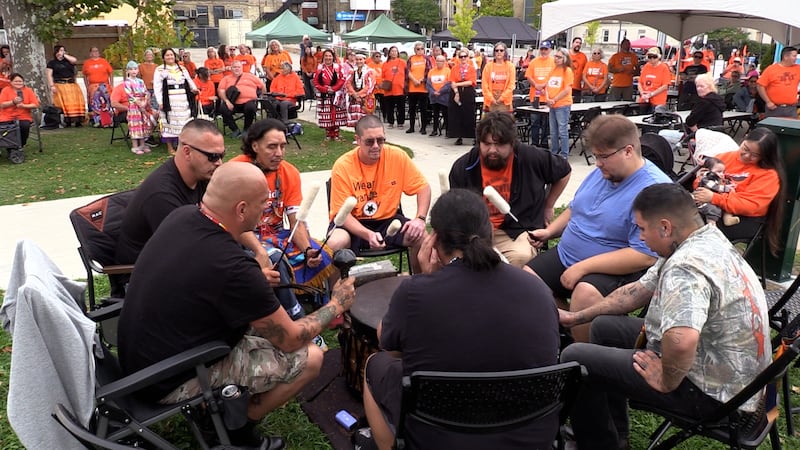
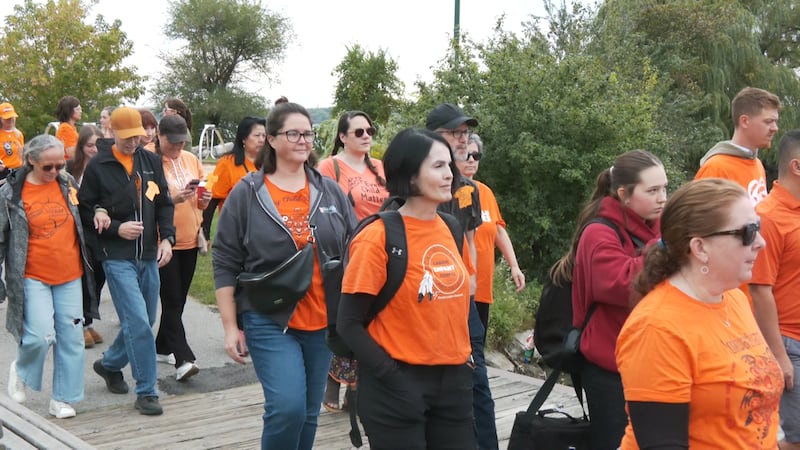
More than 1,000 people took part in Yorkton’s annual Orange Shirt Day walk Wednesday, marking the National Day for Truth and Reconciliation, a growing community support for education and awareness around the painful legacy of residential schools. People gathered to honour survivors, remember children who never returned home from residential schools, and reflect on the ongoing journey toward truth and reconciliation. The event began with a prayer and honour song at the Yorkton Tribal Council’s King Street building. Orange shirts filled the gathering area while school buses lined nearby streets as students and staff from schools across Yorkton arrived to participate. In 2025, organizers said the crowd was the largest they have seen since the annual walk began six years ago. This year, however, interest was even higher. Yorkton Tribal Council Tribal Chief Isabel O’Soup said she was encouraged to see such a strong turnout. “There’s over 1,000 people here today, and I’m grateful for all the schools that are here,” she said. She said she believes the high turnout is due to education efforts having a growing impact year over year. “It’s always the same message: recognition, education and awareness,” she said. “I think it’s getting more prominent. This is the sixth year of the National Day for Truth and Reconciliation, and for some reason the educational piece within the schools is changing. That’s probably why they’re all here.” She noted that organizers have invited schools to participate every year, but this year’s turnout exceeded expectations. The participation of several Catholic schools was particularly meaningful, she added. “The Catholic school board reached out and said some of the schools were going to be here, and they’re never here. I think that’s another accomplishment.” For the Tribal Chief, the large crowd represents progress after years of advocacy and education. “I’m so grateful that the schools want their kids to know,” she said. “This is just an example that we’re getting somewhere, one step at a time.” Although the day is rooted in remembering painful aspects of Canada’s history, O’Soup said she’d like to focus on building a better future. “My whole life is about being a voice for my ancestors and all those kids that don’t have a voice,” she said. “I don’t live in the past. I want to focus on the future, but my past will build that future.” Looking ahead, O’Soup said her vision is one of inclusion and equality, where Indigenous peoples are fully represented and involved in community life. “We all walk together in equality. That’s what I see here today,” she said. “We want inclusion. We want to be included. We were never included. We just want equality and inclusion.” The event also featured remarks from Yorkton Mayor Aaron Kienle, whose tearful speech moved many in attendance. O’Soup said the mayor’s response comes from a genuine place. “I honestly think he speaks from the heart,” she said. “When you really think about how little kids were treated, you cannot not cry. He’s not crying just for show. It has really affected him.” She added that compassion and understanding are essential to reconciliation. “We need that more. We need to see a little bit more kindness and love.” O’Soup also issued a challenge to residents and governments alike, encouraging people to remember residential school survivors throughout the year rather than only on Sept. 30. “Wear orange every Friday,” she said. “We don’t need only one day of recognition. We need to remember all the time.” For those wondering how to begin learning about Indigenous history and reconciliation, O’Soup pointed to one educational tool in particular. “A lot of people ask me where they should start,” she said. “I say reach out to us and we’ll bring the Blanket Exercise to you. It’s one of the most powerful educational tools you could ever put yourself in.” She said understanding the history of Indigenous peoples helps build empathy and creates a stronger foundation for reconciliation. “If you have a heart, you’ll be changed forever. Your perspective of First Nations and Indigenous people might change a little bit because then you understand the history of where they came from.”