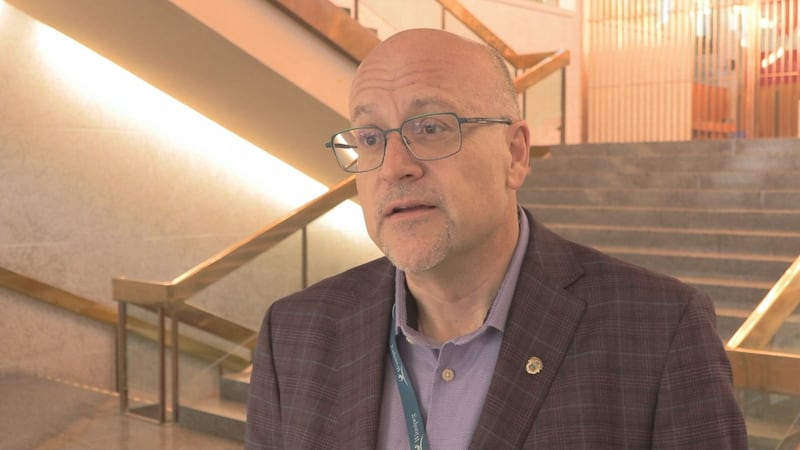
The Newo-Yotina Friendship Centre says its supervised safe injection site is seeing increased demand after the Saskatchewan Health Authority (SHA) issued an overdose alert Wednesday. Manager Emile Gariepy says the increased potency of a certain batch of drugs is leading to more overdoses. “It’s definitely stronger than it normally is,” he told CTV News Thursday. “I’m not noticing anything like, psilocybin or any tranquilizer-type drugs inside of it as well, just that the fentanyl is stronger.” Earlier this week, the SHA said overdose incidents have seen a stark increase this month. The province says there were 140 overdose-related calls between April 1 and April 21. However, that is more than the first two months of 2026 combined, which saw 136 overdose incidents according to the Regina Police Service (RPS). Numerous samples tested by Newo-Yotina were positive for fentanyl and benzodiazepines, but there may be other substances circulating in the community, the alert said. Gariepy says the presence of these drugs increases the risk of fatal overdoses. “It’s also going to take more doses of naloxone to bring people back as well,” he added. Regina Fire and Protective Services (RFPS) have responded to 574 suspected overdose incidents since Jan. 1, 2026, according to a response to CTV News. The RFPS said it responds to overdose incidents through emergency incident response as well as in its partnership with the SHA on the Overdose Outreach Team (OOT). Since the OOT identified a sharp increase in responses, the Ministry of Health released the alert. The highest number of suspected overdoses was seen in December of 2025, the RFPS said. However, the organization said the total number of suspected overdoses this year are trending higher than last year. Minister of Mental Health and Addictions Lori Carr says the government is monitoring the situation. “This just goes to the whole point there is no safe use of illicit drugs,” she told reporters after question period Thursday. “That’s why we’re going to continue on with our ‘Action Plan for Mental Health and Addictions,’ adding those recovery spaces for individuals to have the opportunity to get into a safe, healthy lifestyle.” The provincial plan to address a growing addictions crisis was launched in 2023 and uses a recovery-based model to combat the issue. “We have seen successes,” Carr told the legislative assembly. “Since that plan was introduced, there has been a 28 per cent decrease in overdose deaths in this province.” Carr said the province remains on track to reach its goal of adding 500 new addictions treatment spaces by 2028, needing about 180 more beds to achieve the target. The NDP opposition believes the government’s plan is reactive, rather than proactive. “Their solution is, ‘We’re going to make sure everyone is recovering,’ but yet there’s people out there that are overdosing today,” said Betty Nippi-Albright, the opposition’s critic for mental health and addictions. “There is no plan to ensure people that are still struggling with substance use harms are aware of what they’re consuming … municipalities have been asking for supports because it’s not their job to fund mental health and addiction support. It’s the province’s.” “[Being] proactive is not doing the drugs at all in the first place,” Carr responded. “That’s why we’re working with individuals, why we have education campaigns out there talking about not using drugs. And, of course, illicit drugs are very dangerous and that’s what we’re seeing happening right now. I really hope we have people reaching out for that recovery.” However, Gariepy says the plan does little to help individuals who are not ready, nor willing to seek out help. “You can’t treat somebody if they don’t want to be treated,” he said. “But for the people who do want [it], treatment is a really good option and there’s a lot of things for them to be able to find; the connections and the resources they need to get to get sober.” Earlier this month, Saskatoon’s supervised consumption site closed its doors following the discovery of a major financial shortfall. In Regina, Gariepy emphasized the importance of the space to ensure those who are using can do it safely. Newo-Yotina added its is seeing an increase in demand for its services with little increases in its resources, as it does not receive provincial funding for its safe consumption site. “We’re doing our best, but we could do a lot better if we actually had some help from our government,” Gariepy said. “We need more seats, more testing and we could get more machines. Sometimes it does get really busy and we do have a lot of tests we need to do.” Gariepy added that many people utilizing the centre are fearful of fentanyl contamination given the increase in overdoses. “We’ve definitely seen a lot more people coming in to want to use the [Fourier Transform Infrared machine] opposed to just using testing strips,” he added.