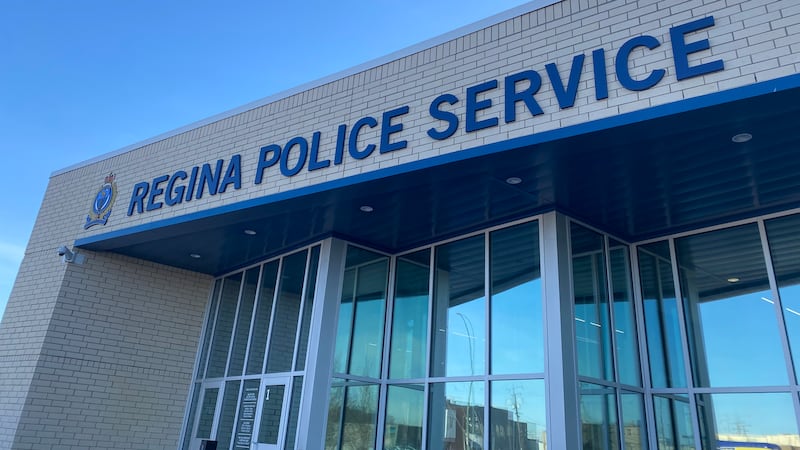
Despite indicating his intention to halt the city’s purchase of electric buses, Ward 10 Coun. Clark Bezo’s motion did not even make it to floor as it was deemed out of order. “I would like to cancel any remainder of the [electric] buses we have coming forth and cancel the contract to not receive them,” the councillor said, attempting to introduce the amendment Thursday afternoon. Earlier this week, Bezo took to social media saying he planned to introduce the amendment during the course of debate. It came after Amalgamated Transit Union Local 588 Regina president Sukhwinder Gainda claimed the battery life for electric buses does not succeed three hours in the cold. However, Bezo’s motion would not get any further than that. “Is there any impact [to] the 2026-2027 budget or contract implications to that?” Mayor Chad Bachynski asked administration. “There’s no funding in 2026 to buy new electric buses that’s been pre-approved,” manager of civic operations Kurtis Doney responded. Because there was no implication on the budget for either of the next two years, the motion was deemed, ‘out of order,’ by Bachynski – who is the chair for council meetings. The city has more than 140 buses in its transit fleet, 20 of which are electric. The federal government and city both contributed $26,106,500 toward the 20 buses and the infrastructure for their charging stations for a total investment of over $52.2 million. The first seven electric buses cost $1.37 million per unit, with half the cost shared with the federal government as part of its zero-emission transit fund, an investment initially announced in February 2024. Electrification of the fleet was also outlined in the city’s Energy & Sustainability Framework and Action Plan which outlines Regina’s plan to become a renewable, net-zero community by 2050. The city says the first seven of the 20 electric buses hit the road at the end of April 2025, with the other 13 on their way. City solicitor Shannon Williams warned of severe implications should the contract be terminated. “If we cancelled the contract at this point, which really isn’t a viable option, it would cost us more money than it would to continue with it,” she said. “I don’t think I’ve heard the actual implications because if that money is cancelled, may be we see some receiving on that contract that would go back right into the 2026 budget,” Bezo responded. “All we’ve heard is this hearsay there could be a penalty. I don’t even know what the penalty is.” Williams said cancelling the contract would result in the city being taken to court. “If you cancel a contract that’s already complete, then you are in breach of the contract,” she said. “We could be in litigation with respect to the breach of contract. I can’t predict how much that will cost but it would cost legal fees, as well as whatever liability we would be under for breaching the contract, which would be up to the courts.” “Typically, [that] is relatively severe and usually often the cost of the contract. I mean, we would be paying the contract and not receiving the buses,” Williams added. Williams also said the city may have had to return the federal funding it received to purchase the buses in the first place, adding to the penalty. “Nothing with those buses that are currently ongoing and on order is in order of this budget,” Bachynski said. “Because there’s no way to identify what that would be. And in fact, it could be a net deficit.” Bezo then withdrew his motion and the meeting continued. Transit security, increased bus fares coming in 2026 Regina’s public transit will get some additional security measures at the cost of increased rates in 2026. It comes as city council ended three full days of budget deliberations and entered its fourth day Thursday at City Hall. On Wednesday afternoon, Ward 8 Coun. Shanon Zachidniak put forward measures to bring additional safety measures on city buses. “It’s something that is going to meet the needs of transit users, transit staff, and have a net zero, impact on the mill rate,” she said while proposing her amendment to the budget. “This has come up as a huge priority for bus operators and for residents: safety and security on buses.” The motion aimed to provide additional security training for drivers, create 10 full-time positions to service additional security with eight transit officers and two support workers and to remove a provision to increase bus fares by 10 per cent – which was proposed by Mayor Chad Bachynski Wednesday morning. To ensure there was no impact on property taxes, Zachidniak proposed five options: “We’ve seen incidents on the bus increase year over year,” Nathan Luhning, Director of Transit said. “We’ve had over 200 incidents of disruptive behavior on the bus [in 2024] and over 400 [in 2025].” “With 96 buses on the road at one time, it’s hard to have one person to respond to multiple issues that may come up at one time,” he added. Peace officers over police In Saskatoon, there are 14 service supervisors supporting transit employees when there are incidents. The Saskatoon Fire Department also has 12 community support officers who split their time patrolling transit and other areas. As part of their budget deliberations earlier this month that council voted to expand the program to create a transit police force of officers and two vehicles. Officers are expected to be deployed early in 2027. Administration in Regina say the city would benefit from a phased in approach, beginning with security personnel to serve as peace officers, instead of police. “We looked at a few options and how we could have peace officers on the bus,” Luhning said. “And we did talk to Regina Police about that idea. [Alternative Response Officers] do jump on the bus once in a while, but not as frequent as we would like.” Currently, the Regina Police Service [RPS] has 27 alternative response officers [ARO] dedicated to the downtown area. “Do we really believe adding several security officers on our buses infrequently will address the safety risk?” asked Ward 3 Coun. David Froh. “The intent of the peace officers is to be a presence,” Luhning said. “They would not have the same power as what an officer or an ARO would, but we have seen good success in the limited resources we have.” After council passed RPS’ budget at over $130 million Monday, some wanted to see their responsibilities expand to address growing incidents on public transit. “We just increased the police budget substantially,” Ward 10 Coun. Clark Bezo said. “The police were here and they did mention they can provide the security services from time to time when needed on the bus. I don’t think we need to fund two different paths to get to the same end game.” Luhning said funding additional AROs to be transit police would cost double the amount of adding security guards. “In speaking with RPS of the adding police to a situation like that, they were in agreement a good first step would be the peace officers before we go to police officers,” he added. “My worry with that is if we tasked the police with [transit], are we going to see an increased ask in the future,” Ward 6 Coun. Victoria Flores said. “To say, ‘Hey, we are already taking care of security on buses in addition to what we’re doing.’ ” The vote to add security guards to transit passed 7-4, with Couns. Dan Rashovich (Ward 1), George Tsiklis (Ward 2), Mark Burton (Ward 4) and Bezo voting against. Transit fares increase As part of a separate vote, council rejected Zachidniak’s idea to remove a bus fare increase from the budget. Couns. Rashovich, Tsiklis, Burton, Shobna Radons (Ward 7), Jason Mancinelli (Ward 9) and Bezo voted against the idea to keep fares the same, as the motion failed. This mean transit prices will increase 10 per cent – as motioned by Mayor Bachynski on Wednesday. “We [could] keep fares the same and we will also increase service,” Zachidniak said. “This is a way we can make sure we are not costing people more money and we are still increasing service.” Ward 5 Coun. Sarah Turnbull also attempted to enhance transit services even further from what Zachidniak proposed but it was voted down. The result of the votes together actually caused Regina’s forecasted mill rate to temporarily decrease. The budget is not finalized until fully voted on, as amended, at the end of the process. Amendments to the proposed budget continue Thursday. Councillors are scheduled to debate the 2026-27 budget through Friday.