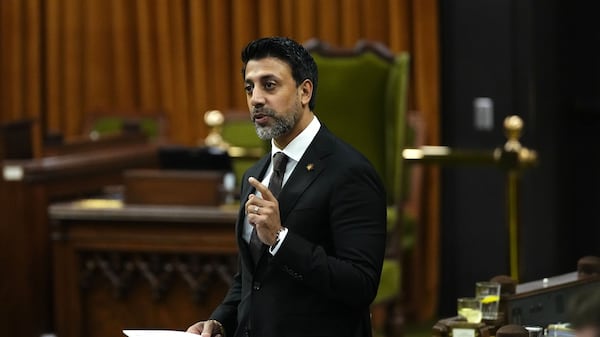
Regina city council has a new forecasted mill rate increase for 2026 after an amendment put forward by Mayor Chad Bachynski to begin deliberations Wednesday morning. “This is a challenging budget year,” he told his fellow council members Wednesday. “We’ve heard a lot about how we’ve kept budgets artificially low for years and we’ve heard from delegates that made it very clear [they] don’t want to see a drastic increase in [their] taxes.” “And at the same time, we don’t want to reduce services and cut the things that make our city livable and vibrant,” the mayor added. With the amendment, the new forecasted mill rate increase is 10.73 per cent, down from administration’s forecasted 15.69 per cent when the budget was first released last month. A series of budget cuts and deferrals to a variety of city services were listed in his motion which will save the City of Regina $12.8 million in expenses. They range from removing physical parking meters from the downtown and moving to a full-cashless system, to discontinuing free parking at Wascana Pool, increasing transit fares 10 per cent, cancelling planned transit service expansion to service late night weekend and holiday routes, and deferring investments into the transit fleet reserve, among others. Capital projects like the 11th Avenue revitalization Campbell Street construction project will each have $1 million less to work with in 2026 as money is deferred to fund a new project earmarked for the intersection of Dewdney Avenue and Lewvan Drive. “I just hope my colleagues will recognize, as we start to make deeper cuts if that’s what council is looking at, just gauge the impact of that dollar versus the impact of that service,” Bachynski said. As part of his presentation of the budget, city chief financial officer Daren Anderson said the city could maintain adequate service levels at the tax rate the mayor proposed. “Council has set a strategic priority to remain in the lowest 25 per cent per capita taxes amongst our comparator cities,” he said. “That requires us to stay below the city of Saskatoon. We can do this for 2026 with a tax increase of 10 per cent.” The decrease results in a grave difference in increase of city tax expenses. Administration’s 15.69 forecasted mill rate hike, which was announced last month, would have seen city expenses related to property taxes rise $33/month for the average Regina household valued at $325,000. At 10.73 per cent, the average household change would be about $23/month. “How did you come up with these different proposed cost savings?” asked Ward 8 Coun. Shanon Zachidniak. “[I] took the initial information provided and narrowed down items provided [within the budget reduction options] that had either low or no impact indicated on that list,” Bachynski responded. “We’re trying to not heavily impact service levels throughout our community, while still understanding that this puts pressure on our on our taxpayers.” Bachynski added he worked with all other members of council to centre in on priorities before going to administration to decide which options were feasible. Anderson said his team was in favour of the proposal. “I would characterize it as a very healthy relationship of finding a balance between cost to taxpayers and service levels,” he said. “The process from our end was quite healthy. And we would have no objections to where it sits right now.” Bachynski’s motion has yet to be voted on and is not final. It is also subject to further amendments by other councillors before the point it is voted on. Council’s deliberations are scheduled to last through Friday. Bezo to motion to halt city’s EV bus program Ward 10 Coun. Clark Bezo says he will be bringing forward a motion to halt Regina’s program to electrify its transit fleet. “We have spent over $29 million with zero results,” Bezo said in a post to social media Tuesday. “This is another failed program, and our residents deserve better.” “We need reliable, practical transit solutions that actually work in our climate. Not costly experiments that fall short,” he added. It comes after Amalgamated Transit Union (ATU) Local 588 Regina president Sukhwinder Gainda claimed the battery life for electric buses does not succeed three hours in the cold. “If you’re asking me, I’m not in favour of electric buses at all,” Gainda said as part of his delegate presentation. “It’s not for the Saskatchewan weather. For the winter, the battery dies very quickly, they can just run for two or three hours.” “If we cut electric buses and got rid of that fleet to maintain services, would you be happy with that?” Bezo asked Gainda. “I would be happy with that,” he responded. “We haven’t seen them on the road … before, we were happy with the electric buses because it will save some fuel we were thinking and it’s [good] for the environment. But now when we see after two hours of drive, the battery comes to 15 per cent.” The city has more than 140 buses in its transit fleet, 20 of which are electric. The federal government and city both contributed $26,106,500 toward the 20 buses and the infrastructure for their charging stations for a total investment of over $52.2 million. The first seven electric buses cost $1.37 million per unit, with half the cost shared with the federal government as part of its zero-emission transit fund, an investment initially announced in February 2024. Electrification of the fleet was also outlined in the city’s Energy & Sustainability Framework and Action Plan which outlines Regina’s plan to become a renewable, net-zero community by 2050. “Diesel is pretty expensive. Is there any reason why we couldn’t use the buses which don’t use the gas in fall, spring and summer for our fuel savings and just use the diesel ones in the winter when the electric one[s] suck?” Ward 9 Coun. Jason Mancinelli asked the union president. “We haven’t tried in summer yet,” Gainda responded. “This is the first time we [have them] during the winter time.” Electric buses first hit the streets in Spring 2025, according to the city. “Before we prejudge them, knowing we have our over 140 buses in the fleet and only 20 are electric,” Mancinelli added. “But I think with fuel savings in the peak seasons where they’re usable, could we try them that way?” “If you’re saving on fuel, we’re spending on electricity,” Gainda said. “We can’t rely on them. With diesel buses, we have a sign, we know how long it will go. In electric buses, especially in winter, a big no.” The conversation was then halted by a point of order from Ward 3 Coun. David Froh. “I respect this conversation. It’s interesting. I respect your opinion and my colleagues,” he said. “Looking to the chair and to the clerk’s office for a recommendation as to whether this is the appropriate time.” “It’s not a strong debate. Electric buses, in light of all the people that are waiting here to speak this evening, I just like us to be mindful,” Froh added. Mayor Chad Bachynski, who is the chair for city council meetings, agreed with Froh’s point and the meeting proceeded. Budget deliberations continue More than 80 delegates spoke to council through the first two days of budget deliberations. With those now complete, city administration gave a presentation of the budget on Wednesday morning before councillors began their questioning. As part of the process, members of council may present motions and amendments to the city’s budget, such as Bezo’s attempt to cancel transit fleet electrification. -More to come...