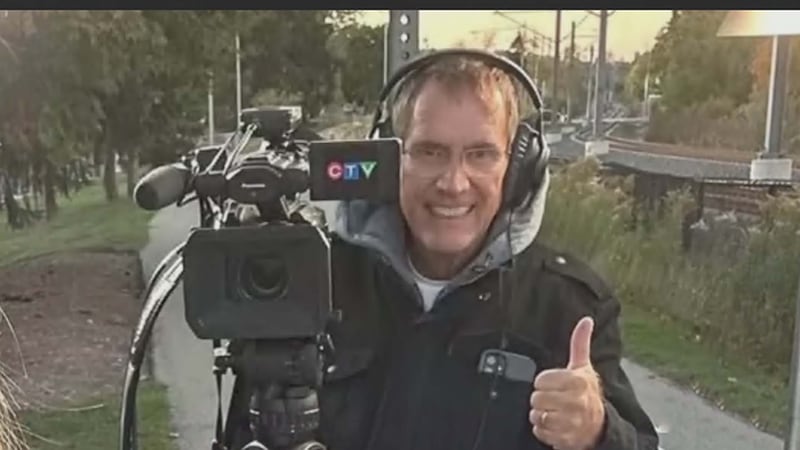
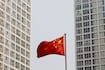
Eric Ham is based in Washington, D.C. and is a political analyst for CTV News. He’s a bestselling author and former congressional staffer in the U.S. Congress and writes for CTVNews.ca. U.S. President Donald Trump has now withdrawn his invitation to Prime Minister Mark Carney to serve on his Board of Peace, marking the latest escalation between the two leaders. This newest dispute underscores the very delicate tightrope the prime minister must navigate as the United States grows increasingly more unpredictable and less democratic on the global stage. Adding to the tensions, both men lobbed veiled and not-so-veiled shots at one another in Davos. Still, Carney is walking a very fine line as Ottawa seeks to reduce its reliance on the United States, all the while making inroads with China, the world’s second largest economy. But in doing so, Carney must engage in a delicate diplomatic two-step as he seeks new opportunities with Beijing. The prime minister seeks to keep both nations close, all the while finding points of leverage as he eyes all-important CUSMA negotiations this spring. Prior to the latest tit-for-tat between the prime minister and the American president, Carney did in fact agree, albeit in principle, to join President Trump’s Board of Peace. This made Carney one of the very few Western democratic leaders willing to serve. Yet, that stirring address in Davos struck a nerve with the thin-skinned American president and now, once again, Ottawa stands in the cold. A situation only made worse as the new Ottawa-Beijing trade pact comes into clearer picture. Courting China as a hedge In the wake of bruising tariffs on key sectors, it is now becoming harder to ignore Canadian dependence on the United States. The nation’s economy and very sovereignty hangs in the balance. As Washington grows more unpredictable, Ottawa is making the prudent and smart decision to reduce the nation’s reliance on its southern neighbour. In its place, Carney is hoping China can become a more stable and dependable trading partner. Aware of the potential, he is nevertheless moving forward. During his address in Davos, Carney said, “Now Canada was amongst the first to hear the wake-up call, leading us to fundamentally shift our strategic posture. ... So we’re engaging broadly, strategically with open eyes. We actively take on the world as it is, not wait around for a world we wish to be.” Recognizing the ground has shifted and will continue to do so, he is courting Beijing perhaps as a hedge against a Washington that is becoming less democratic and even less trustworthy. Incessant bromides, unexpected attacks, and overt disrespect levied by Donald Trump against Canada are now a daily constant. Washington responds with fury Just recently, U.S. Commerce Secretary Howard Lutnick doubled down on the stinging attacks and constant threats. Referencing Canada’s recently inked trade pact with China, the cabinet secretary said: “If they continue this path, right, which is a political path of a certain thing, ‘I’m going to go fly to China, I’m going to open up my markets to China, I’m going to take Chinese electric cars and do all sorts of this stuff,’ then when (CUSMA) gets renegotiated this year … do you think the president of the United States is going to say, ‘you should keep having the second-best deal in the world?” The pressure from Canada’s biggest trading partner is enormous and the clock is ticking on CUSMA. The prime minister hopes to maintain the trade agreement with the U.S. and Mexico. However, should talks fall apart, Carney will need a backup plan that will stave off ruin for the economy. Perhaps it is too ambitious, wishful thinking, or a combination of both, to think Carney could court the two biggest global economies and keep them close. The on-again, off-again relationship between the neighbours is once again off. However, this time, it feels more ominous; more finite. In Davos, as the world braced for an American military onslaught, Carney took the stage and stood in the gap for Europe and all of the West. Unfazed and unbowed, he signalled to the international community that the post-Second World War order is officially no more. Rather than feign indifference or ignore Carney’s message, Davos embraced it; embraced him. With one poignant speech and fresh off a massive win that included America’s biggest antagonist, it is Carney once again punching well above his weight and taking on the moniker of ‘leader of the free world.’ Washington has taken notice; and they are responding with rage and fury. It is unclear how much longer the PM can walk this tightrope but at some point he, too, will have to come to terms with his own words and no longer straddle the middle, but ultimately and eventually choose a side.