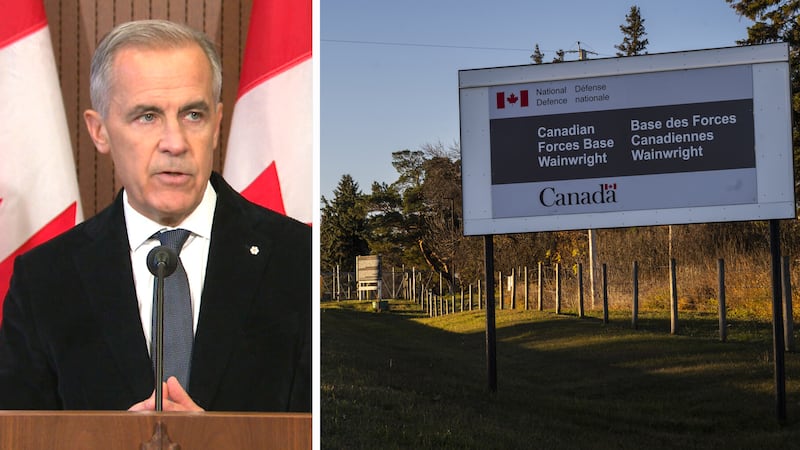
Environment and Climate Change Minister Julie Dabrusin will not reveal whether the Alberta-Ottawa memorandum of understanding sets a target date of 2030 by which the province will hike its industrial carbon price to $130 a tonne. In November, Prime Minister Mark Carney and Alberta Premier Danielle Smith signed a major new energy co-operation agreement, outlining the conditions that need to be met for a new oil pipeline to the Pacific to proceed. The memorandum of understanding (MOU) also laid out deadlines by which the two parties need to agree on certain issues, including on an industrial carbon price by Wednesday, specifically stating Alberta’s system “will ramp up to a minimum effective credit price of $130 per tonne.” “The whole MOU has multiple pieces to it, and I do want to point to the progress we’ve made so far,” Dabrusin said in an interview Tuesday on CTV Power Play with Vassy Kapelos, when asked whether that price will by reached by 2030. “We have a co-operation amendment. The consultations on the draft just finished on Friday, and so we hope to get the final agreement out shortly,” Dabrusin added, also pointing to agreements in principle between Canada and Alberta on methane and methane equivalency. Dabrusin also said it’s “not just about” the $130 credit price set out in the MOU, but rather about the effectiveness of the industrial carbon price system overall. The federal government has pointed to an increased industrial price on carbon as the key piece of its climate policy that will supplant the impact of removing both the consumer carbon price and the oil and gas emissions cap. Speaking to reporters in Wakefield, Que. on Tuesday, Carney conceded they’re unlikely to meet the April 1 deadline to agree on an industrial carbon price. “I don’t think we’re going to announce an agreement tomorrow, but I feel very good about the progress and the state of the discussions,” he said. When pressed a second time on whether the $130-a-tonne price will be reached by 2030, Dabrusin wouldn’t directly say. “The $130-price is in the MOU and the negotiations are ongoing on that piece,” she said, adding she will announce the details once they’re agreed on by both the federal and provincial government. Dabrusin called the industrial carbon price a “central part” of the federal government’s climate strategy — when pressed a third time on whether she believes Alberta will commit to a 2030 deadline for $130 a tonne — adding negotiations with Alberta are “ongoing.” With files from CTV News’ Rachel Aiello