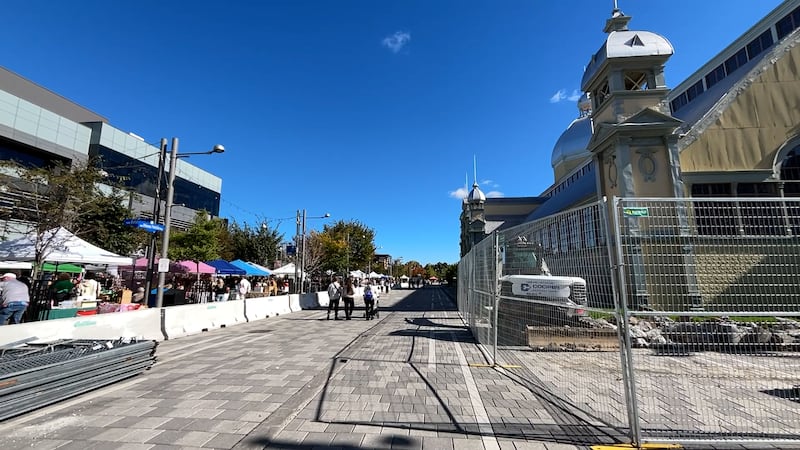
A proposed high-speed rail along the Toronto to Quebec City corridor could one day reshape how Canadians travel, but many are asking: at what cost? On Wednesday, a series of public information sessions kicked off in Ottawa. The event at Bayview Yards was hosted by Alto, the Crown Corporation behind the ambitious project, gave residents a chance to ask questions and weigh-in on the project’s potential future. Gord Boulton drove from Kingston, Ont. to attend the first information session saying, “I’m just really curious how they’re going to try and stick-handle around some of the issues of construction.” Boulton is part of a Facebook group page and is reporting back to his neighbours about concerns they have for the proposed high-speed rail project. “A lot of people in our area sold their property to the Nature Conservatory with the idea that nothing was ever going to be built on this property, and now it appears like possibly that’s going to be flipped,” says Boulton. Other attendees are interested in the potential environmental and economic factors that comes with the new route. “We need to design for all users and that includes not just the human users,” says Ben Hammer. Hammer is originally from Ottawa and regularly commutes by train between Halifax and the capital. “We need to make sure that the corridor includes wildlife crossings, because we don’t want rail kill,” he said. “We want to make sure all the beings on our lands get where they need to go safely.” Benjamin Morrison is back in Ottawa after working on environmental assessments for bullet trains in Japan. “It would change the way that people can kind of do business, at least in eastern Canada. Someone will be able to go from Toronto to Montreal and back in a day for an important business meeting,” says Morrison. Marc-Olivier Ranger, Alto’s Chief Strategic Policy & Partnership Officer says, he’s impressed with the turnout on the first day of information sessions. “We want to know what a resident from Ottawa wants from the project,” says Ranger. “We have a whole team that is here to explain what’s the scope of the project, how we’re going to develop the corridor, a station location, what criteria we’re going to use…and really to listen.” The proposed corridor between Toronto and Quebec City will have seven stops. Construction on the first section between Ottawa and Montreal could start as early as 2029, and open around 2037. “We’re talking about Ottawa to Toronto in under two hours,” says Peter Paz, senior director for Public & Government Relations for Ontario for Alto. “We’re talking about Ottawa to Toronto in under two hours, connecting Ottawa to Montreal in an hour. That is game changing.” Tremblay station, the current VIA Rail station, located southeast of downtown Ottawa and the city’s original downtown Union Station have been floated as possible locations for the capital’s high-speed terminal. “As much as I see the appeal of rebuilding Union Station, I’m not sure the additional cost justifies it,” says Hammer. “At the same time, I’m not sure if O-Train Line 1 provides enough capacity for the ridership that Alto will see.” Alto says ultimately the Ottawa hub will be placed in the best location for the city. “Connectivity is really important and that’s why we’re working really closely — regardless of what option we end up going with — we are working really closely with the City of Ottawa,” says Paz. The series of consultations and then design process will lead to a final decision by the federal government in 2029 on whether to fund the project. Alto says the entire project could come with a price tag between $60-90 billion dollars and partly be funded by private investors.