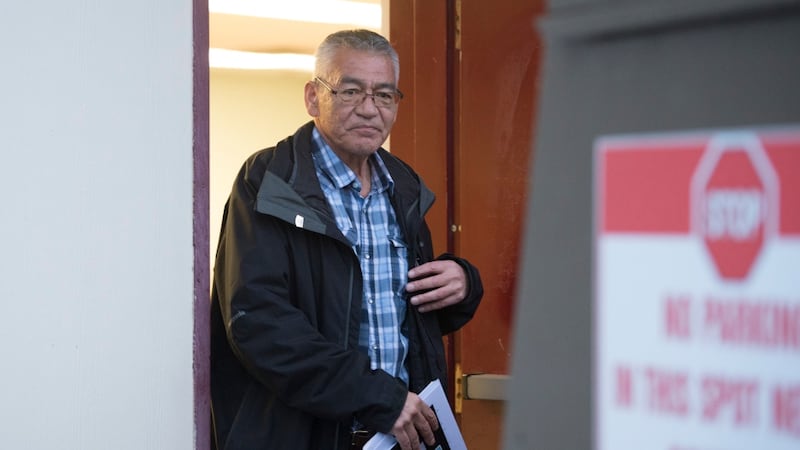
An Ottawa man living with ALS has now been selected for a Health Canada approved trial that is only being done in Ottawa and Montreal. The treatment is unique because it aims to address the causes of ALS. Raymond St. Pierre has been living with ALS for more than two years. “I have grown much weaker, and I have lost a bit of balance,” said St. Pierre, who spoke to CTV News at the Ottawa Hospital Civic Campus. “Now my speech is beginning to be affected a little bit, so I’ve noticed some changes for sure.” St. Pierre first spoke to CTV News Ottawa in 2024 after a promising breakthrough out of Western University on the cause of ALS. “Like I mentioned in the first interview that there was a light at the end of the tunnel, this could be it,” he said. Researchers then discovered that targeting an interaction between two proteins present in ALS impacted cells can halt or even reverse the progression of the disease. Now, St. Pierre has been approved for a first of its kind Health Canada trial. “This is most encouraging because it’s the first time in Canada since Dr. Strong’s discovery out of Western University,” he said. He’s one of the first patients in Canada to be on a trial for a medication that is being tested only in Ottawa and Montreal. “We are looking at Darifenacin and whether it is able to aid patients with ALS to repair their nerve muscle junction to improve their muscle strength and muscle function,” said Dr. Ari Breiner, an Ottawa Hospital neurologist. “I think the hope is that it will slow down any progression of the disease. At this point we don’t know whether there will be any reversal or not of symptoms.” Breiner, one of the doctors overseeing the treatment, says it’s unique. “It’s a made-in-Canada study,” said Breiner. “It’s based on groundbreaking cellular and mouse work that was done at the University of Montreal and the trial itself is only being done at two sites, both of which are in Canada.” St. Pierre is only a few weeks into the six-month trial and doesn’t know how it could all work out. He could even be on a placebo, something both patients and doctors are not notified of during trial periods. “It’s a beginning, it’s a start,” he said. “I’m hoping it will slow down the progression and if it can help out, fantastic, but we will just have to see after a few months.” “We are optimistic, but it’s still in the testing phase and there’s still a lot of work to be done before it’s accessible to patients outside of a clinical trial,” said Breiner. For the 75-year-old, the trial also gives him hope that he can make a difference in the lives of those living with ALS.