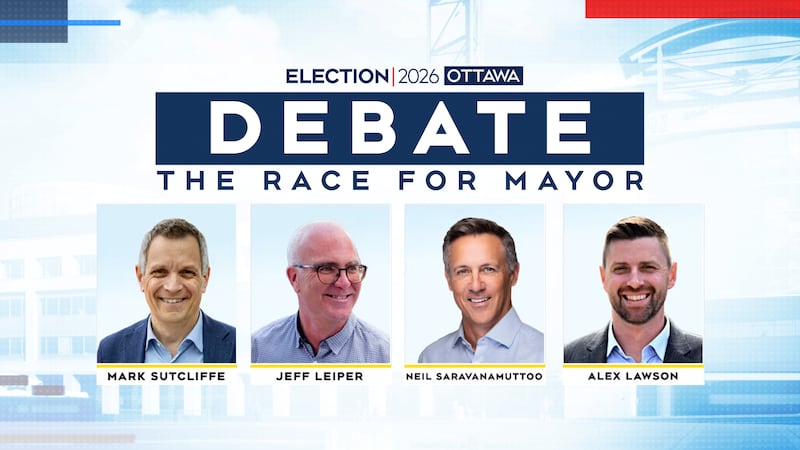
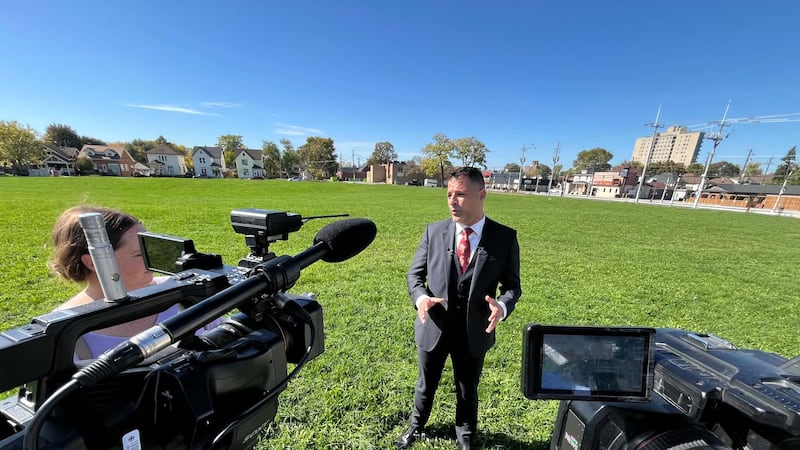
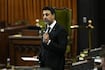
Ottawa mayoral candidate Alex Lawson says, if elected, he would introduce a motion at the first council meeting of the new term to eliminate Ottawa’s vacant unit tax. The vacant unit tax was implemented by city council in 2022 to encourage homeowners to occupy or rent their properties to address the affordable housing crisis in the city. Properties that are declared vacant for more than 184 days in the previous calendar year are charged a fee equivalent to one per cent of the property’s assessed value on their final property tax bill. If the same property is vacant multiple years in a row, the charge increases every year to a maximum of five per cent of assessed value after five years. Net proceeds from the tax are directed to the city’s affordable housing reserve. All property owners must declare the occupancy status of their properties every year. In a news release on Monday, Lawson said the number of vacant units found did not justify the bureaucracy required to run the program. “Last cycle, 327,967 properties had to declare. The number found vacant, after the City’s own audits, was 4,140. That is 1.3 per cent,” Lawson wrote. According to city data, 4,140 homes were declared vacant in Ottawa in 2023, including 1,244 identified by an audit. A total of 3,669 homes were vacant in Ottawa in 2022. In December 2025, city staff said 1,602 previously vacant units were returned to the housing market between 2022 and 2023. Lawson said the tax has failed to reduce rents, pointing to rising rental figures between October 2022 and October 2025. The tax has faced opposition before. In 2023, Coun. Laura Dudas moved a motion to scrap it, calling it a “bureaucratic burden” on households. Council, however, voted to maintain the tax and to simplify the declaration process. In 2024, as part of the Ontario-Ottawa Deal with the provincial government, the city strengthened the tax, adding increasing penalties for properties that remain vacant for several years. Lawson says, if elected mayor, residents would not need to declare for the 2026 occupancy year and any late filing fees for previous years that have yet to be paid will be waived if the home was occupied. Lawson also said he would inform the province that the city is scrapping the vacant unit tax and, in exchange, would open up more city land for housing and keep the property tax burden low. The money raised by the tax for affordable housing would be found elsewhere, he said. “On September 16, Mark Sutcliffe admitted there is another $250 million of fluff in his budgets at City Hall. The revenue cut from the VUT is fully covered by these savings,” Lawson said. Sutcliffe said, in his campaign launch on Sept. 16, that he would commit to finding an additional $250 million in savings and efficiencies in the City of Ottawa’s budget if re-elected. He made the same pledge in 2022. Opponents more favourable to tax Sutcliffe has been supportive of the vacant unit tax and seconded the motion to keep it in 2023. He also signed the Ontario-Ottawa Deal with Premier Doug Ford and voted in favour of strengthening the tax in 2024. In a statement to CTV News Ottawa, Sutcliffe’s campaign said he would not eliminate the tax in the next term of council but would push to improve it. “The VUT program will be up for review in the next term of council, and at a minimum, it must be improved. The program is too cumbersome, requiring every homeowner to comply with an administrative burden despite the VUT applying to only a fraction of properties. However, eliminating it entirely would create a significant budget shortfall, reduce investment in affordable housing, and contribute to higher housing costs in Ottawa,” the statement said. “When the data on the VUT is presented, Mark Sutcliffe will review all options and will push for significant improvements to the program, including streamlining the administrative process.” Coun. Jeff Leiper, who is running for mayor, also voted in favour of keeping the tax in 2023 and in favour of strengthening it in 2024. His campaign told CTV News Ottawa that Leiper would keep the tax if elected. “Jeff will keep the Vacant Unit Tax. The evidence is clear that it’s working: the VUT has already brought more than 1,600 units back to the market and unlocked an estimated $400 million in housing supply. It’s also one of the city’s primary funding sources for affordable housing. Getting rid of it would benefit property owners who profit from keeping units empty and would pull the rug out from under Ottawa’s housing efforts to create more affordable housing,” a statement from Leiper’s campaign said. “That said, Jeff believes implementation matters. Where the letter and the spirit of the VUT aren’t aligned — where the tax is being applied in ways that weren’t intended, or where the city isn’t getting the outcomes it should — Jeff is open to targeted refinements. He also wants to improve coordination with MPAC to ensure the tax is being applied correctly and consistently.” Leiper’s campaign said Lawson’s position “signals whose interests he’s there to serve,” while Leiper’s interest is in housing people. “As for Mayor Sutcliffe, he has had four years to strengthen this tool and has said little about it as a campaign issue — which is its own answer,” his campaign said. Mayoral candidate Neil Saravanamuttoo said he would need to further research the issue. “What I have heard from many Ottawa residents is that they find the tax administratively burdensome and frustrating to navigate. Those concerns deserve to be taken seriously,” Saravanamuttoo said in a statement to CTV News Ottawa. “As Mayor, I’ll conduct a transparent review of the Vacant Unit Tax to determine whether it is achieving its intended objectives, delivering value for taxpayers, and minimizing unnecessary administrative burden. Any decision about its future will be guided by evidence, transparency and results.” Fourteen people are running to be mayor of Ottawa: Jeff Leiper, Alex Lawson, Neil Saravanamuttoo, Mark Sutcliffe, Zed Chebib, Peter Westaway, Suraj Harish, Queen Divine Priya Amber Bakshi, Bernard Couchman, Ali Shayvard, Jacob Solomon, Amjad Ali Syed, Josh Rachlis, and Geoff Nicholas. Election day is Oct. 26.