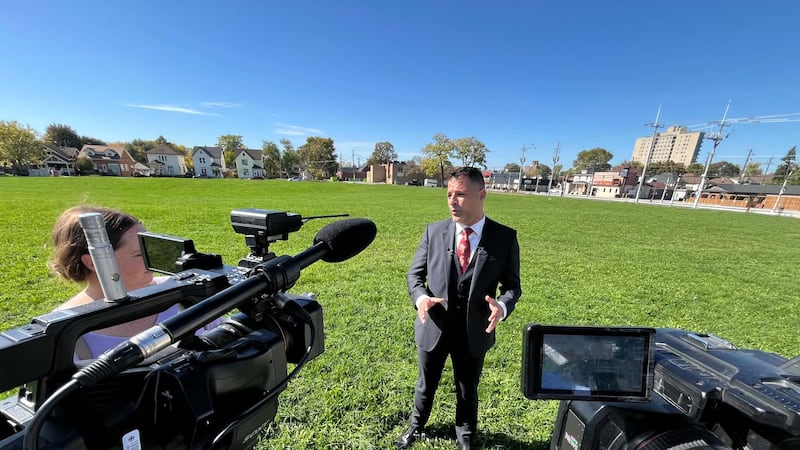
Windsor’s two leading mayoral candidates are pitching different approaches for downtown revitalization and housing as the municipal election campaign enters its final stretch. On Tuesday, Drew Dilkens announced a plan in his bid for re-election to relocate the Downtown Mission and Positive Pathways from their current locations to the city’s Homelessness and Housing Help Hub (H4), while challenger Fred Francis questioned the timing of the proposal and promoted his own plan to increase affordable housing. The announcements come as voters prepare to choose their next mayor on Oct. 26, with advance voting already underway. Dilkens’ broader downtown revitalization plan includes bringing the two organizations’ services together at the H4 site, located in the former Windsor Water World building. The city has already approved more than $7 million in upgrades to the facility, including filling in the former pool, improving its heating, ventilation, and air conditioning system, as well as adding showers and washroom facilities. “We just believe it would be better done off of Ouellette Avenue,” said Dilkens of the proposed relocation. He said the city has held initial discussions with the Downtown Mission and hopes to work with the organization to make the plan a reality. Dilkens acknowledged that expanding services would come with costs, saying the city is working through the details. He also reiterated his commitment to securing federal and provincial support for the proposed Village at The Barn transitional and supportive housing project. The downtown plan also includes efforts to attract a major business tenant, create an economic development area, improve public spaces, and pursue a new central library at the former tourism building at City Hall Square with a residential development component. Francis offers housing plan Francis, who released an affordable housing plan Tuesday at the former Grace Hospital site on Crawford Avenue, criticized Dilkens for making the relocation announcement less than two weeks before election day. “He’s had 12 years to do it. If he couldn’t get it done in 12 years, why would we believe he’ll be able to do it in four more?” Francis said. Francis called for more concrete details on budgets and timelines, arguing the city needs a strategic plan to address housing and downtown challenges rather than additional campaign promises. His housing platform proposes incentives to encourage affordable housing construction, including waiving building permit fees for affordable housing developments, reducing development charges through partnerships with senior governments, and establishing clearer timelines for development applications. The plan also calls for converting underused office space into housing, tackling vacant and neglected properties, and making it easier to build in the downtown core. Francis said the former Grace Hospital site illustrates his concerns about the pace of development. He was a member of council during previous decisions involving the property and said some discussions took place in camera, preventing him from publicly sharing details. “We will move forward with developments that improve neighbourhoods, allow for more affordable homes, and will not cost taxpayers money,” Francis said. Voter homework Lydia Miljan, a political science professor with the University of Windsor, said municipal voters need to look beyond campaign announcements and examine where candidates stand on the issues. “In municipal races, usually it is a lot on you to figure out where they stand,” said Miljan. “You have to sort of read between the lines because they don’t want to seem that they’re part of a specific political party.” She said voters should examine the issues to determine which candidate positions align with their priorities. Miljan also said the competitiveness of a race can influence turnout, particularly when voters see a possibility of change. “Whenever there looks like an interesting race, that sometimes increases voter turnout,” she said. “But when you have the same people always getting re-elected, sometimes people figure, well it’s not going to matter if I vote or not and that tends to suppress the turnout.” Windsor’s city clerk, Steve Vlachodimos, said predicting turnout remains difficult, pointing to the 1982 municipal election when turnout reached 53 per cent and election officials reportedly ran out of ballots. “It’s hard to always predict what the voters will do,” said Vlachodimos. “But I have faith and trust in the voters in terms of what they choose to do.” Dilkens and Francis are among 11 candidates running for mayor in Windsor’s Oct. 26 municipal election.