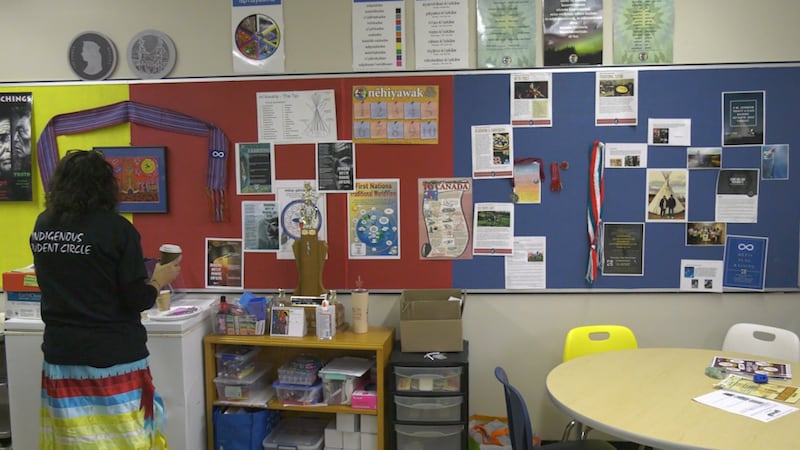
Regina Public Schools has laid out a new three-year plan for Indigenous education. The school division’s plan includes integrating Treaty teachings into all student studies. The plan, revealed on Sept. 8, was created to support students through five principles: respect, relationality, reciprocity, relevance, and responsibility. It’s a framework that principal on assignment Shannon Fayant developed using her 30-plus years in the Regina Public School system. It was also created with consultation with the Indigenous Education Advisory Council, community elders, the Indigenous Student Forum and Indigenous Advocates. However, Fayant said the majority of school teachers are non-Indigenous and that their insights could not be overlooked. “I reached out to some teachers and some principals, vice-principals, who have been doing the work on Indigenous education and really are some of those allies ... reaching out to them to just ask: what do we need to do, where do we need to go?” Fayant said. Fayant said the first target was younger education at the elementary level. Some Treaty education exists already in different social studies courses that are available to high school students. “We are looking at lowering the PTRs for the Grade 1 programs. We’re also looking at how we can ensure that we have Treaty education in all our curriculum K to 12 and ensuring that we have an Indigenous education high school framework, but also an elementary framework as well,” Fayant explained. Individual schools themselves are not yet the focus for Fayant and the team behind this new education plan. High school students can currently choose to graduate with a Métis sash or Treaty medal. In November, every public school in the city will fly the Métis flag throughout the month. In just its first few months of operation, the plan is currently working through exploring a wide breadth of options. Regina Public Schools will also examine potential curriculum additions, course options and inclusive programs before anything school-specific is approached. “Part of the three-year plan, we are developing some professional PD and its individual modules,” Fayant said. “But for now, we are doing it as a collective, as a group, and we’re calling it nanâtawihowin. So it’s healing medicine.”