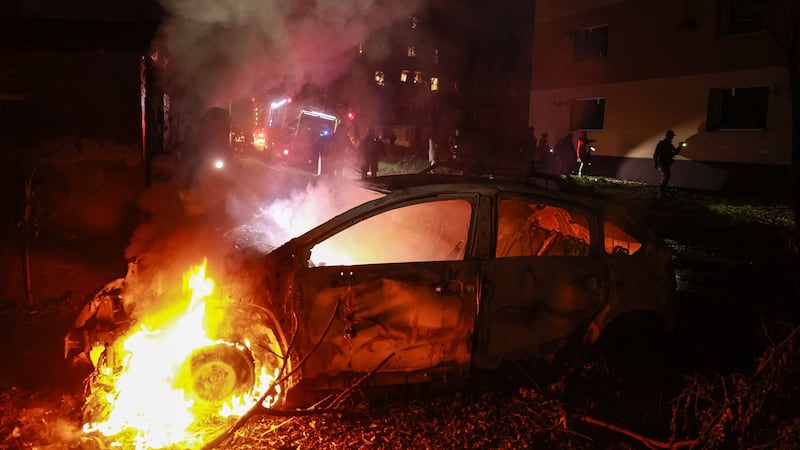
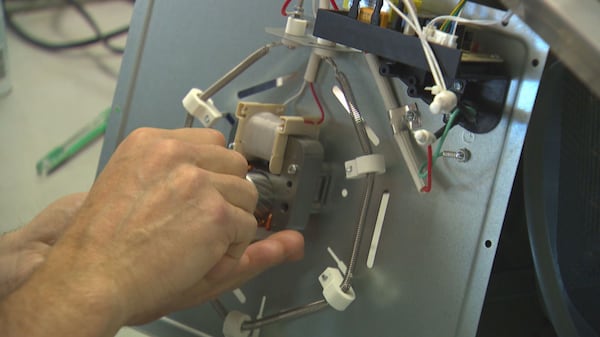
Two electric school buses that were pulled off the roads in the National Capital Region this week following a fire in Montreal could be back in service as early as Monday, the manufacturer has announced. It was Tuesday that a Lion Electric school bus went up in flames in Montreal with students on board. Both the driver and students managed to evacuate the bus and avoid injury. The fire caused the Quebec government to pull 1,200 Lion Electric buses off the roads, citing safety concerns and a possible defect. All 1,200 Lion Electric buses underwent inspections. In a statement to CTV News Ottawa on Friday night, Lion Electric said its buses would begin coming back on the roads Monday. “The Lion Electric Company (LION) is pleased to announce that the Société de l’assurance automobile du Québec (SAAQ) has approved its plan to return LION-C electric school buses to service. This plan, developed with the support of Transport Canada, paves the way for a gradual and safe return of school buses to Quebec roads starting Monday,” the company said. “The plan, based on a preventive inspection bulletin developed by LION over the past few days and sent to all affected operators, provides for continued checks throughout the weekend. As a result, vehicles will be progressively authorized to return to the road as they are cleared for service. In parallel, the technical analysis continues in collaboration with Transport Canada to determine the cause of Tuesday’s incident. LION can confirm, however, that neither the electric battery nor the propulsion system was involved.” Western Quebec School Board route affected The move to pull buses in Quebec affected one bus in the Outaouais region, which transported 54 students to and from Greater Gatineau Elementary School. “In situations like the Gatineau region, you’re talking about vast territories. Children are sometimes on the bus for an hour to and from school. Sometimes it’s not viable for parents to bring their children to school,” said Katherine Korakakis, president of the English Parents’ Committee Association. In a statement to CTV News earlier in the day Friday, the Western Quebec School Board (WQSB) said, “We are not certain of the timeline for the inspection at this time. The board is working with its contractors to ensure the least possible disruption to students and families.” “What they’re saying is that each bus to inspect is between 30 minutes to an hour,” said Korakakis. “And then once that inspection happens, then if there’s a repair that’s needed, that’s additional time. So, the concern becomes how are parents going to mitigate getting their kids to and from school?” One bus was also pulled from its route by the Ottawa Student Transportation Authority, which told CTV News, “Of OSTA’s six operators that provide school bus service, one has an electric bus. Out of an abundance of caution, this bus has been temporarily replaced with a standard school bus until we have more information.” A total of 23 routes across the WQSB were cancelled Friday due to buses being pulled. Inspections search for cause This is the third time a Lion Electric bus has caught fire in the past year. In an earlier statement, a spokesperson for Lion wrote, “We are currently conducting an analysis, in collaboration with Transport Canada, to understand the circumstances of the event. The precise cause has not yet been identified. Earlier this week, we shared inspection procedures with all affected operators. We are working closely with them and Transport Canada to confirm the safety of LION vehicles and to ensure the full and prompt resumption of school transportation services.” Transport Canada says it is focusing on the heating system. “In the last year, Transport Canada has received reports of three fires and one overheating event involving LionC school buses. The latest incident happened on September 9, 2025,” it says. “Transport Canada is actively investigating all these incidents. While a safety defect hasn’t been identified yet due to the extent of fire damage in affected buses, the focus of our investigation is on the low-voltage heating system.” In addition to the inspections, Transport Canada is recommending school boards, schools, teachers, and students review bus fire exits and escape procedures. “Being prepared in an emergency can save time and lives,” Transport Canada says. Korakakis says she would be comfortable with the Lion Electric buses returning to the roads, pending the outcome of the inspection. “If things are safe and they can guarantee things are safe, then of course they should. But you can’t put stuff in place if they’re not safe.”