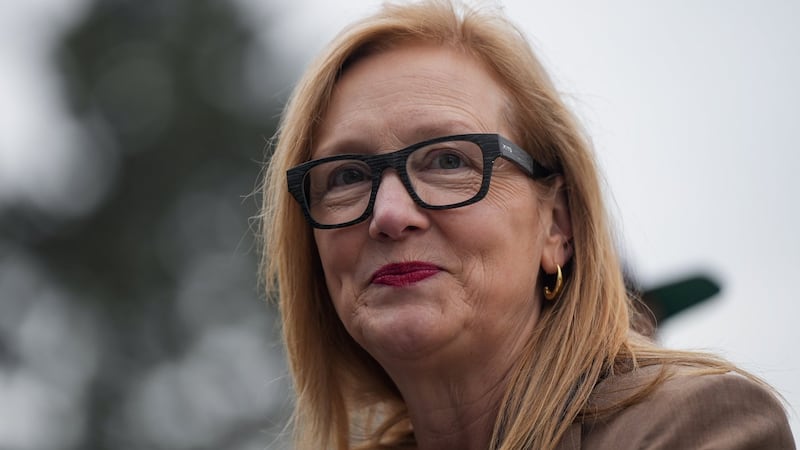
Ottawa will ‘spring forward’ on Sunday. Daylight saving time begins on Sunday, March 8, at 2 a.m., with clocks moving forward one hour. Here’s what you need to know about the arrival of daylight saving time. When Daylight saving time begins at 2 a.m. on the second Sunday of March, with clocks moving ahead one hour to 3 a.m. Ottawa will stay on daylight saving time until the first Sunday of November. Later sunset The sun will set later in Ottawa when daylight saving time begins on Sunday. The sunset on March 7 is at 5:58 p.m., according to timeanddate.com. The sun will set at 6:59 p.m. on March 8 and 7 p.m. on March 9. Ottawa will see 11 hours and 31 minutes of daylight on March 8, with the average amount of daylight increasing three minutes a day. History of daylight saving time According to the Canadian Encyclopedia, the Canadian government introduced daylight saving time in 1918 as a measure for increasing production during the First World War. “The idea was that during months when the sun stays visible for longer, a pre-breakfast hour of daylight could be saved for use after supper,” the Canadian Encyclopedia said. “Countries did this by turning the clocks ahead by one hour in the spring (to start the day earlier) and back by one hour in the fall.” Saskatchewan is the only province that currently follows standard time year-round. In March 2020, Yukon adopted Yukon Standard Time and no longer observes daylight saving time. Calls to end the time change There have been calls to end the bi-annual time change in Ontario and across Canada. Last fall, Orléans MP Marie-France Lalonde introduced a private member’s bill to end what she calls the “outdated practice” of daylight time. The bill calls on the federal government to work with provincial and territorial officials to formalize an agreement to end daylight time. According to Lalonde’s private member’s bill, a pan Canadian conference on time change would look at the main issues respecting the time change, including economic issues, the scientific studies on the effects of the time change on health and productivity, and the possibility of adopting a more “uniform approach” across Canada. The first reading of the bill was on Oct. 6, and there has been no movement on the bill since. In 2020, the Ontario government passed legislation introduced by former Ottawa MPP Jeremy Roberts to make daylight saving time permanent. The attorney general would only bring the act into effect in coordination with Quebec and New York State. The Quebec government conducted public consultations in 2024 on abolishing daylight saving time. The survey found 91 per cent of respondents wanted to stop the bi-annual time change. B.C moving to permanent daylight time Sunday’s switch to daylight saving time will be the last time British Columbia residents adjust their clocks. Premier David Eby says the province will move to permanent daylight time. Impact on sleep A sleep expert suggests standard time is better for your body. “The time that we’re in now is the normal time that’s dictated by the sun,” said Rebecca Robillard of the sleep research unit at the University of Ottawa Institute of Mental Health Research at the Royal. “A lot of people are already sleep deprived, so this kind of worsens that. But also, the fact that we’re getting more light in the evening, it actually suppresses our sleeping hormones that rise before bedtime and pushes our bedtimes and our sleep times later as well.” With files from The Canadian Press and CTV News Ottawa’s Dave Charbonneau