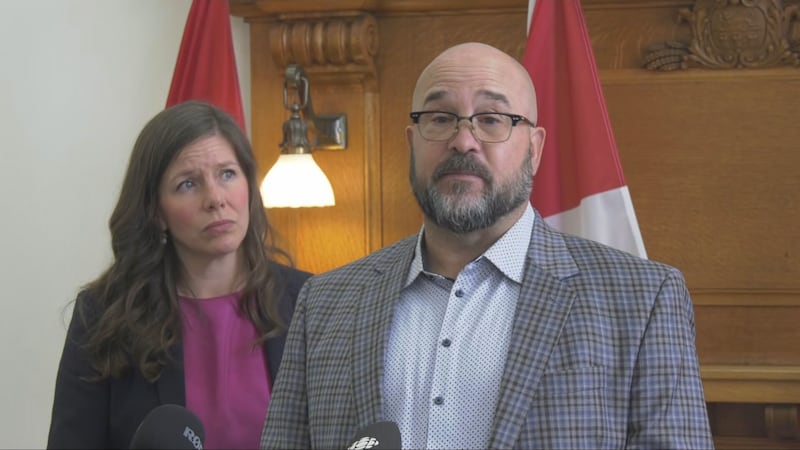
With the Canada Post strike, mail and parcels are not being processed or delivered and this is affecting Canadian residents and businesses nationwide. This ongoing uncertainty as to whether businesses packages and goods are going to make it to their end destination is hurting locals. The Canadian Federation of Independent Business (CFIB) warns the impact on small business will be massive. “Many of them are already in weakened condition because, of course, the tariffs and the thousand other things that are that are coming at them. The last thing that we need, is a major chunk of Canada’s transportation infrastructure out for months at a time,” says Dan Kelly, CFIB President and CEO. My Baby Shoppe on Bank Street uses Canada Post to ship many online orders, and this latest strike is bringing back memories of the strike in 2024. “It’s just been a huge inconvenience and costly. We’ve had to find other carriers, and it’s just slowed our process down,” said sales associate Jenna Pietrantonio. Pietrantonio says Canada Post is around the corner, making it easy and fast to drop off deliveries. “We ship out baby clothing all throughout Canada, the U.S. and internationally. For international clients, it’s been more costly to ship. Whereas Canada Post has been a lot more affordable and same with wedding gowns. It’s been more costly just because the wedding gowns are heavier,” says Pietrantonio. She says she’s had to find alternatives like courier or UPS. “We’ve had clients complain about how long it’s taken to receive their package. it’s definitely affected our business,” says Pietrantonio. “It’s just been a bit disappointing. There was one client we shipped to in Australia. We don’t like letting down our customers.” Pietrantonio says it affected about 20 per cent of sales, especially on import goods. The CFIB says small business owners are throwing up their arms and wondering what to do. “I’m really worried that this could be a much longer strike than last time,” says Kelly. “Last year, the strike cost small businesses $1 billion in lost sales and increased costs over the four-week period. You can imagine this one’s going to be just as significant. I’m deeply concerned about the knocks that this will have on many sectors. One of the first impacts, given the sudden nature of the strike, is that money gets frozen in the mail.” Postal workers are back on strike in response to the federal government’s announcement that door-to-door mail delivery will end for nearly all Canadian households within the next decade and that some post offices will close for good. “This was reaction because of the very strong likelihood that our jobs are under attack and our rights are being eroded through changes in business model that have not been consulted through the union,” says David Jesion, a worker with Canada Post. The union representing 55,000 postal workers said it was caught off-guard by the changes. “Ideally, we would like to keep our jobs secure. We would like to keep our pensions secure, our benefits secure. We want to be serving our customers. We enjoy our jobs. It’s just unfortunate that this negotiation has lasted as long as it has,” says Jesion. The federal government says Canada Post is losing $10 million every day, and this change could save $400 million a year. “As much as the strike is important for the employees involved, we don’t want to be on the picket line. We want to be serving our customers. We’re here to protect unionized and labour-intensive jobs,” says Jesion. Canada Post says it’s now working on a new offer and has just over 45 days to come back to the federal government with a plan to implement the changes. “The federal government cannot back down. It needs to proceed with the reforms that it has proposed. Canada Post is essentially insolvent. There’s no way that Canada Post is going to be able to go back to business as usual,” says Kelly. “The government needs to give Canada Post the labour market protection it needs to make sure that it stays operational until such time as the reforms are done. We’re urging the government to consider some form of back-to-work legislation or temporary, essential services designation for Canada Post to ensure that the mail continues to move and packages continue to move while the reforms are going on. I think that that’s the only option that we have at this stage.”