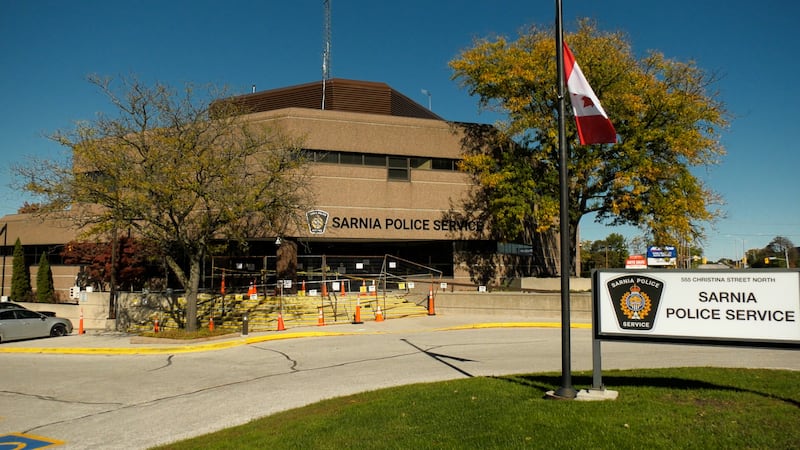
Police in Greater Sudbury say reports of intimate partner violence continue to increase, with about 58.6 coming in every week so far in 2025. “We had about 3,500 intimate partner violence calls for service in our city last year, which is a significant increase,” said deputy chief Natalie Hiltz. “That led our board and our city to declare IPV as an epidemic.” To help deal with the cases, police have created a dedicated IPV unit as part of a one-year pilot project. It will include four officers and a sergeant covering day and afternoon shifts. Pilot project The unit was formally established in June and early results show increased victim engagement, improved file quality and reduced investigative delays. The unit also diverts complex and involved investigations away from front-line officers. Hiltz said having officers dedicated to IPV cases helps victims dealing with trauma. “Also … the complex investigations are getting that attention and care that they need and deserve,” she said. “Ultimately, we can hold people accountable and we can reduce IPV in our community.” The YWCA Genevra House shelter in Sudbury has seen a staggering 68 per cent increase in the number of crisis calls in the last year. “Our shelter is full on a daily basis,” said executive director Marlene Gorman. “We do have some movement of people in and out, but as quickly as someone moves out, somebody else is moving in.” Support for survivors Gorman said the IPV unit will strengthen support for survivors, and said that working together will create critical pathways for those responding to the IPV epidemic. “Our city has been doing some good work in terms of addressing this epidemic,” she said, including the Greater Sudbury Coalition to End Violence Against Women, made up of several agencies working together. “The city has also updated the community safety and well-being plan, and part of that is addressing gender-based violence within our community.” “I just attended, recently, the city’s forum looking at the Roadmap to End Homelessness, because we know that the No. 1 reason for women’s homelessness is abuse,” Gorman added. More collaboration is needed to really address the issue, she added. “We need all three levels of government working together to address some of the systemic issues,” Gorman said. “Affordable housing being a major one, because we know that our local shelters are full and we’re a bottleneck because people can’t afford to move out and there just isn’t enough affordable housing and transitional housing in our community.” The police’s IPV unit will undergo ongoing assessment of workload distribution, specialized training requirements and opportunities for cross-collaboration with other areas such as the sexual assault unit and major crimes unit. Upon completion of the one-year pilot, police will evaluate the results and decide on its long-term future.